The Orchid family has over 28000 species offering a dazzling array of shapes, sizes, and color patterns. From the delicate elegance of Moth Orchids to the captivating pouch of Slipper orchids, there is a perfect bloom for every taste.
Whether you're a seasoned orchid enthusiast or a curious newcomer, this guide unveils 15 popular orchid varieties, each showing unique characteristics.
1. Tiger-Stripe Orchid
Native Area: Himalayas to Central China
Water: Needs more water during spring and summer growing seasons
Temperature: Maximum night temperatures of 53 degrees Fahrenheit
Light: Bright Morning or Late Evening Sun
Height: 3 to 4 Inch
These species have grasslike leaf blades with a yellowish base and produce between 4 to 7 long-lasting flowers. The flowers are yellow with brown striped petals and are frilly with large and irregular red spots.
Many of these species are slightly fragrant. They are pollinated by Trigona bees, which collect a sticky compound from a flower's lip and use the compound to seal up cracks in their nests. They are normally found in wet forests and is popular in horticulture.
Water: Water with room temperature water and allow plants to dry out slightly after blooming
Temperature: 70 to 75°F during the day, 60 to 65°F at night
Light: Partly Sunny, Bright filtered light
Height: 6-24 inches, varies by species
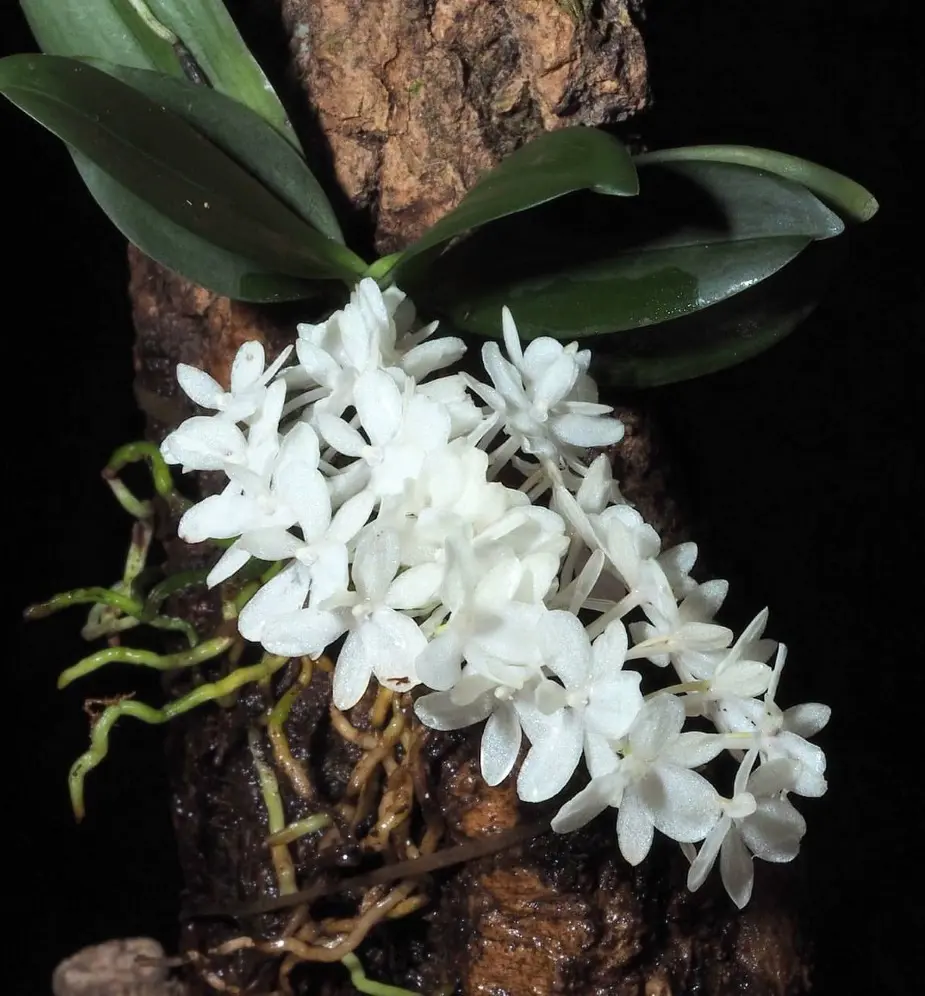
Aerangis Orchids are the most tropical orchids, and their growth depends widely on maintaining a proper balance of required elements. This variety needs an environment with lots of sunlight, and a lot of moisture in the air. They produce cascades of tiny but showy orchid flowers in pure white or sweet lemon color.
3. Dendrobium Orchids
Native Area: Philippines
Water: Every few days from spring to fall, and during flowering once a week
Temperature: 70 to 80°F during the day, 60 to 65°F at night
Light: Bright diffused indoor light
Flower Size: 6 inches to 4 feet, depending on species
This Filipino orchid grows naturally in mossy, wet, cool oak forests alongside rhododendrons, azaleas, and myrtles. The name of this species honors Queen Victoria, who ended her long reign when this orchid was discovered.
These orchids love warmer days and cooler nights with high humidity and contain distinct dormant periods. With more than 2000 species included, these orchids defy easy categorization. The most common varieties feature white yellow, or purple blooms.
Native Area: Widespread in lowland forests from Mexico to Brazil to the Caribbean
Water: Water during active growth, decrease water and humidity during rest periods
Temperature: High humidity, temperatures between 60 F and 85 F
Light: Medium light
Height: up to 4 inches
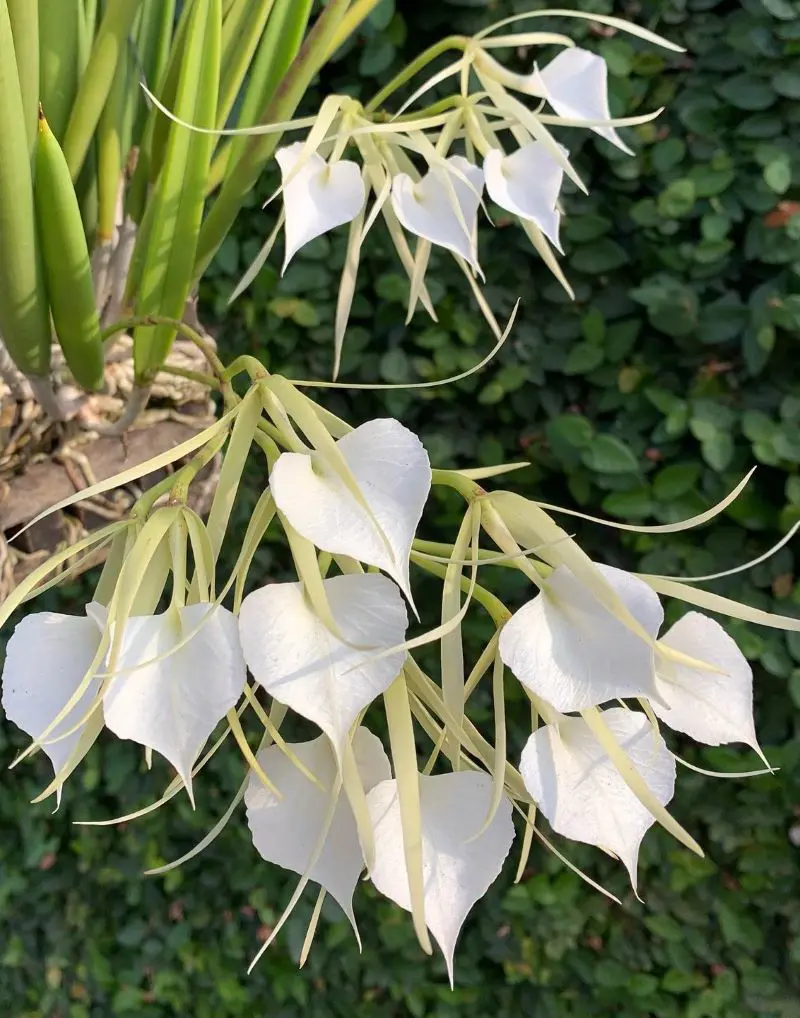
Also called the Lady of the Night, this orchid boasts a sweet fragrance, emitted at night from the clusters of 4 to 12 flowers. These flowers have green to whitish cream, spidery sepals and petals. Also, the lip is large and tubular, flaring into a heart shape.
These orchids naturally inhabit seasonally dry forests, often near the coast, and live as epiphytes. They might flower multiple times a year and at any time of the year but mostly in fall or winter.
5. Ascocenda Orchids
Native Area: Asian tropics
Height: Varies by species
Light: Strong bright light
Water: Once every 5-7 days, as the soil begins to dry
Temperature: 70 to 80°F during the day, 60 to 65°F at night
Ascocenda Orchids are a hybrid of Vanda and Ascocentrum orchids. These compact plant with jewel-like flowers has a single upward-growing main stem and can be easily grown indoors.
These flowers are usually grown in native places like the Asian tropics and their height varies by species. They need a strong bright light for growing and should get watered every 5-7 days, as the soil begins to dry.
6. Phalaenopsis
Native Area: India, China, Southeast Asia, Indonesia, and Australia
Height: 1 to 3 feet, depending on the species
Light: Indirect indoor light or a shady outdoor location
Water: When soil becomes slightly damp, up to 2 times per week during dry periods
Temperature: 70 to 80°F during the day, 60 to 65°F at night
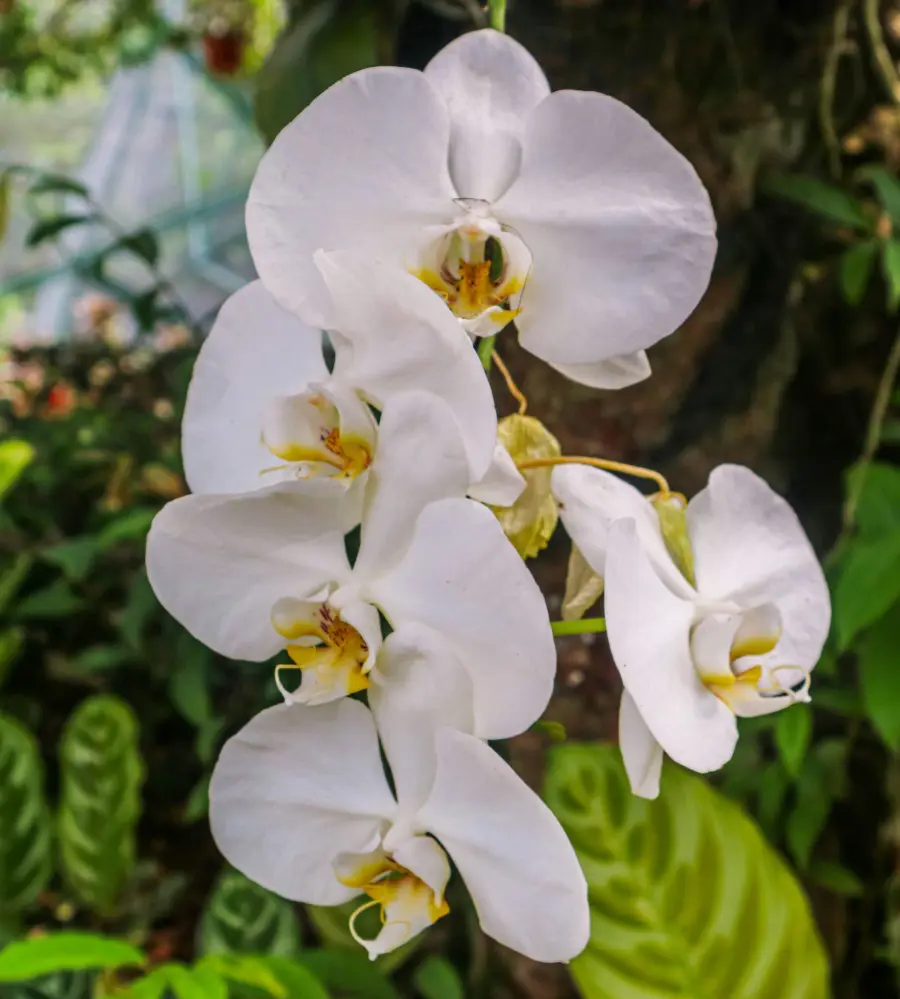
Phalaenopsis affectionately known as the Moth orchid is the perfect starter orchid, possessing broad and glossy leaves and gracefully arching blooms, enlightening the indoor decor. Moth orchids usually blooms long lasting from 2 to 6 months.
Commonly found in Southeast Asia, Philipines, and Southern Australia, these orchids grow on trees as an epiphyte but also can grow in rocks and on the ground in some cases. The plants need watering when the potting mix begins to dry out, usually once a week.
Water: About once a week, when the soil feels very dry
Temperature: 70 to 80°F during the day, 60 to 65°F at night
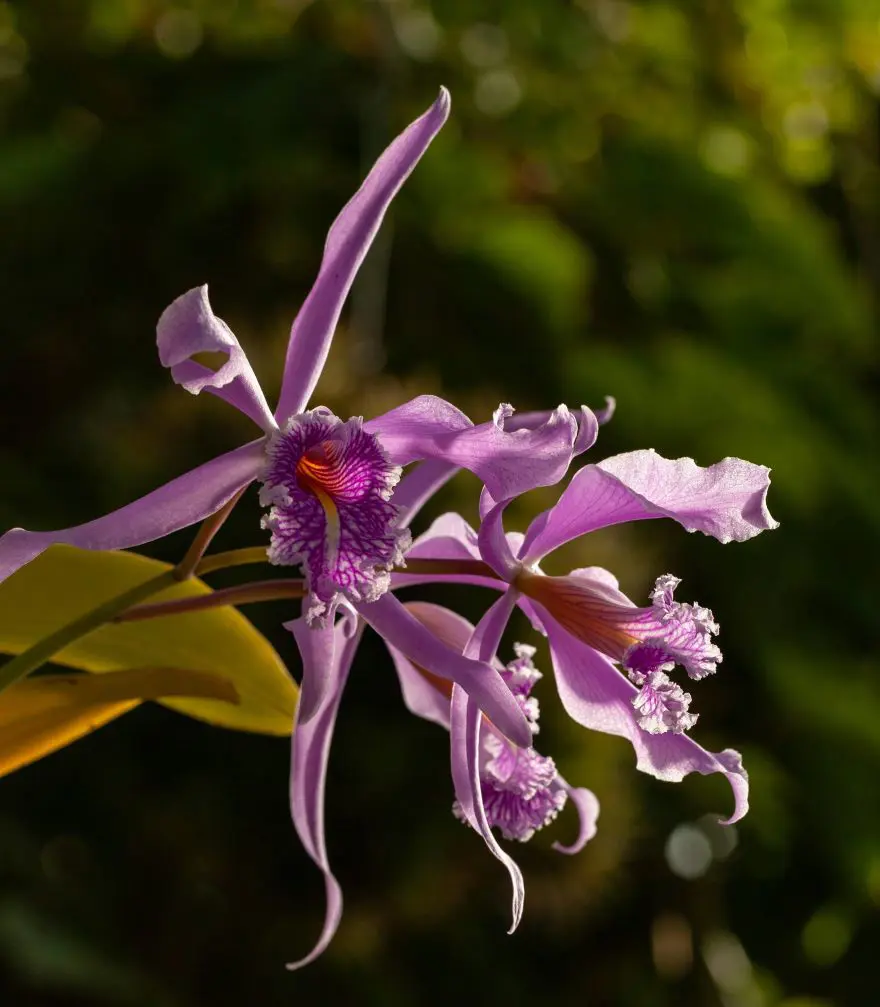
Cattleya orchids are renowned for their role in elegant corsages and originate from the warm forests of the Americas, offering thick, leathery leaves and stunning fragrant flowers in the spectrum of colors.
They are known for their fragrant scent and are often used in corsages. These plants prefer a night temperature drop to initiate blooming. Also, they need a slight drying-out period between the waterings to grow properly.
8. Oncidium
Native Area: Mexico, Central and South America, West Indies
Height: 6 inches to 10 feet
Light: Bright indirect light
Water: Keep moist, watering up to 2 to 3 times a week during warmer conditions
Temperature: 70 to 85°F during the day, 60 to 65°F at night
Oncidium orchids are commonly referred to as "dancing lady orchids" due to the skirt-like frill of their petals. With more than 300 species in this genus, these flowers thrive at consistent moisture and humidity, preferring a cooler environment.
Their flowers can be tiny and delicate, or large and showy. They often have a complex and fascinating structure and are also known for their fragrance, which can be sweet, spicy, or citrusy. They need bright and indirect sunlight as well as warm temperatures.
9. Paphiopedilum
Native Area: Southeast Asia, Europe, Northern Parts of United States
Height: 3 to 24 inches in height
Light: Well shaded, indirect light
Water: Keep moist, watering up to 2 times per week in drier months
Temperature: 70 to 80°F during the day, 55 to 65°F at night
Paphiopedilum, also known as the slipper orchid, is a type of flowering plant, prized for its unique pouch-shaped lip, called the "slipper".
Being native to tropical and subtropical regions of Southeast Asia and the Philipines, they can be a bit delicate to care for requiring to avoid direct sunlight and a soil with well well-draining mix, offering a blend of bark and moss.
Temperature: 70 to 80°F during the day, 60 to 65°F at night
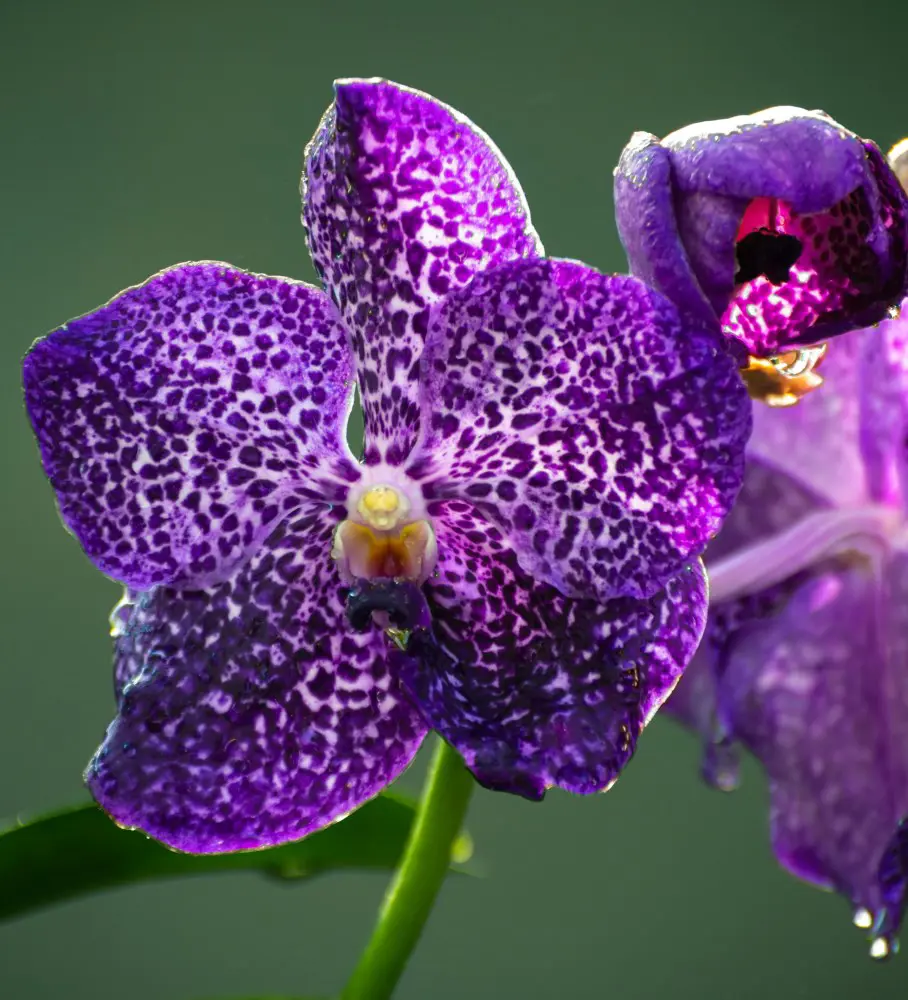
Originating from the tropical climates of India and Southeast Asia, Vanda are known for their vibrant and colorful flowers and unique, flat leaves thriving in warm and humid conditions.
These plants require brighter light but generally don't thrive in full sunlight. These flowers can acclimate to full sun, though plants grown in those conditions are washed out and not as healthy as those grown under shade to take the edge off strong sunlight.
11. Ludisia
Native Area: Southern and Southeast Asia
Height: 3 to 18 inches
Light: Bright diffused indoor light
Water: Keep soil moist and keep it in a high-humidity environment
Temperature: 65 to 75°F during the day, 60 to 65°F at night.
Also known as "jewel orchids," Ludisia make up a rare genus with only one species. These orchids have dark green leaves and small white flowers that bloom in the fall and winter.
These flowers don't need a lot of sunlight and do well in shade as indoor plants with east or west-facing windows. They thrive in moist soil with highly humid environmental conditions. They need a temperature ranging from 65 to 75 degrees Fahrenheit in the day and 60 to 65 degrees at night.
Temperature: Can tolerate cool temperatures but keep above 50°F
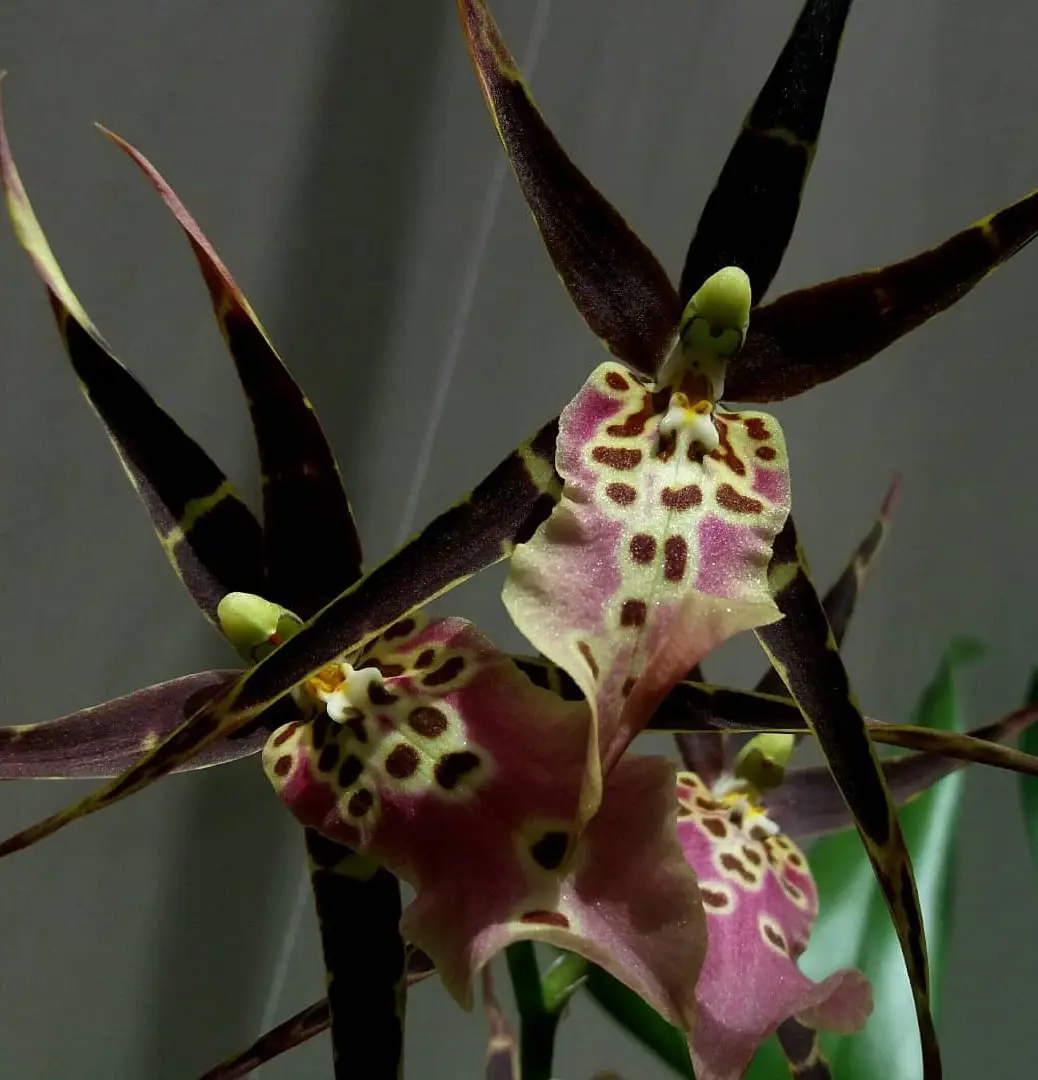
Brassia orchids are distinguished by their spider-like sepals and interesting color patterns due to which they are known as "spider orchids." These orchids mesmerize with their spider-like flowers requiring bright but indirect light and consistent moisture to mimic their native tropical environments.
These fragrant orchids boast numerous blooms with 8 to 12 flowers cluster blooming from a single bulb, These plants love moisture and prefer bright and diffused light to thrive with weekly watering when the soil feels very dry. These orchids typically bloom in the spring and summer season.
13. Encyclia Orchid
Native Area: Florida, Mexico, Caribbean
Height: 3 inches to 2 feet
Light: Medium to bright diffused indoor light
Water: Allow roots to dry out between watering, 1 to 2 times per week
Temperature: Cool to warm. Keep above 60°F for most plants.
Encyclia Orchids are not fragrant and bloom best when planted on an orchid mount to simulate the epiphytic growing conditions of the wild. They boast uniquely shaped flowers, thriving in high humidity and bright light, and offering a distinctive flair to any orchid collection.
These orchids produce several blooms that last for several weeks often flowering multiple times a year. Depending on the species, these plants need cool to warm temperatures but should be kept above 60 degrees Fahrenheit for most plants.
14. Epidendrum Orchids
Native Area: Tropical and subtropical North and South America
Height: 6 inches to 6 feet, varies on the species
Light: Bright diffused indoor light; supplemental artificial light is often required
Water: Allow roots to dry completely between watering. Water more often during hot weather.
Temperature: Tolerate most temperatures above 50°F
The Epidendrum genus is large, containing more than 1000 species and many more hybrids. Their flowers are petite and the plant needs very bright diffused indoor light to bloom and thrive.
They are grown natively in tropical and subtropical North and South America and are 6 inches to 6 feet in height, depending on the species. These flowers can tolerate most temperatures above 50 degrees Fahrenheit with frequent watering during hot weather.
Temperature: 75 to 85°F during the day, 60 to 65°F at night
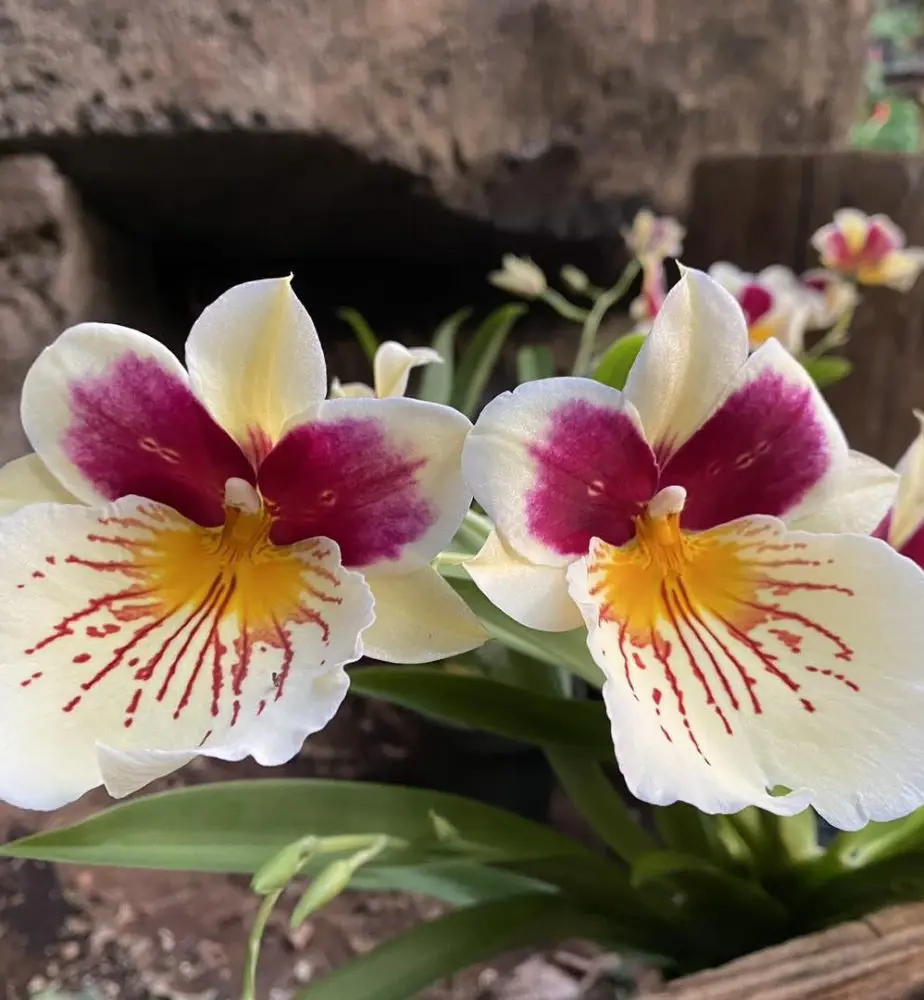
Miltonia orchids are known as "pansy orchids" because of their similar appearance to garden pansies. Unlike garden pansies, these orchids require bright indirect light and moderate temperatures, blooming from late spring to summer.
Their blossoms have the same face-like features that give our cool weather annually so much personality.