When we talk about Thistle, we can easily claim it as one of the most determined foes in the garden. As unpleasing as it may sound once thistle invades your garden, it's one big problem to deal with.
Not only does it invade your garden but the safety of your fur baby and children also comes into question when thistle invites itself. We've listed some ways to help you keep Thistle away from your lawn.
How To Get Rid of Thistle Naturally
1. Hand Pulling
The method of hand-pulling thistle can be a bit labor-intensive and time-consuming. But we can guarantee you that the more you grind yourself, the better will be these results. You can begin by making the area moist which will make your work easy. Then wear your safety gear and pull out the thistle plants along with the roots.
If the thistles are scattered in small quantities and plucking out by hand seems no big deal you can go for it. But make sure that you monitor if there is any regrowth of thistles.
A highly organic and sustainable way to kill thistles is to cover them with a thick layer of natural mulch material. You can mulch over the thistles with leaves, wood chips, compost, leaf mold, bark, pine needles, and/or paper material.
Make sure you apply mulch several inches deep that can block sunlight to effectively kill the thistles.
3. Use Vinegar
Vinegar is another useful way to get rid of thistles from your yard. Vinegar works by dehydrating the thistle plants. Before applying vinegar make sure it has at least 20 percent acetic acid.
Put the vinegar into one spray bottle and apply directly over thistle plants. But bear in mind that it needs several applications before the thistles are completely dead. Since it's acid, you don't want to hurt yourself! So put on protective gear before using vinegar.
4. Overseeding
Overseeding is another fantastic method to get rid of thistles from your lawn. By adding healthy grasses, they can easily outcompete thistles and fill in bare patches. This makes it difficult for thistles to take hold in your lawn.
In order to overseed, you can start by raking and prepping the places where thistles have grown. Evenly spread some good quality seeds in the prepped area. This will create a healthy lawn that'll have no space for thistles.
5. Use Corn Gluten Meal
Using corn gluten meal is considered one of the most smart ways to get rid of thistles. One thing about corn gluten meal is that it is pre-emergent. That means it will stop the sprouting of thistles.
You need to use the corn gluten meal before the sprouting starts or else it won't be effective on full-blown thistles. Corn gluten meal stops the formation of roots in the seeds and prevents the growth.
Boiling water works as one of the most effective ways to get rid of thistles for good. All you need to do is identify the exact areas where thistles are growing. Then you can boil the water and pour it over the thistles. While doing so be very thorough as you don't want to damage nearby plants or harm yourself.
Boiling water not only kills thistles through heat but also is effective in killing roots and tissues. So we suggest you to give boiling water a try.
7. Smothering
Smothering is one great method to get rid of Thistles. Smothering works by blocking the sunlight. Since thistle needs sunlight for their growth and development, by cutting off the sunlight you reduce the chances of their full-blown growth.
Start by covering the areas with thistles with several layers of newspaper or cardboard and fixate them. All you need to do is wait for a few days to a week and the magic happens underneath. All the thistles will be dead from not getting enough sunlight.
8. Mowing
Thistles are one of the most persistent invaders of lawns. So might need to mow your lawn time and again. If not handled properly thistle will take no time to colonize you whole lawn.
Set your mower to a low height and get to work. Mowing will prevent the seeds ultimately preventing thistles growth. You can incorporate mowing with other methods for successful results.
9. Improve Garden health
A thick and healthy lawn is going to find it quite difficult for thistles to take hold. Proper and timely aeration optimizes soil health by providing a clear pathway through which air, water, and essential nutrients penetrate deeper into the soil.
If you've been watering properly, aerating correctly, and fertilizing properly, you create conditions whereby the grass thrives and builds up a good, tight cover that doesn't allow space for thistles or other weeds to get a foothold.
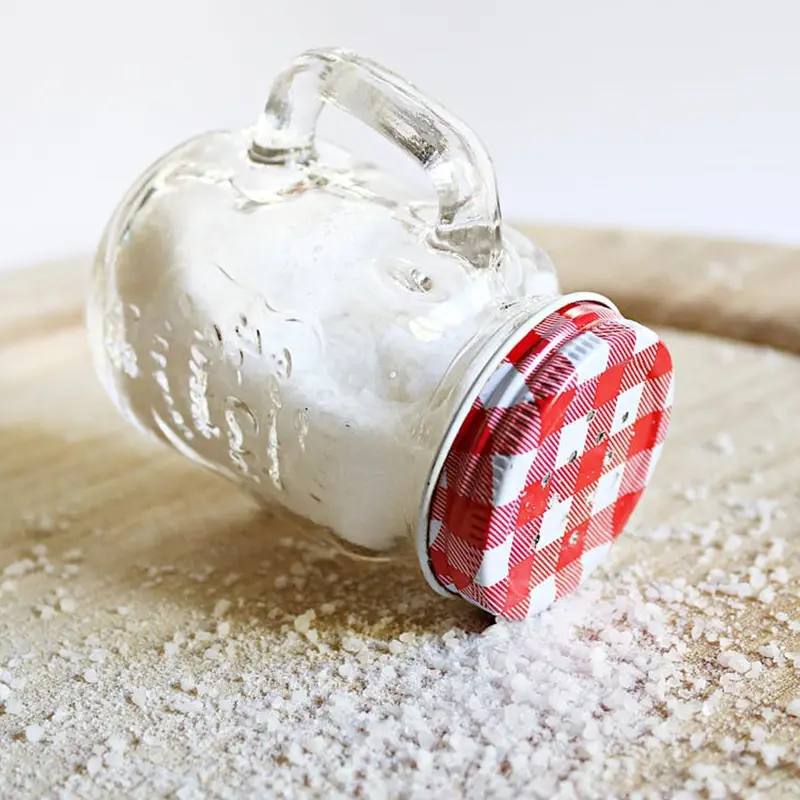
A little salt, sprinkled right at the base of thistles, can kill the plants by dehydrating them. Salt draws moisture out from the plant cells, consequently drying them out and eventually dying. However, this method should be administered with care since it has the potential to affect the quality of the surrounding soil as well.
Therefore, while salt can kill thistles in a hurry, it is a remedy to be used sparingly and only where you will not mind possible changes in the soil conditions.
11. Introduce Natural Predators
Introduce insects like the thistle tortoise beetle to control the population of thistle. These insects are known to be predaceous on thistles and, by feeding, prevent the spread of the plant. The thistle tortoise beetle will selectively feed on thistle plants, ultimately weakening and reducing their populations.
By creating an environment that encourages beneficial insects to your lawn, you can set up a natural balance that would help keep thistle populations under control.
12. Try Raking
Raking may be an effective way of containing the spread of thistles, particularly in less heavy infestations. On the other hand, it is very cautious since it sometimes worsens the situation, spreading the thistle seeds and fragments out to start new plants.
Rake safely on a dry day when the soil is firm and not too wet, as this helps avoid compacting the soil. Gently rake over the area infested with thistle in such a manner that it will aid in lifting and loosening the thistle plants without further disturbing the soil.
13. Increase Shade in the Garden
If you give thistle a wide-open, sunny area in the garden all hell breaks loose – it will fill up that space almost overnight. So fill in every possible space in your garden with plants you love to shade out and out-compete the thistle seed and young shoots.
For any open areas, plant annuals or ground covers, or use a good vegetative mulch to fill in and smother the thistle. By not giving thistle a chance to establish, you’ll rarely encounter it.
How To Get Rid Of Thistles Using Chemicals
14. Use Products containing Glyphosate
Glyphosate is a nonselective herbicide that will kill nearly any plant it comes in contact with, which includes thistles. One of the ways glyphosate works is by inhibiting a specific enzyme pathway necessary for plant growth.
Because it is not selective, the best means to achieve success from this herbicide is to apply it directly to the thistle, avoiding contacting desirable plants. It is mostly applied in dry and calm weather to minimize the risk of drift to off-target plants.
2,4-D is a selective herbicide that kills broadleaf weeds, such as thistles, and doesn't affect grasses under normal conditions. Upon contact with the herbicide, it mimics natural plant hormones in the target weed, resulting in an uncontrolled growth that ends up killing the plants.
Application occurs as a foliar spray and is most effective when thistle plants are actively growing.
16. Use Products Containing Clopyralid
Clopyralid is a selective herbicide formulated to kill broadleaf weeds, which include thistles. This chemical agent disrupts the process of plant growth. It is used in many pasture and rangeland environments.
Clopyralid acts at a low dose and degrades rather slowly in soil, thus affecting weed seeds germinating later.
17. Use products Containing Dicamba
Dicamba is one of the very popular, selective herbicides that control a wide range of broadleaf weeds, including thistle. This occurs through its action of mimicking natural plant hormones and eventually inducing uncontrolled growth.
It has been in use in many applications, but caution needs to be exercised since it tends to drift around and cause damage to non-target plants. Proper application methods are very important to avoid unwanted damage.
How to Get Rid of Thistles From Professional Help
Getting rid of Thistles comes with the combination of various methods of chemical and natural removal. we have listed some of the ways below;
18. Integrated Weed Control
Similar to most professionals, you can adopt an integrated weed management approach using a combination of several methods to ensure effectiveness.
This is made possible through site assessment—selecting the most appropriate mix of mechanical, chemical, and cultural methods based on the particular species of thistle and the level of infestation.
19. Herbicide Application
One professional approach is herbicide application. Broadleaf-specific selective herbicides, containing glyphosate, are very effective. Systemic herbicides such as these are absorbed by the plant and flow through the vascular system to kill the entire plant, roots, and all.
It's important to apply the herbicide during the growing season when thistles are actively taking up the applied material for maximal response. Always follow the manufacturer's instructions.
20. Manual Removal
Another feasible mechanism would be mechanical removal, more so for individuals who advocate for a non-chemical strategy. Mechanically, it would imply using specialized tools like thistle weeders or, in some cases, a hoe to dig up thistles.
Ensuring the removal of the whole root system will completely avoid any chance of regrowth. Rotary mowers or brush cutters can effectively cut down top growth of thistles in larger infestations.
21. Professional Mulching
Mulching is a perfect cultural control practice that might repress thistle. Apply a generous, deep mulch of wood chips, straw, or grass clippings over the area infected by the plant to block out sunlight that will help in seed germination.
Soil disturbance is, therefore, minimized, and the chance of its giving new thistle seeds a foothold is lessened. In addition to controlling weeds, mulching tends to enhance soil health and conserve water for the garden or lawn.
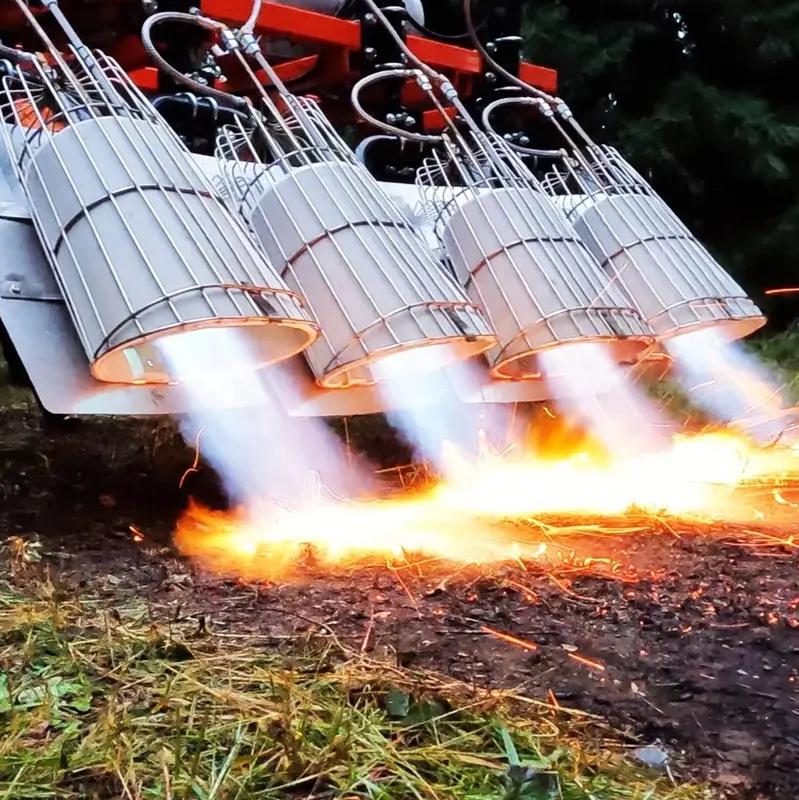
Flaming works well for people who need a non-chemical approach. However, on the other hand, burning thistles using a propane torch only works on young, actively growing plants. Indeed, cellular damage occurs with extreme heat that kills the thistles.
However, proper care needs to be taken to avoid fire danger or further damage to other plants which may come into contact with the flame. It works well in small areas or controlled settings where the flame will be manageable.
23. Cultural Control
Cultural control methods can ensure long-term control of thistle infestations. This means that the general health of your garden or your lawn needs to be improved by adjusting the pH, raising the fertility level of the soil, and increasing the density of plants to make the environment less hospitable to thistles.
Increasing the vigor of desirable plants increases competition and thus will naturally help suppress the growth of thistle.
Identification of Thistle
There are certain characteristics that thistles inherit, which will be handy for you in recognizing thistles. We have listed some of them below;
Prickly Stems and leaves
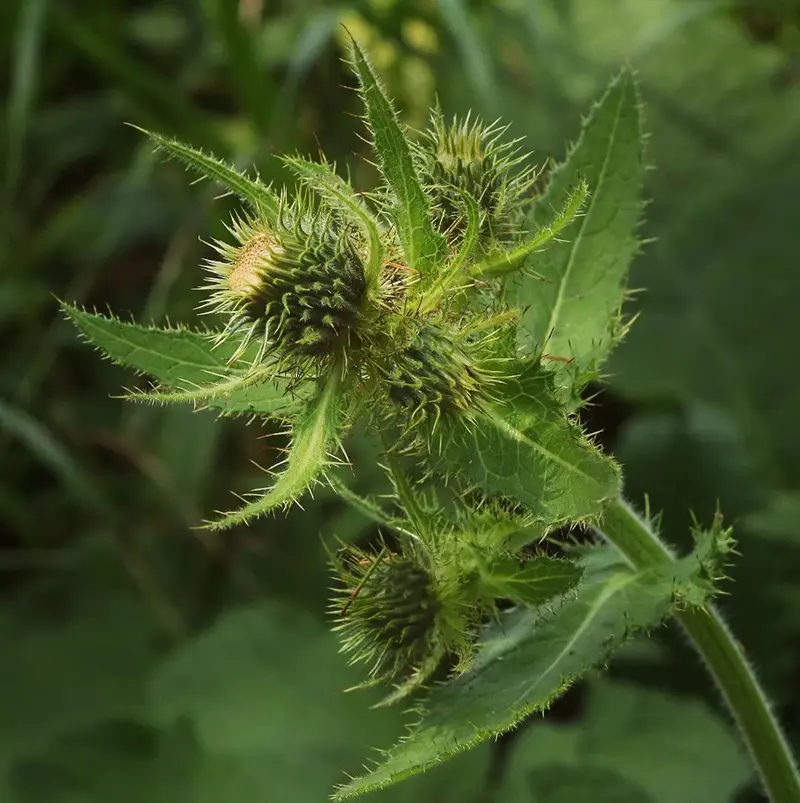
Thistles are like the garden’s way of saying, "I’m not here to make friends." Thistles are plants with spiny and prickly leaves. Their stems, as well as leaves, have pointed, needle-like projections or serrated edges. These develop into a natural defense system of the plant against herbivores.
The thorns may make it hard to even handle the plant, and thus one must handle them with gloved hands.
Purple-Pink Flower
Many thistle species are known for their bright purple or pink flowers, which form at the end of stems. As these flowers are composed of many small tubular florets, they have a fairly distinctive 'thistle' appearance, which adds to the plant's ornamental value but makes them all the more noticeable when flowering occurs.
Deep Taproot
Thistles have a taproot system that grows straight down through the soil. This strong taproot access allows the plant better access to nutrients and water while also holding it very securely in place. Effective removal of thistles would consist of pulling up as much of this taproot as possible since leftover fragments can contribute to regrowth.
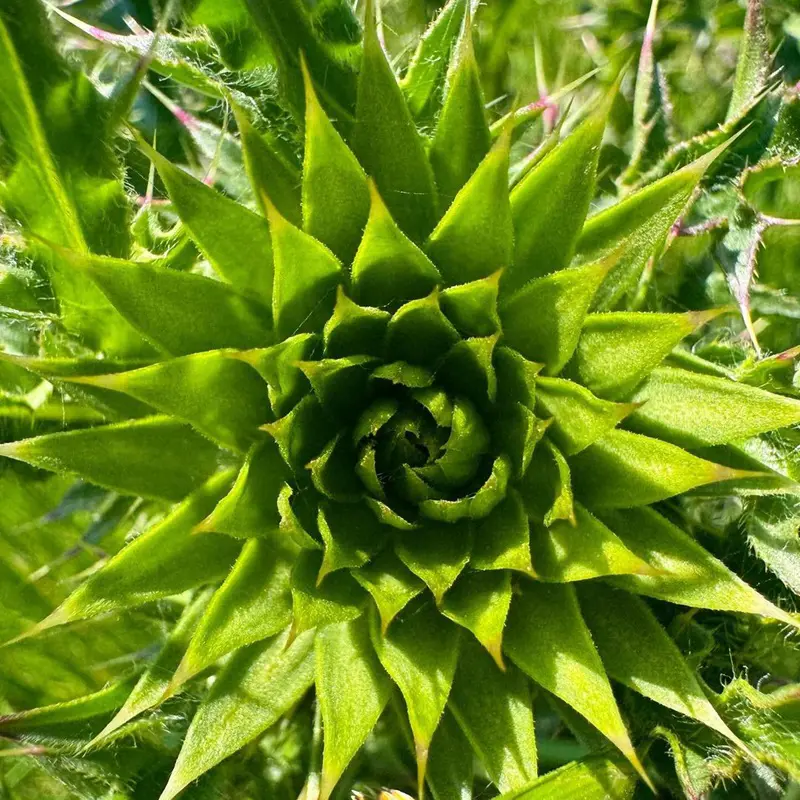
Thistles in their early development form a rosette of leaves that grow close to the ground in a compact circle. The rosette habit also is advantageous for the plant, as it can form vigorous growth before generating taller stems and flowers. Identification and control of thistles are both easier and often more effective at this rosette stage than when the plants are mature.
Prevent Thistle from Invading
There are various ways you can adapt to prevent thistles from returning back to your lawn.
Regular Monitoring: Keep an eye out for any new thistle in your garden or lawn. Thistles can spread fast, therefore removing them quickly when spotted will assist in containing them. Early removal of young thistles may be easier and prevent them from seeding to colonize further.
Maintain Healthy Lawn: Basically, a good dense vigorous lawn is the best defense to thistle. The denser and the more vigorous the lawn, the more it competes with other invaders.
Mulching: A good mulch applied will go a long way in controlling the growth of thistle. The mulch acts to prevent sunlight from getting to the soil and thereby prevents the thistle seeds from germinating. It also helps retain soil moisture and improves the health of the soil.
Proper Watering and Proper Fertilization: Allowing your lawn and plants to get the right amount of water and nourishment is vital to their health and heartiness. Proper watering breeds deep root growth for your grass, making it more competitive against weeds. The thistle plants are more likely to face less stress and competition in well-nourished plants.
Types of Thistle
There are wide varieties of thistle that are present in various parts of the world. We have listed some common thistles you might have noticed here and there further below;
Canada Thistle (Cirsium arvense): It is a persistent and aggressive perennial thistle. Canada thistle has small purple or pink flowers and a deep, spreading root system. It forms dense patches. It is known for its rapid spread, making it difficult to control.
Bull Thistle (Cirsium vulgare): It has large, spiny leaves and tall, robust growth, Bull thistle features purple, thistle-like flowers. It tends to grow in disturbed areas and can reach up to 6 feet tall.
Milk Thistle (Silybum marianum): It can be easily recognized by its white-veined, spiny leaves and distinctive purple flowers. Milk thistle is often cultivated for its medicinal properties. It can grow up to 5 feet tall.
Musk Thistle (Carduus nutans): Musk thistle is notable for its large, nodding flower heads with pink to purple florets. It has a strong, spiny appearance and emits a musk-like odor when crushed. This thistle can grow up to 8 feet tall.