We can relate to how hard is it to live with the nasty itching and scratching on the body parts. Chiggers are the real annoying creature. Are you worried about your pets and family members? Well, you've landed in the exact feed.
We've come up with this exclusive guide, especially for you covering every possible aspect of chigger bites from identification to natural ways of treating them. We hope to catch up with you till the end!
About Chigger Bites
Chiggers and bites are often taken as synonyms to each other. Clear from the name, chigger bites are the bites of microscopic bugs, chiggers. Once they find a soft patch of skin, they inject a chemical liquid called digestive enzymes into the skin that are responsible for breaking down the skin cells.
You should know chiggers aren't insects, they're rather arachnids belonging to the same family of spiders and ticks. Adult chiggers aren't known to bite you, it's their larvae that are notorious chewers of your inner skin, they form a hole in the skin and chew the skin tissues.
Chigger Bites on Pets
Chiggers are known to feed on both animals and humans. If you've pets in your house such as dogs and cats, they are also equally likely to get infected by the chiggers. They are often found in the head, belly, feet, or ears of pet animals since these areas have less fur.
If you've ever noticed your pets scratching a lot more than usual, you should suspect, they might have got bitten by the chiggers. You might find a cluster of red bumps on the affected area.
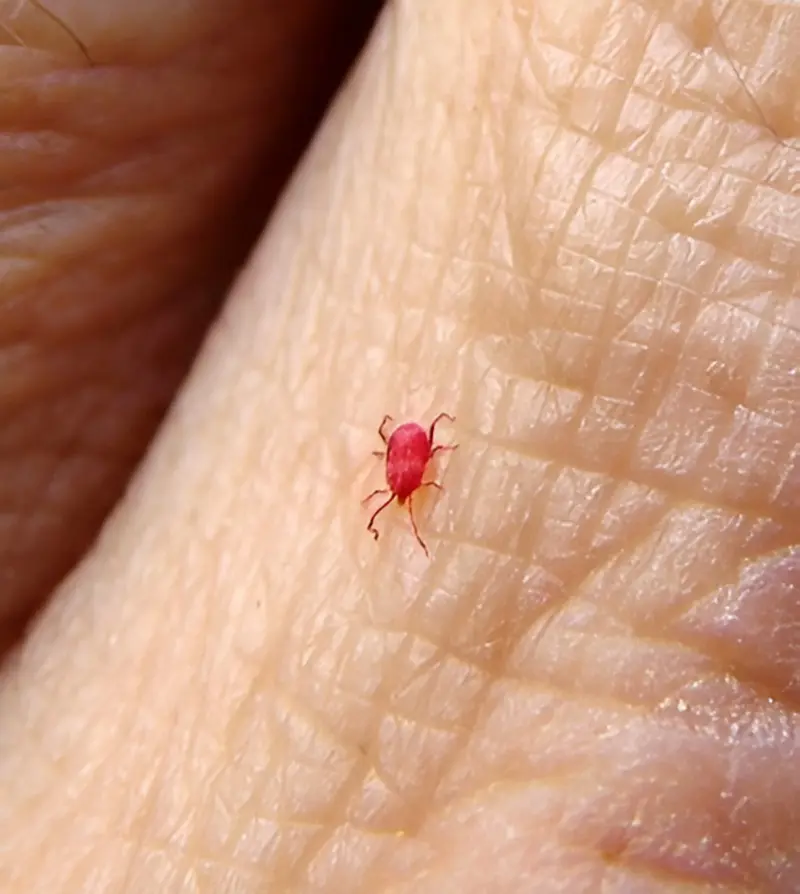
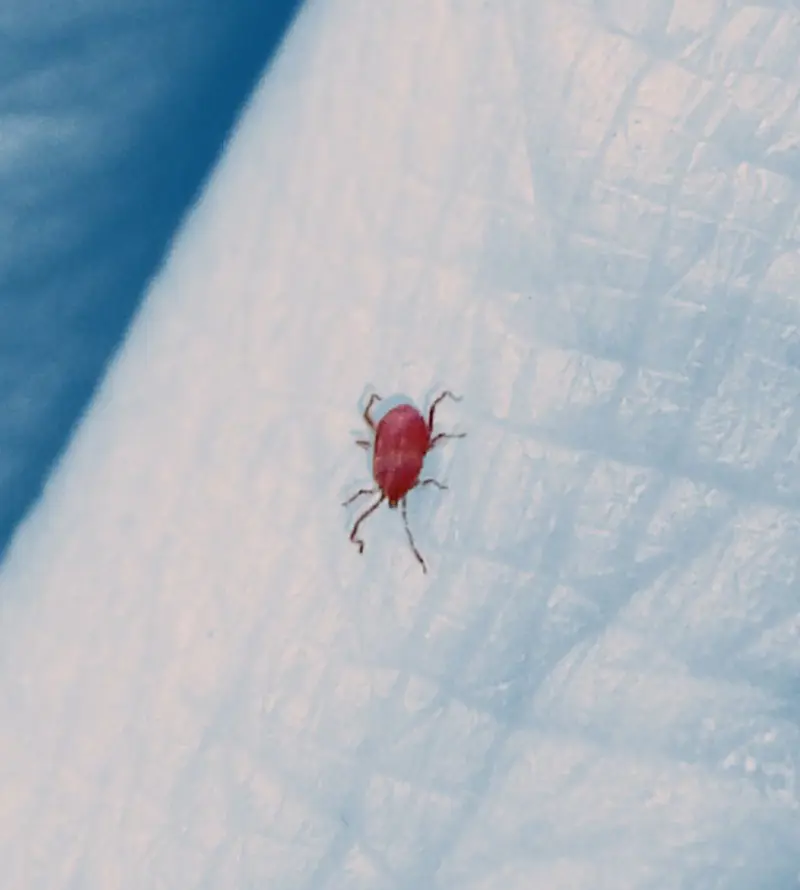
If you spot a red bug that bites, there's a high possibility it is a chigger. One of the early reactions of chigger bites is itching and this can occur after some hours of the chigger attaching to the skin of the hosts. The victim might see a line of small red spots that are very similar to the pimples or red bumps.
The bites are often found around the waist, ankles, and folded skins but they are likely to bite anywhere on your body. It has been found that the itchiness ceases after a few days and the red bumps might require 1-2 weeks to heal.
Common Symptoms of Chigger Bites
Please find the common symptoms of chigger bites listed below:
Chigger bites are most likely to induce itchiness and irritation on the bite spot.
A lot of urge to scratch on the bite site that usually lasts for several days. Your good night's sleep might get ruined.
Your skin may get discolored after the bites.
You may find a cluster of small, red bumps on the skin.
Most people develop early symptoms usually after some hours of chigger bites.
Secondary Reactions
In general, chiggers in the US are not reported to spread any kind of disease. However, in other parts of the world such as Southeast Asia, Indonesia, China, Japan, India, and northern Australia, the bites from the infected chiggers are found to cause scrub typhus.
It has been suggested to seek professional advice if you develop any of the symptoms through chigger bites such as darker scabs on the bite site, severe skin rashes, etc.
What To Do For Chigger Bites
Chigger bites are not the bugs that burrow into your skin. They usually induce itchiness and rashes that may develop after the chiggers have already detached from the skin. Once you notice the signs of chigger infestation on your body, it would be best to take action right away.
If you ignore it and leave it to disappear on its own, it might take several days. Several effective home remedies that might help you to treat chigger bites are provided below:
One of the first things you should be doing if you feel that you were around the chiggers is taking a proper bath or shower. Make sure to use soap and hot water while scrubbing your skin. This will ensure any chiggers attached to your skin to wash away.
Keep in mind to use a washcloth along with you for creating friction against the skin so that chiggers come off. You should know that the chiggers may no longer remain on your skin if you start to experience itching. However, taking a bath may give you some relief.
2. Apply Colloidal Oatmeal
Colloidal oatmeal is prepared by grinding oat grins into a fine powder. This powder form of oatmeal possesses fats, proteins, vitamins, minerals, and other nutrients shown to benefit the skin. In 2003, colloidal oatmeal was officially categorized as a skin protectant by the FDA.
The anti-inflammatory and antioxidant properties of colloidal oatmeal soften and soothe the skin by increasing the moisture content. For centuries, people have been using it as a home remedy to reduce itching and inflammation on the skin. You can take the help of the colloidal oatmeal while bathing with warm water.
3. Apply Cold Compress
Applying ice packs on the bite site is the simplest home cure for chigger bites. You can relieve itching to a great extent through the cold compress to the affected area. The chilling ice has been found to numb the skin and reduce inflammation associated with the chigger bites.
You need to wrap a clean cloth around the ice packs and compress it over the affected area. Make sure to perform this compression for about 10-15 minutes and take a break of a few minutes before repeating the process. You will be rewarded with instant relief.
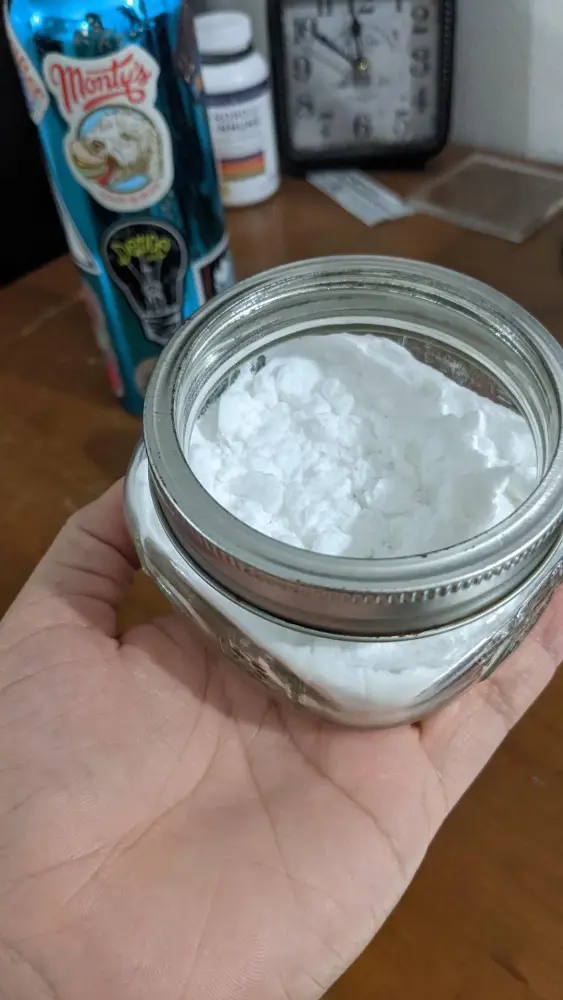
If you discover red bumps on your body that are causing itching and scratching, it has been suggested to make use of baking soda paste for the affected area. This paste is certain to reduce inflammation and soothe the site associated with the chigger bites.
You simply need to dilute the baking soda using water and make a solution of equal proportion. This solution can then be used directly on the bite sites. After applying properly on the site, let them dry before washing off with warm water. Repeat the process for multiple times a day until the itching subsides and stops.
5. Try Aloe Vera Gel
We are sure you are pretty aware of the aloe vera plant. People have been using this amazing plant for several skin-related issues. Aloe vera gel is an excellent remedy for chigger bites if applied properly and effectively on the bite sites. Aloe vera gel is the extraction of the aloe vera leaves.
This gel has been found to possess soothing and healing properties that are certain to work against the itching and inflammation associated with the chigger bites. You can simply apply the gel directly to the affected area and leave it to dry for some period. If you want some extra cooling sensation, you can refrigerate the gel before applying.
6. Tea Tree Oil
Tea tree oil is a beneficial essential oil from the tea tree plant. The oil has natural anti-inflammatory and anti-microbial properties. If you apply tea tree oil properly on the affected site, it can reduce itching while preventing bacterial infection development on the chigger bites.
Keep in mind to dilute the oil with other carrier oils such as coconut oil or olive oil before applying it to the affected skin. You need to soak a cotton ball in a few drops of diluted tea tree oil and gently dab it on the bite sites. Your itchiness and urge to scratch will be alleviated in no matter of time.
7. Try Apple Cider Vinegar
You will be amazed at the excellent healing properties of the apple cider vinegar if you apply it to the chigger bites spot. Besides that, apple cider vinegar has anti-inflammatory properties to help reduce itching and inflammation to a great extent.
You need to dilute the apple cider vinegar using water in equal proportion and apply this solution to the affected site. For an effective application, you can make use of a cotton ball or pad and gently dab it on the bite site. Make sure to let the solution dry on your skin before rinsing it with warm water.
Another popular home cure for chigger bites can be achieved by applying lavender essential oil to the affected sites. Lavender oil has been a popular choice among home remedy enthusiasts to treat bug bites. This oil has soothing and pain-relieving properties that can help to provide you relief.
Being highly rich in anti-inflammatory properties, a study conducted in 2012 showed the effective use of lavender oil against spider bites, fire ant bites, and bee stings. Considering this, you can try this beneficial oil to treat bug bites of all kinds including chigger bites.
What Do Chiggers Look Like
1. Body Structure
Chiggers have kind of a flattened body shape. In general, the entire body is divided into two parts, the cephalothorax and the abdomen. The cephalothorax comprises of head and thorax while the abdomen covers the rest of the body parts.
The body of chiggers is covered with fine hairs which are in fact, sensory organs that help chiggers to navigate and detect the potential hosts. Chiggers are very tiny and if observed under a microscope, they are a red-hairy creature resembling something out of a horror movie.
2. Color
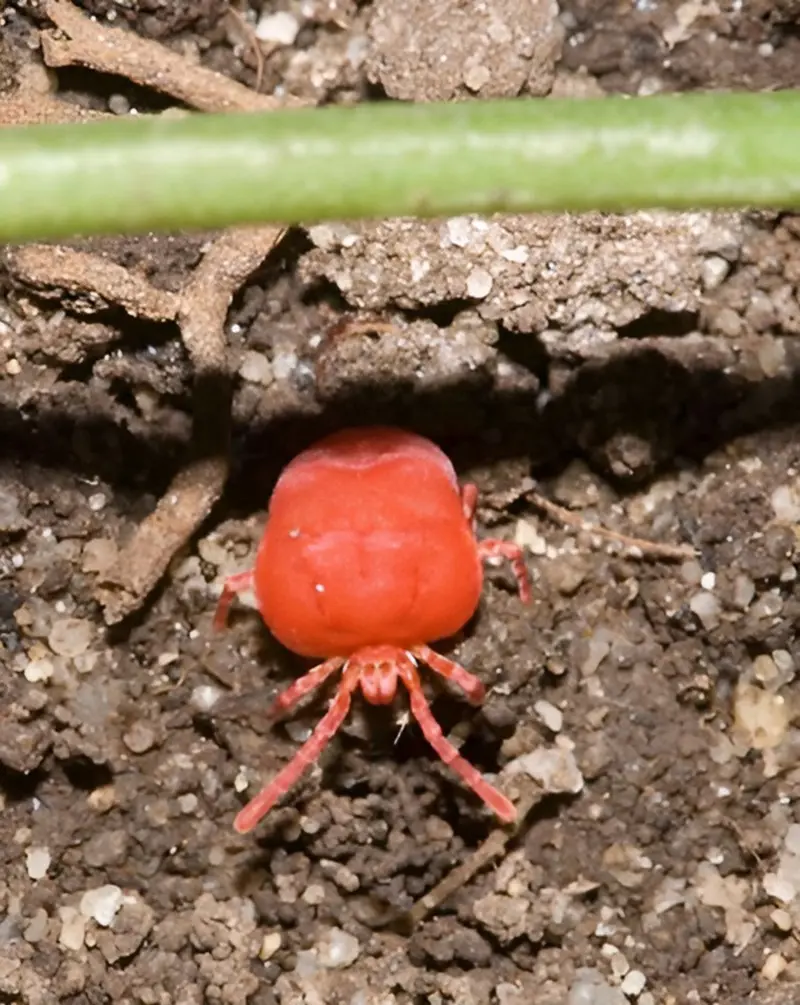
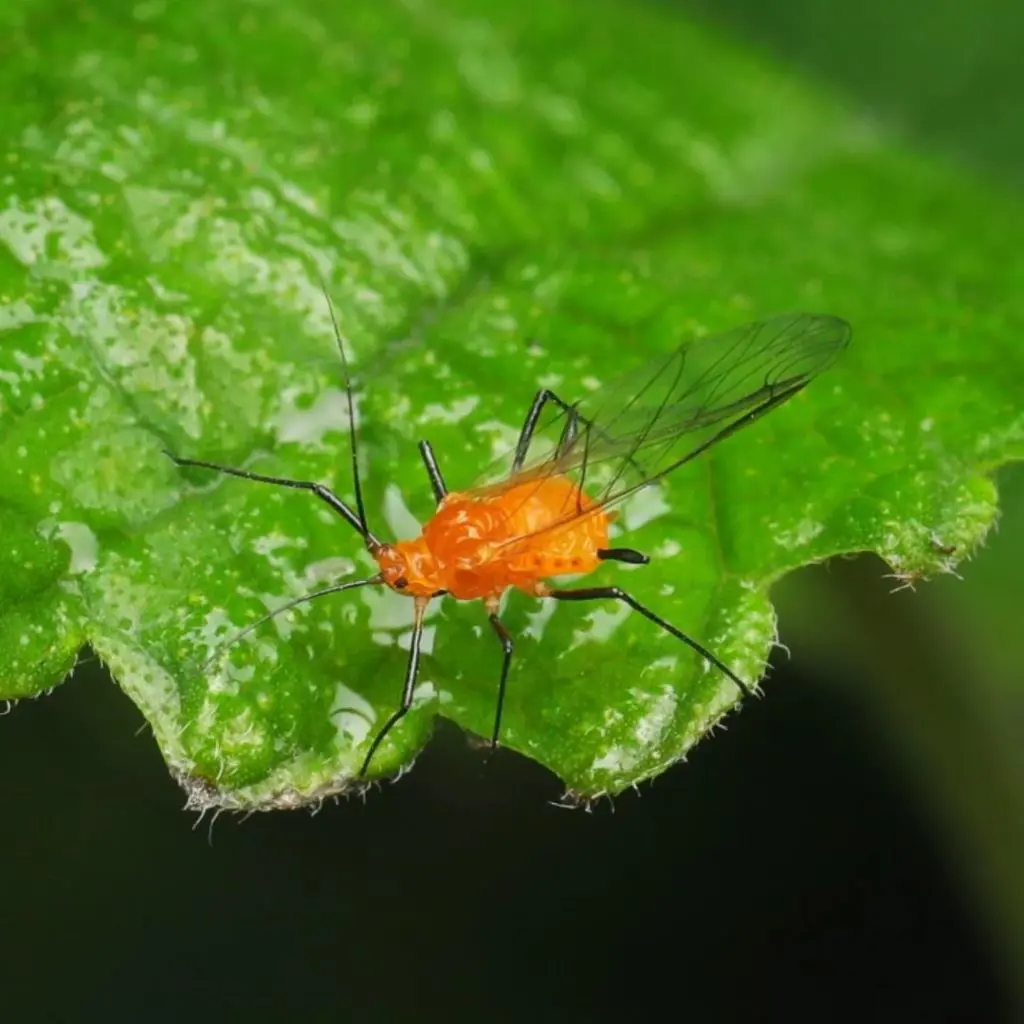
Chiggers possess the distinctive feature of bright red or reddish-orange coloration and yellowish when they are full. Although they are very tiny, the color composition of chiggers makes them easier to spot if they are in a group forming a cluster. But you have to have a concentrated pair of eyes.
3. Size
Chiggers are very small bugs typically measuring no more than 400 μm (1/60 of an inch). With your naked eyes, you might find them appearing as tiny red dots moving across the skin or clothes.
4. Mouthparts
Mouthpart is the crucial aspect of chiggers. The short and small piercing mouthparts which are also known as chelicerae can pierce your skin. But they are not very rigid and strong, that's why chiggers usually bite on your soft folded, or wrinkled skin.
Chiggers use their mouthparts to inject digestive enzymes into the skin of their hosts. This chemical will further break down skin cells for the chiggers to drink. During this process, the host will experience intense itching and irritation encouraging them to scratch very harshly.
5. Legs
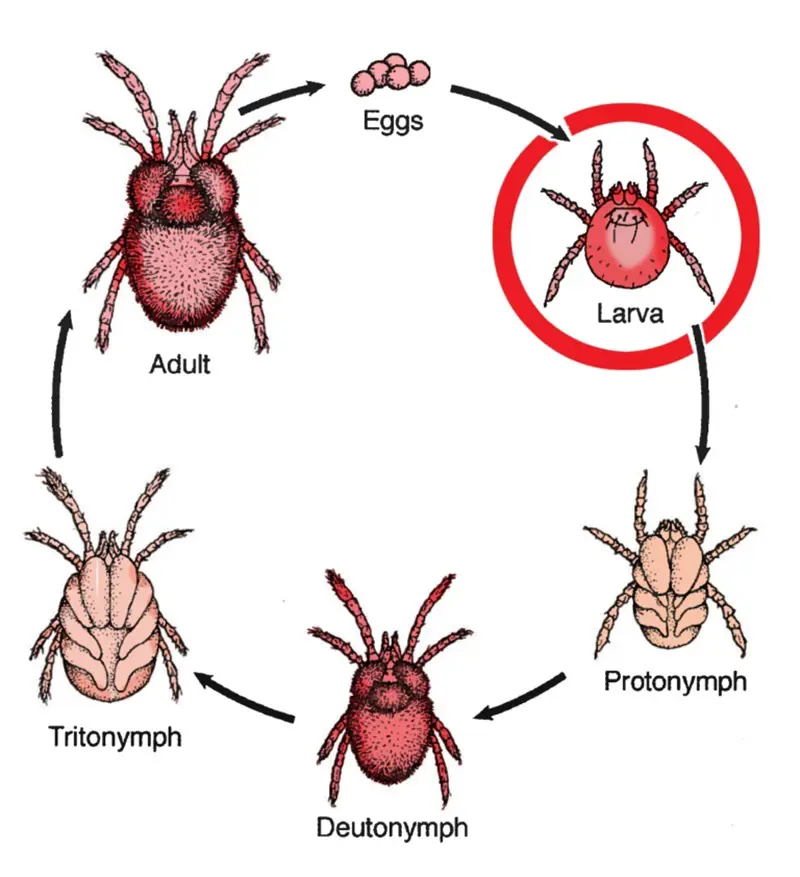
Like other arachnids, chiggers have eight legs. But during the larvae stage, they have only six legs. You should know chiggers bite their hosts during the larval stage and are often found to move pretty quickly. The legs of larvae are quite long compared to their body size.
Female chiggers are usually active in the spring when the ground temperature is above 60 °F. When favorable conditions are met, they lay eggs in the vegetation, and in general, they are found to lay 15 eggs per day.
The eggs of chiggers are round-shaped. After around six days, pre-larvae emerge with six legs. Again after the next six days, the pre-larvae are found to grow into the larval stage.
2. Larva
The larvae of chiggers are about the size of 170-210 μm in diameter with red coloration. Their body is covered with hair and moves quickly taking advantage of their long six legs. The larval stage is the most active stage in terms of their parasitic nature.
They feed on the blood of the animals and humans causing itchiness and red bumps on a rather softer patch of their skin. The larvae usually gather in mass in vegetation such as low bushes and matted vegetation where the potential hosts are easier to access.
3. Nymph
The Nymph stage of chiggers comes after the larvae have fallen off their hosts by feeding on their skin. At this stage, the chiggers are sexually immature though they closely resemble the adult chiggers.
During the nymph stage, three phases are to be covered by the immature chiggers. The protonymph, deutonymph, and tritonymph are three phases. In the final stage, they are likely to develop an additional pair of legs making the total count to eight legs.
4. Adult
Once the chiggers turn into adulthood, they do not feed on the blood of the animals and humans. They are found to feed on small arthropods and their eggs. Adult chiggers also prefer eating plant material. They mostly live in soil digging the earth. You might encounter them digging the soil of your garden or yards or compost bins.
Where do Chiggers live
We are sorry to inform you that there's no such place in our home earth where these red bugs haven't reached. Chiggers are found to live in every country that has existed in our world. They mostly like to live in moist, grassy areas like fields and forests, near lakes and streams, and on your lawn.
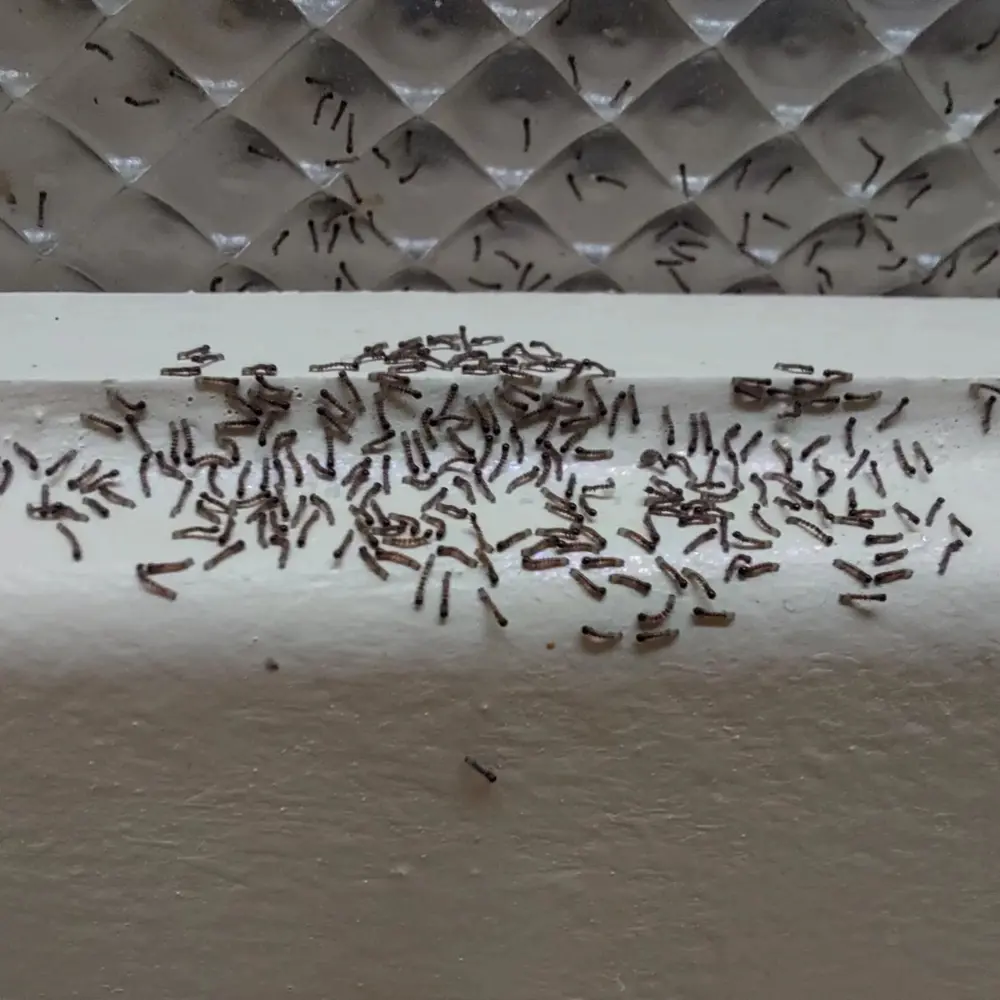
Being more prevalent in the hot and humid regions, chiggers like to stay close to each other with their babies. They usually form a large group on the leaves and grass that are close to the ground so that it will be easy for them to get attached to their potential hosts.
Chiggers are nuisance red bugs that are extremely difficult to locate with your naked eye but once you get bitten by them, you will end up scratching, god knows for several days. Therefore, getting rid of them seems a bit difficult but never impossible.
Your lawn could be an ideal spot for the chiggers to hide out. This is because lawns are usually shady and damp. For this reason, you need to regularly keep an eye on your lawn. It has been suggested to mow your lawn periodically making them as short as possible.
In addition to that, you need to aerate your lawn by creating small holes in the soil. Proper aeration will ensure proper air circulation and water drainage throughout the lawn which will eliminate the compact and tight areas.
2. Eliminate the Shaded Region
Chiggers enjoy the shaded regions. If you've grown bushes, trees, and plants all over your garden and yard, there's a high potential your surrounding is harboring chiggers. You need to make sure chiggers do not get enough shade.
You can prune the tall bushes and trees regularly and allow maximum sunlight to reach the ground. You surely need to grow a variety of plants in your garden as per your preferences but if you want to make your property chigger-free, you must allow maximum sunlight in every place.
3. Make Use of Chigger Repellent Plants
Yes, there are varieties of chigger-repellent plants such as lavender and tea plants. You can choose to plant them in your garden and yard and keep the chiggers away from your place. These plants are found to have a strong smell around the atmosphere which chiggers loathe.
There's another alternative to this. You can make use of the essential oils of these plants as well. You can simply combine drops of essential oil from the repellent plants and spray them around your property. You can choose either of them based on the level of infestation.
4. Natural Predators
Well, chiggers are a living being and every living being are in some sort of food chain. One is always eaten up by another, that's the natural life cycle. If you are fine with predators like ants, centipedes, and lizards roaming around your property, you've nothing to worry about chiggers.
Yes, natural predators will do their natural feeding work keeping the chiggers away from your place. You just have to try maintaining a suitable environment for the natural predators to survive around your place and you can get rid of chiggers without much effort.