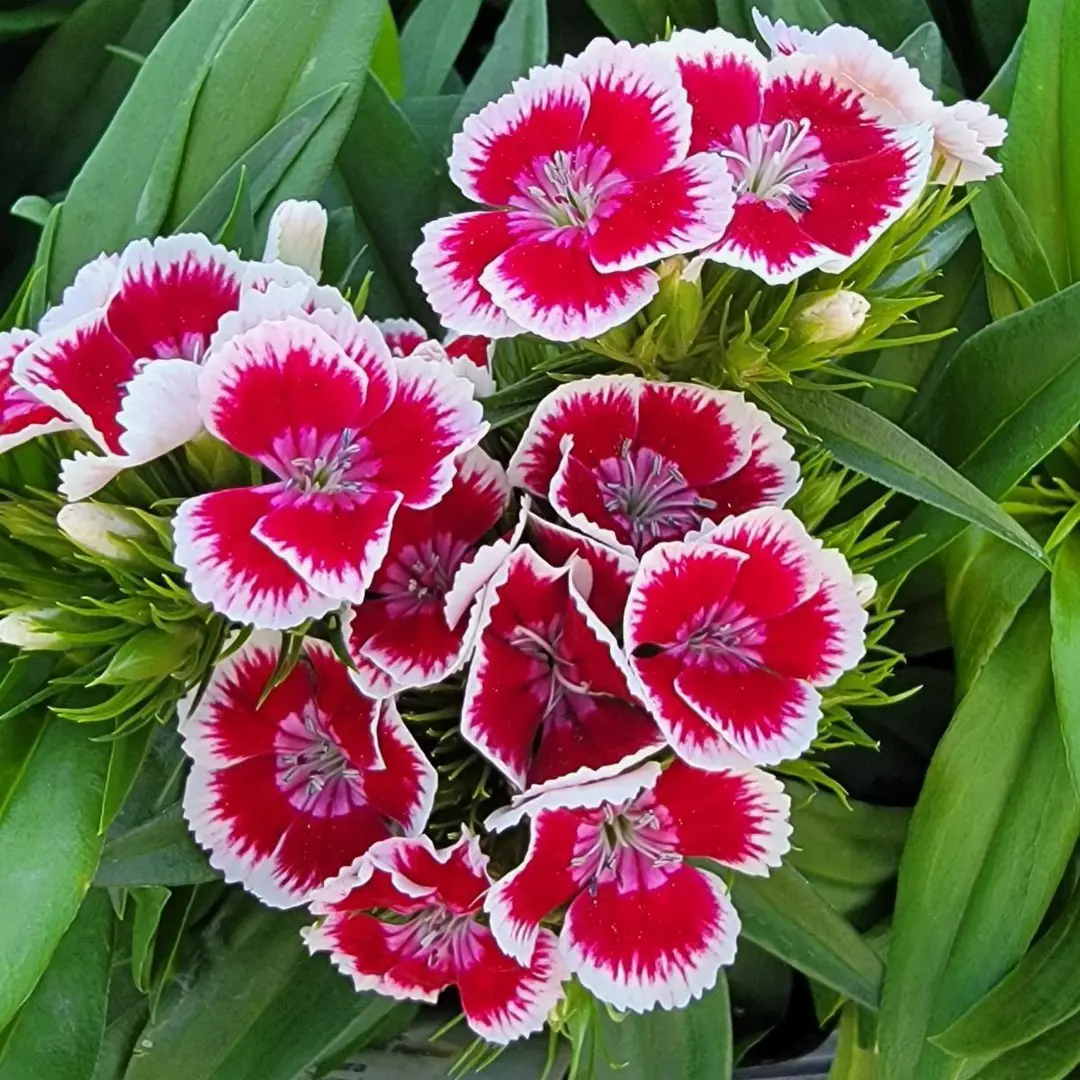
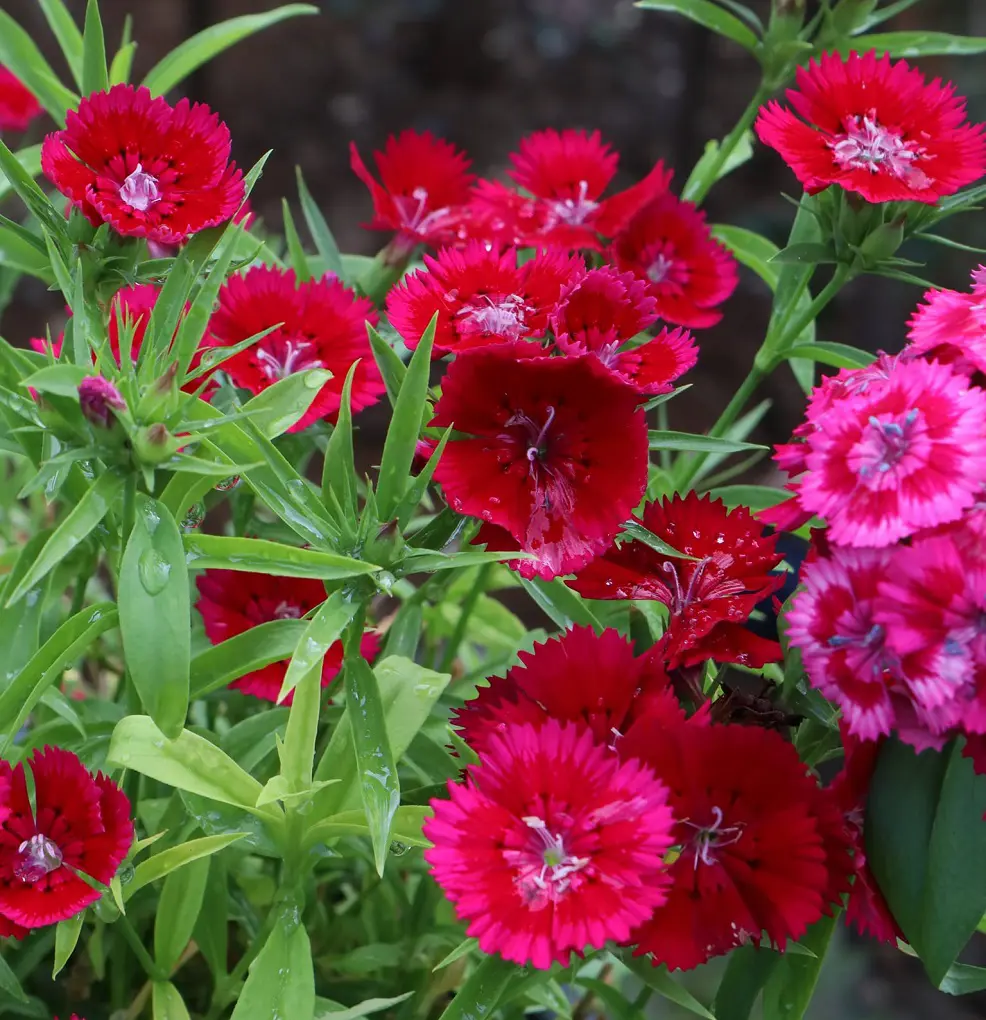
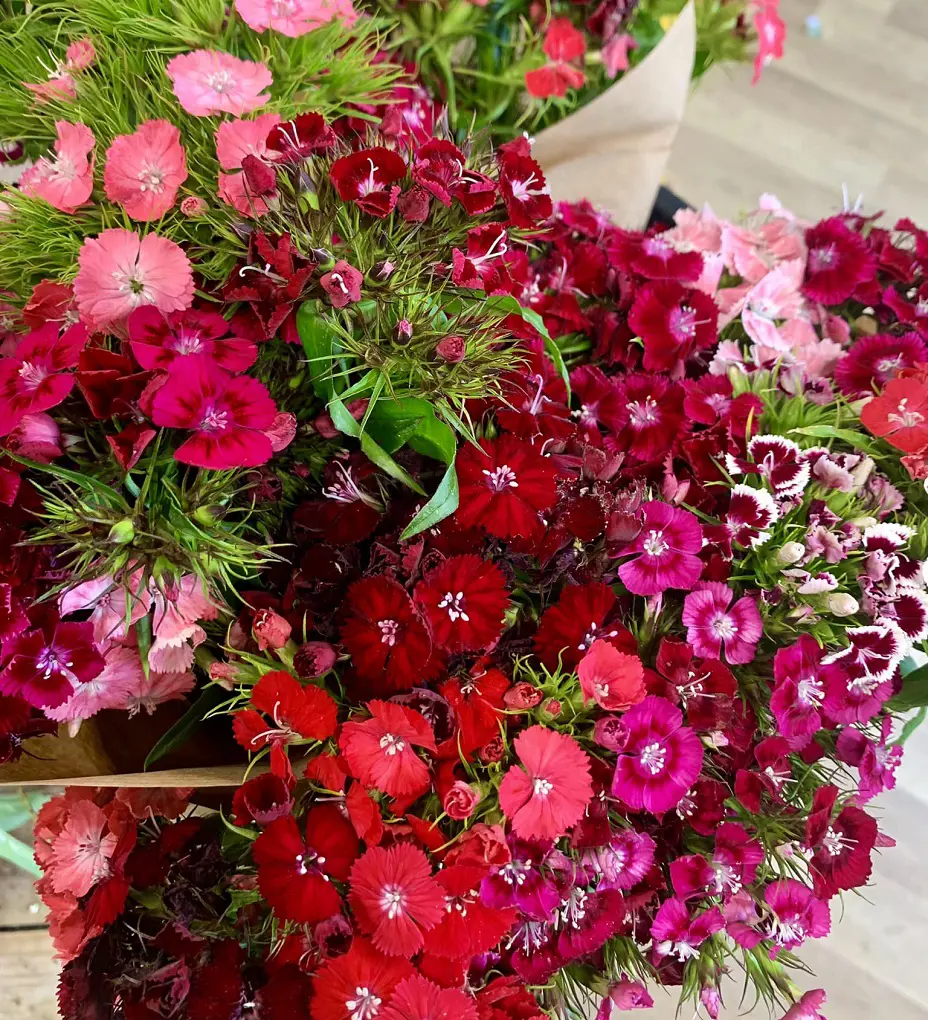
Sweet William is a short-lived perennial that is well-known for its vivid clusters of blossoms and delightful scent. The variety of colors and patterns in this flower make it perfect for cottage gardens and borders, adding a touch of elegance.
Understanding Sweet William's needs from planting conditions to watering and insect control is essential to growing and caring for it. This guide offers crucial advice and insights to assist gardeners in successfully growing these beautiful blooms.
About Sweet William Plant
Native to regions of Asia and southern Europe, Sweet William or Dianthus barbatus is a short-lived blooming plant. Although it is a herbaceous perennial or biennial, because of its comparatively short lifespan, it is most usually planted as an annual bloom.
It usually grows to be around two feet tall and is known for its vivid, clustered blossoms. The plant grows well in containers, perennial beds, and cottage gardens. Its leaves are an average pointy green color.
Overview
Common Names: Sweet William, bunch pink, bearded pink, pinks
Botanical Name: Dianthus barbatus
Family: Caryophyllaceae
Plant Type: Herbaceous perennial
Size: Typically grows 1-2 feet tall and 0.5-1 foot wide.
Sunlight Requirements: Prefers full to partial sun.
Soil Preferences: Thrives in moist, well-drained soil.
Soil pH: Adapts to acidic, neutral, or alkaline conditions.
Bloom Period: Produces vibrant blooms in spring and summer.
Flower Colors: Available in red, pink, and white.
Hardiness: Suitable for USDA zones 3-9.
Native Range: Originates from Europe.
Toxicity: Can be toxic to pets and humans if ingested.
This common blooming plant Sweet William is easily grown from seed. Although it has a biannual life cycle, the blossoming season usually falls in the second year.
Seeding Outdoors
Timing: Directly plant seeds in the garden in late spring or early summer, after all risk of frost has passed.
Soil Preparation: Choose a spot with rich, well-drained soil. Adding old compost or other organic debris to the planting area can improve drainage and supply vital nutrients.
Planting: Make small holes in the prepared soil that are about 4 millimeters deep. Lightly cover the seeds with soil after scattering them thinly along the furrows.
Germination: During the germination stage, which usually takes 7–14 days at ideal temperatures between 18–22°C (64–72°F), maintain constant moisture in the soil.
Thinning: It's important to separate seedlings as soon as they develop their first genuine leaves. This promotes healthy plant growth by avoiding crowding and guaranteeing adequate air circulation. Plants that are mature should be spaced 15–30 centimeters (6–12 inches) apart.
Seeding Indoors
Timing: Six to eight weeks before the last predicted spring frost, start seeding inside.
Containers: Use individual containers or cell packs that are loaded with a premium seed-starting mix.
Planting: Plant seeds 4 millimeters deep, making sure the growing medium stays consistently moist.
Light and Temperature: Make sure there is enough sunlight, preferably 12 hours a day or more. Keep the temperature low, between 15 and 18°C (59 and 64°F), for best germination.
Hardening Off: For one to two weeks, progressively adapt seedlings to outside circumstances after they have sprouted their first true leaves and reached a manageable size. The procedure of hardening off fortifies the seedlings and gets them ready for planting.
Transplanting: Place the hardened seedlings into the prepared garden bed once the risk of frost has passed, making sure to provide a space of 15 to 30 centimeters (6 to 12 inches) between each plant.
Moreover, continuous attention is necessary for the best possible growth of Sweet William throughout the growing season. While regular watering is necessary, it's also critical to let the soil dry out a little bit in between applications to avoid root rot.
Deadheading, or the practice of removing wasted flowers, needs to be done regularly to encourage blooming all season long. During the growing season, light applications of a balanced fertilizer meant for blooming plants are advised to further improve flowering.
Care for Sweet William
Dianthus Sweet William is a low-maintenance flower that flourishes when its basic requirements are satisfied. Planting it in rich, well-drained soil will promote good root development and successful cultivation.
As bedding plants, space the plants 8 inches apart to allow for the lush foliage that grows during the first growing season. The best air circulation and growth are made possible by this spacing. To protect the plants from extreme heat, place them in an area that receives full or filtered sun.
During the hottest portions of the day, provide moderate shade. Watering regularly is necessary, but it's important to avoid overwatering because Sweet William likes a moderate amount of moisture without being soggy.
Light
Dianthus Barbatus plant is more at ease in full sun than in any shade, unless you live in the South, where it becomes very hot. Although they can withstand some shade, too much shade causes the plants to become lanky and floppy.
Soil
Sweet William is tolerant to a wide variety of soil types, except for heavy, damp ones. It is best to have a loamy, fertile, well-drained ground. Although they can also thrive in a variety of pH conditions, plants often flourish in neutral to slightly alkaline soils. Before planting, some producers treat the soil with lime.
Water
Throughout the growing season, give them regular irrigation by being careful not to overwater. For this species, wet environments are conducive to fungal infections. The best is a somewhat wet but not saturated substrate.
Humidity and Temperature
Sweet William Flowers are relatively cold-hardy blooming plants. Light frosts won't harm it, but prolonged freezing will cause the plant to wither. High humidity does not suit this species well, and temperatures above 85°F may cause dormancy.
Fertilizer
During their growing season, Sweet William plants should be fed with an all-purpose fertilizer every six to eight weeks. You can refer to the product label for directions on how much to use.
Although stem cuttings can be used to produce Sweet William, this is not the most popular method because of the short lifespan of the plant. Buying easily accessible, cold-treated Sweet William plants in the spring and growing them as annuals turns out to be a more sensible strategy for many gardeners.
On the other hand, if cutting propagation is of interest to you, the procedure entails harvesting parts of nonflowering stems in late summer or early autumn. Take these cuttings just below a leaf joint; they should be around 3–4 inches long.
Remove the bottom leaves, then plant the cut ends in a well-draining potting mix after dipping them in rooting hormone. Keep the moisture level constant and supply indirect lighting.
Young plants can be overwintered indoors with the right care before being transplanted outdoors the following spring. Rooting usually takes place within a few weeks.
Common Pests and Plant Diseases
Many Dianthus barbatus (Sweet William) cultivars have improved their disease resistance, yet, some typical pest and disease issues still exist. Potential invaders of insects are spider mites and aphids.
Often, a strong water spray will remove these bugs. Neem oil or insecticidal soap are good ways to handle severe infestations. Likewise, slugs and snails are examples of mollusks that can cause problems, especially in areas with shade. Removing and handpicking is an easy control method. Learn about and use organic, garden-safe techniques to ward off these gastropods as an alternative.
Also, dangerous are fungi-related diseases, of which rust and crown rot are the most prevalent. Bad drainage exacerbates these problems. Make sure the Sweet William crown is at or just above the soil's surface before planting it, and make sure the soil has enough drainage. Drainage can be greatly enhanced by adding coarse materials, such as gravel or sand, to the planting area. Lastly, adequate air movement between plants discourages the growth of fungi even more.
To ensure healthy growth, continue a regimen of light fertilization every 6–8 weeks using a balanced formula throughout the growing season. You can practice deadheading and prolong the flowering time by routinely removing wasted blooms. This can promote a second, softer bloom later in the summer. You can harvest seeds by letting a few blossom heads dry and ripen. When the pods start to split apart and rattle when shaken, harvest the seeds in the late summer.
Alternatively, leave some bloom heads whole to encourage spontaneous reseeding. In late summer, when the pods open, prepare the soil around them and shake the stems to release the seeds. For shallow covering, gently scrape them into the top layer of soil and firm it down. After the foliage begins to fade away in late October, arrange the garden beds and remove any leftover plant material.
Reduce plant height to 4-6 inches in areas with moderate winters and somewhat persistent leaves. On the other hand, if you anticipate a hard winter, cover the crown with a 4-inch layer of mulch made of crushed leaves or straw.
Common Problems with Sweet William
A few difficulties could arise for Sweet William during its growth cycle. Here are some common problems:
Fusarium Wilt
This fungal disease causes wilting, curling of the leaves, and a general deterioration of the health of the plant. Because the causal agent is found in the soil, it is difficult to eradicate once it has established itself. So, it is very crucial to prevent.
Take care when handling plants to prevent root injury, which makes them more susceptible to infection. Make sure the new soil is disease-free and in good condition before transplanting.
Leaf Spot
Another fungal disease that eventually kills plants, leaf spot is indicated by yellow or brown patches on leaves. Fortunately, protection can be provided by fungal applications. Avoid watering from above to further prevent infection because this releases airborne spores.
Discolored Stems
Overwatering is indicated by a yellowing stem. Overwatering over an extended period of time can cause mildew and root rot, which can be irreparable. Lessen the frequency of watering immediately and evaluate soil drainage.
Use a loose, well-draining potting mix in place of the soil if it has poor drainage, and continue watering the plant regularly after it has recovered.