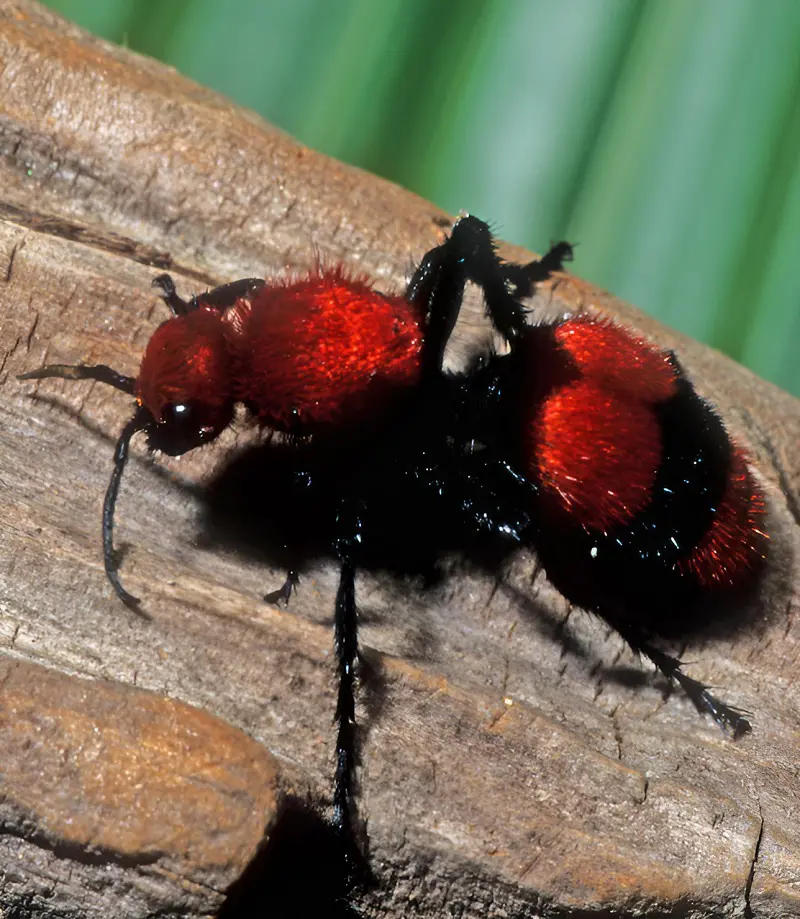
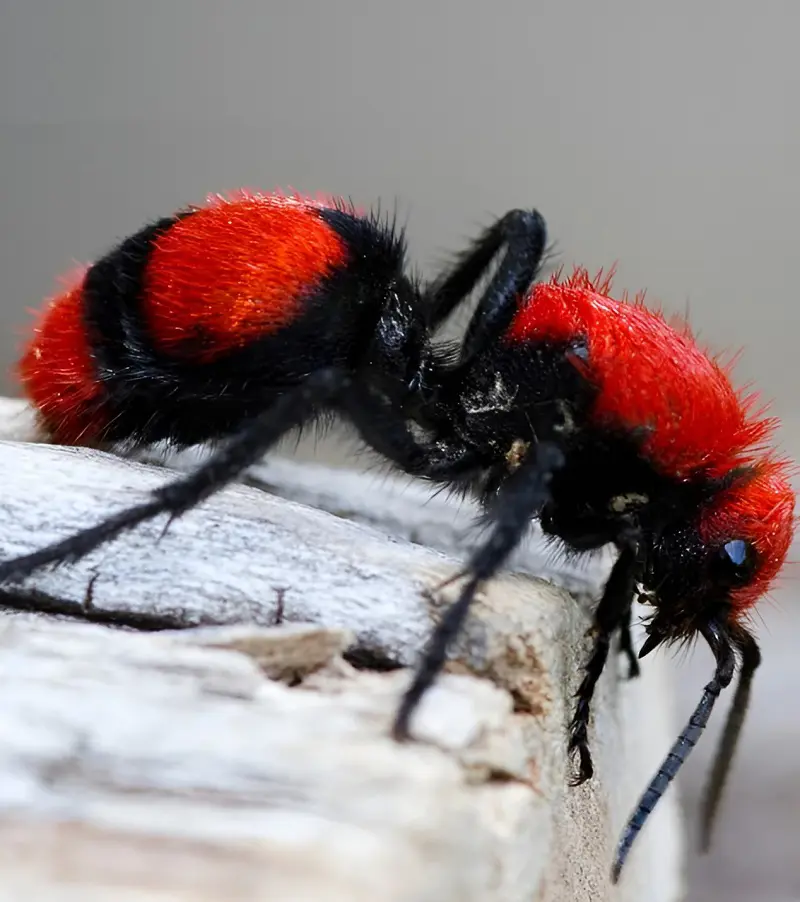
If you see big black and red ants on your turf, they are the red cow killer ant also known as red velvet ants. The velvet in their name comes from their females who are wingless and bright fuzzy red, and despite being called an ant, they are actually a wasp.
They are nicknamed red velvet cow killer ant not because they kill cows but because of the painful stings they can deliver. Continue reading to know how to stay safe from this huge red ant.
Where Are Red Velvet Ants Found?
Velvet ant wasps are found all over the world, particularly where warmer climate presence can be felt. These red and black velvet ant are most commonly spotted in the southwestern United States such as the states of Texas, Arizona, and California where they prefer the arid deserts, grasslands, and scrublands.
In Central America and South America, they inhabit tropical rainforests, savannas, and mountainous regions with a good capability for adapting to unusual habitats. Furthermore, they can also be found in warmer regions of Africa, Asia, and Australia while being completely absent from zones with cold winters.
Common Places To Find Them
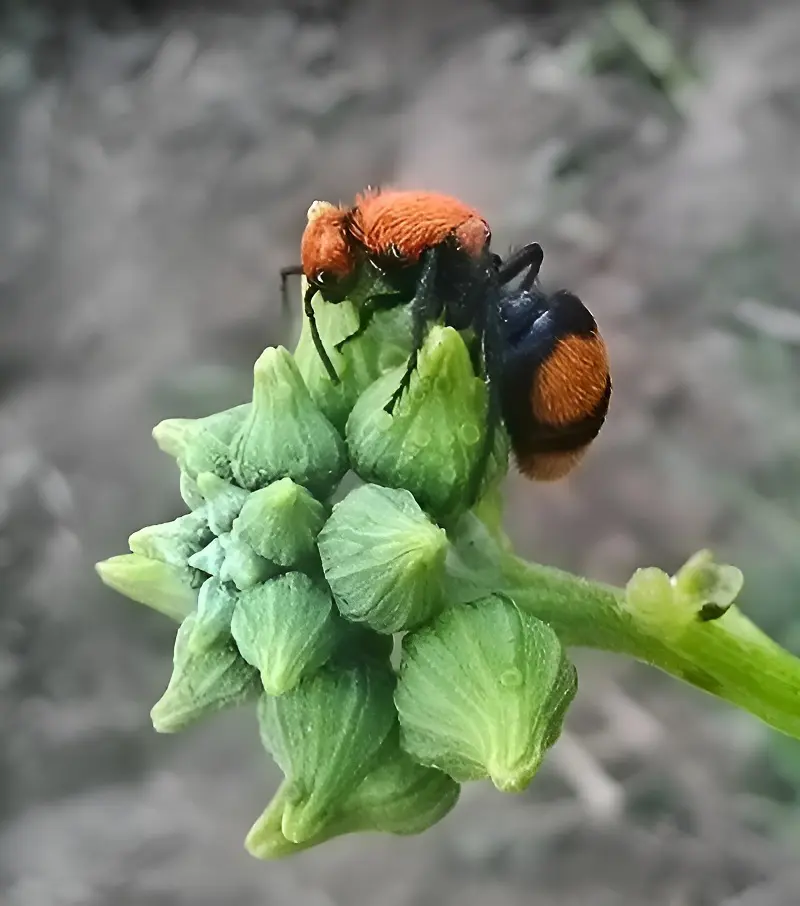
Flowers: Cow killer ants are generally binaural and they can be found drinking nectars from flowers. Males have an easier time finding nectars as they are winged.
Fields: Other areas that also fit the bill of being also warm, dry, and sandy include fields, pastures, meadows, and nearby forest trails.
Forests: Red black fuzzy ant are sometimes found in forests, particularly inside decaying logs and stumps either to take shade for resting or due to their prey host insects.
Bee and Wasp Nests: Female cow killers lay eggs on host hives of ground-nesting bees and wasps such as cicada killer wasps and horse guard wasps as their larvae co-occur, parasitize and feed on these insects from inside their hives.
What Do Red Velvet Ants Look Like?
Despite being an entirely different species from ants, these misunderstood wasps can be confused with regular ants but there are still some notable and significant differences for us to distinguish these "cow killer insects" from other ant and wasp species.
Appearance
One of the most striking aspects of a velvet ant’s appearance is its hard and durable black exoskeleton, their exoskeleton is no joke even when compared to the likes of regular ants and provides them with a high level of protection against predators so don't even think about trying to stamp one because it won't work.
In fact, insect-collecting enthusiasts can't stick a pin through their exoskeleton. It’s also worth noting that they have bright colors as a result of aposematism and serve to warn predators about their painful sting.
Different Colors
Depending on the species of velvet ants, their dense pile of hair create a vibrant fuzzy appearance is typically bright red on the thorax and abdomen but they can also be in shades of orange, yellow, or white.
Females
Females are wingless and spend most of their time crawling on the ground. The painful sting that the cow killers are known for belongs to the females. They can range from 0.75 to 2 inches which makes them pretty large for an "ant".
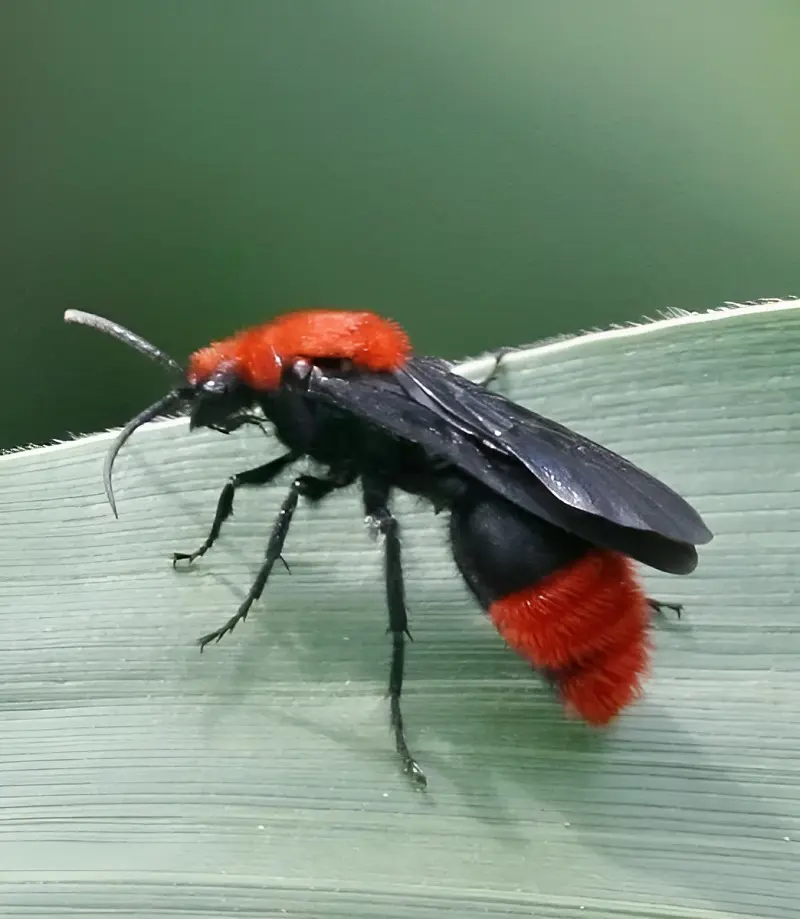
Males are winged hence, they won't be mistaken for ants instead of the wasps they are. If you see a male velvet, the good news is they lack stingers and won't hurt you in any way.
Since the males are capable of covering more distance, we assume the burden of finding a mate falls upon the male. The males are usually smaller when compared to the females, being 0.75 to 1 inch long, and have a more slender body.
Wasp Characteristics
Both the males and females have a pair of long curved antennae and a constricted waist, the latter is especially a major characteristic feature of wasps.
Red velvet ant larvae are external parasites of ground-dwelling larvae or pupating bees, bumblebees, and wasps. The most notable and common nests targeted by red velvets are the nests of ground-dwelling cicada killer wasps and horse guard wasps.
Once the red velvets reach adulthood, they exclusively feed on the nectar of plants and occasionally drinking water, essential for all insect life. They mimic the behavior of wasps so they like wasps food.
Red Velvet Ant Stinger
Not only do female red velvet ants sting, but their stings are potent which has earned them the nickname of "cow killer ant" because their stings are so painful that they could kill a cow.
While the stings are painful and rated as the fourth most painful sting in the world, their venom is not toxic to humans. While they do not sting unless provoked, there are a few signs that you can observe to understand that the cow killer feels threatened.
Signs That You Should Back Away:
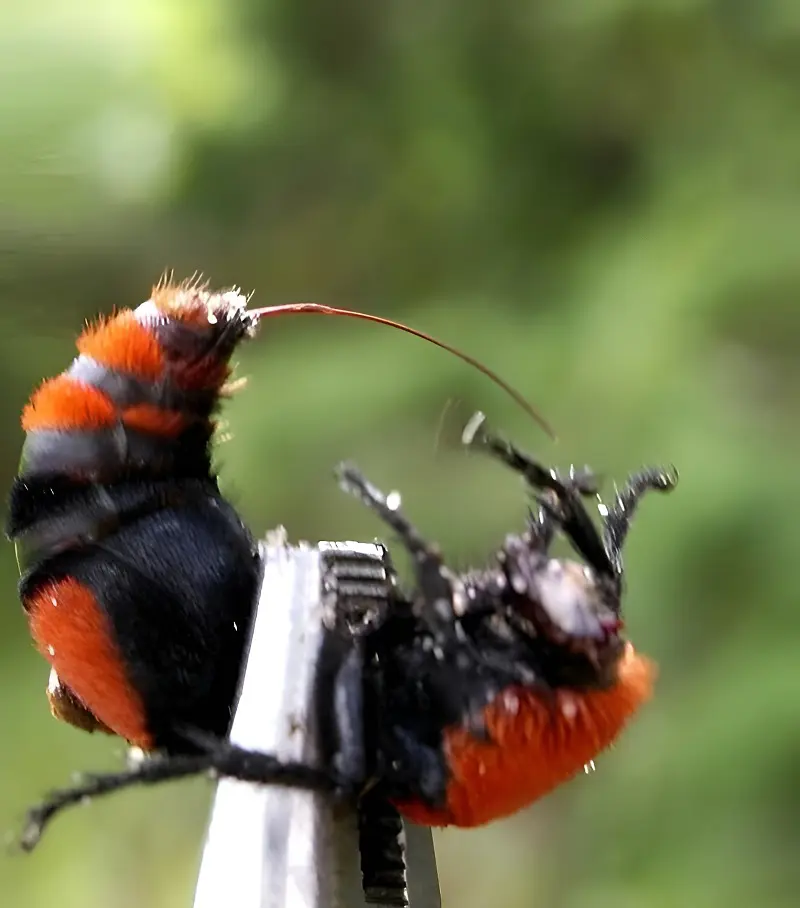
While they rely on aposematism, i.e. their bright colors as a warning of their powerful sting to other animal life, if that fails to deter a perceived threat, they will make chirping or a squeaking noise further warn their predator of the dangers involved through a process known as stridulation.
When stridulating, they rub their abdominal segments together in a rapid fashion creating noise, to warn a predator that has gotten too close of their presence and get them to back away.
Red velvet ant stingers are one of the longest stingers in the insect world relative to their body size. They are generally half the length of their body so with the female cow killer being 2 inches long, this means means they have a stinger that is as long as 1 inch.
Symptoms of Velvet Ant Bite:
Most red velvet ant stings result in a limited local reaction with massive amounts of localized pain, redness, and swelling. The infamous sting contributes to the excruciating pain associated with velvet ants, making them known as the 4th most painful sting in the world.
Their venom isn't toxic to humans unless you have hyper-allergy.
What To Do If Bitten?
Once stung, immediately check out the sting site and look for a small black dot at the sting site. Due to the length of the stinger and being hollow, they can get broken off and lodged in your body due to gloves or cloth.
If there’s one there, remove it carefully by swiping a flat hard object like a credit card over the area. It takes 2-3 minutes for the stinger to release all its venom, so removing it quickly can reduce the severity of the symptoms. Do not use tweezers or pinch with fingers which can release more venom.
Once the stinger is removed, you can consider treating the stung area to reduce the severity of pain and swelling. First, clean the area with soap and water to neutralize the venom then apply cold compress to reduce the swelling.
Red velvet ants are solitary wanderers thus you won't usually find them in numbers nor are they aggressive to humans so you should be fine if you simply leave them alone. Since the red velvet ants parasitize and feed on ground-dwelling nest hosts, having velvet ants nearby could also be a sign of a wasp, bee, or bumblebee infestation.
Thus it's possible to prevent them by also preventing ground-nesting insects in your home.
Red Velvet Ant Treatment
Due to their painful sting, if they happen to wander accidentally into your homes, we recommend that you contact a professional pest management service to remove them safely.
Despite there being only one velvet ant, they cannot be crushed easily due to their extremely tough exoskeleton which only leaves out the chemical method. Unless you have experience working with insecticides, we do not recommend you to handle a red velvet ant wasp yourself.
The hive terrorizing velvet ants are a solitary species which means their behavior does not consist of them forming nests or residing together with male or females in any fashion.
These giant black and red ant have a noticeable gender dimorphism where the females are wingless while the males are not. This results in pretty pronounced behavioral differences between the male and female velvet ants. Here is a summary of their behavior.
Diurnalism: Red velvet ants are diurnal which means they will rest during the night and be active during the day. They generally search for mates while seeking shade to cool off on warmer days. The adults feed on nectar from plants, while the larval stage of the red velvet ants parasitizes the larval and pupal stages of their host species.
Egg Laying: The cow killers being active during the day also allows them to search for potential nests of their host species to lay their eggs while the majority of the populations of these hosts are away allowing them free reign.
Females: Female cow killer ants dig into the nesting chambers of ground-nesting bees and wasps. Afterward, they lay their eggs on the larvae inside. Once the velvet ant larvae are born, they eat their hosts and then spin their cocoon within the pupal case of their hosts. While the larvae eat other insects, adult females only feed on flower nectars.
Males: Similar to the females, the males also feed on flower nectars. In fact, males are generally only found lazing near the flowers as they do not need to search for a hive.
Mating: Since the red velvets are, the only time they come into contact with each other is to mate.
Aggressiveness: These big red and black ants have no reason to be aggressive and thus will not seek out other species to attack including humans and will instead scurry away.
Defense Tactics: However, despite their lack of aggressiveness, they can still deploy a variety of tactics to avoid predation if they feel threatened or are attacked. They will rub together body parts to make a chirping or squeaking noise to try and scare the attacker.
Habitat: The males are free roaming while the females are terricolous before mating and fossorial after mating and laying eggs.
Overwintering: Larvae will overwinter as pupa while some females can overwinter as adults. Overwintering patterns for adult males are unclear due to their shorter lifespan.
Life Cycle Of Red Velvet Ant
When it comes to lifecycle, the lifecycle of red velvets is pretty unique, especially considering their huge gender dimorphism when compared to other wasps or even ants. They are solitary and do not create nests nor live in groups unlike most insects of wasp, bee, and ant families are known to do.
The lifecycle of a velvet ant begins with the female velvet ant laying her eggs. Once the female cow killer finds the nests of the other insects, particularly ground-nesting types in particular such as some species of bees or wasps. It takes around 3 days for the egg to hatch.
2. Larva
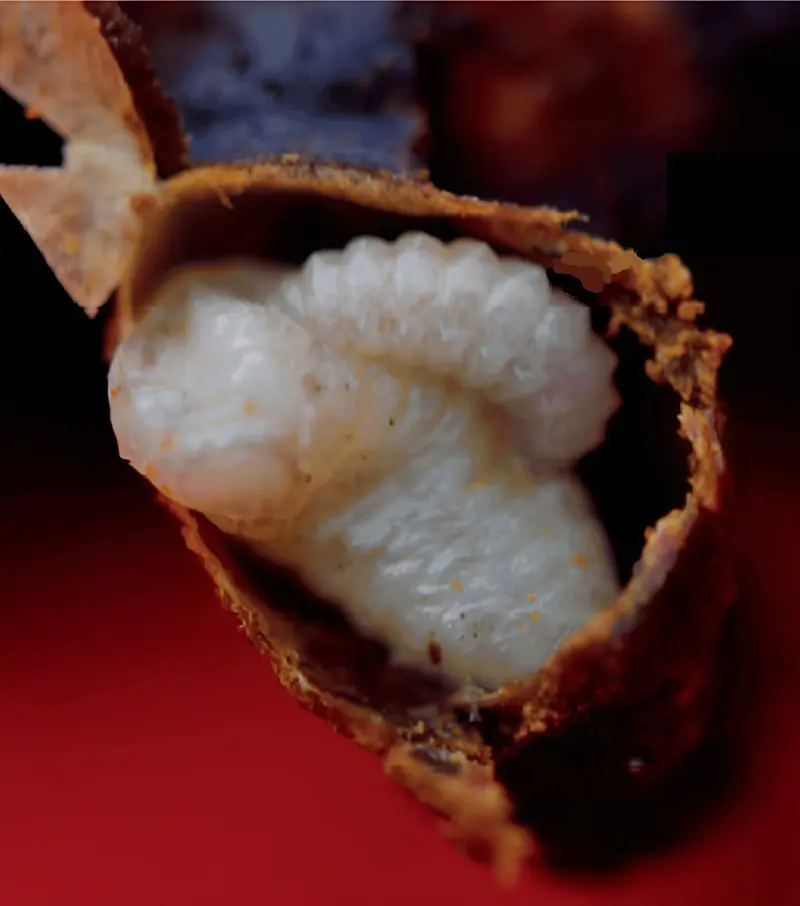
Once the velvet larvae hatch from the egg, they consume the pupa of the host. They feed on other larvae until they are full and ready to pupate and spins their cocoon within the host's pupae shell. This is a key part of the velvet ant’s survival strategy and this parasitic strategy that takes advantage of forcing a different species to be a host is known as brood parasitism which is a well-known strategy in nature.
3. Pupa
After the larval stage, larvae undergo a pupal stage in the host nest which allows them to metamorphose into their adult form and involves making significant changes in their body structure. This process takes about 20 days in total.
During this stage, they are extremely vulnerable as well as inactive. Without the disguise of a host's pupa, they would not survive this process in a nest of foreign species.
4. Adult
The adult velvet ants emerge once the metamorphosis is complete. The males are winged and will fly in search of females to mate with. The adults mate immediately after entering adulthood. The males die after mating so it is more common to see females than the males.
After mating, the female restarts the cycle anew by seeking out a new ground-nesting host to lay her eggs. She digs through the nesting chambers and then lays the eggs inside the cocoons of the host insects.