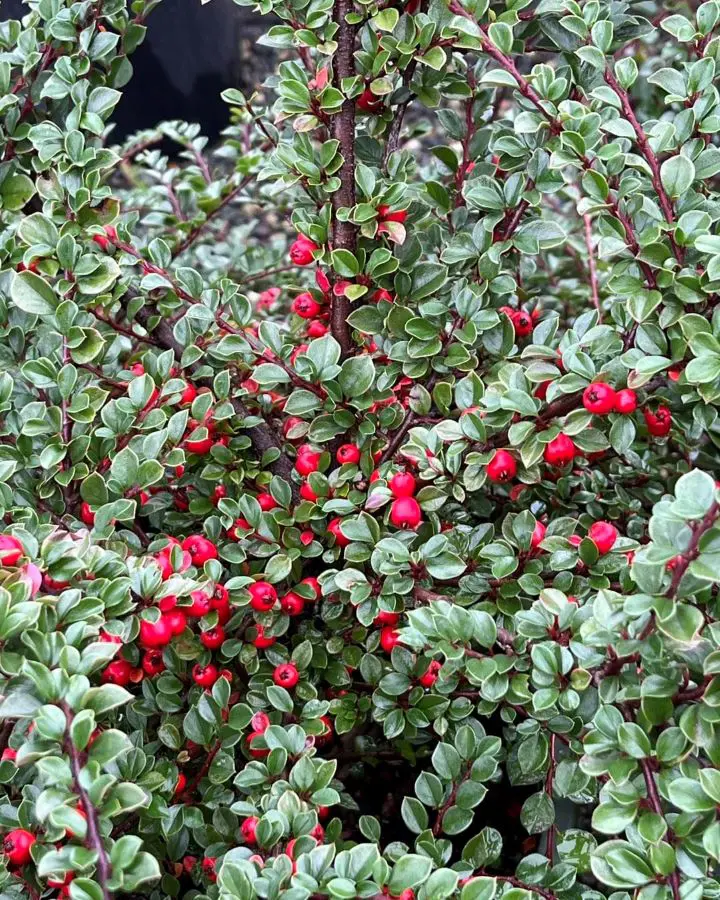
Planting, growing, and caring for cotoneaster is a rewarding effort for any garden enthusiast. This hardy shrub, known for its vibrant berries and lush foliage, adds year-round beauty to gardens.
Starting with planting, this stunning plant thrives in well-drained soil and a sunny spot, which makes it an easy addition to various garden landscapes. Similarly, this article is committed to guiding you through the procedure of growing and caring for this charming shrub.
What Is A Cotoneaster?
Cotoneaster is a diverse genus of shrubs and small trees belonging to the Rosaceae family. They are native to parts of Eastern Asia and have been widely cultivated for their attractive growth habit, making them a popular choice for landscaping and gardening.
In this comprehensive guide, we will explore the characteristics, cultivation, and uses of cotoneaster plants, as well as some of the most popular varieties and their unique features.
Description and Characteristics
Cotoneasters are known for their dimorphic shoots, which produce structural branch growth and flowers. The leaves are arranged alternately and are typically ovate to lanceolate in shape, with both evergreen and deciduous species occurring.
The flowers are produced in late spring to early summer and are often white, pink, or red, with five petals and up to five styles. The fruit is a small pome that can be pink, red, orange, or black, containing one to three seeds.
Popular Varieties
Some of the most popular cotoneaster varieties include:
Cotoneaster Horizontalis: A low-growing, prostrate shrub with dark-green leaves that turn flame red in autumn. It produces white spring flowers and sealing-wax red berries in autumn.
Cotoneaster salicifolius: A dense, vigorous shrub with arching stems and willow-like, evergreen leaves. It produces white flowers that develop into yellow berries, which turn salmon-pink with age.
Cotoneaster Cornubia: A large-growing shrub with broad, spreading branches and dark-green leaves. It produces loose clusters of white flowers in spring and large bunches of deep scarlet berries in autumn.
Cotoneaster Coral Beauty: A compact, low-growing shrub with bright red berries and white flowers. It is often used as a ground cover or in rock gardens.
After selecting which varieties to plant, it’s time to add this stunning plant to your garden.
1. Choosing the Right Spot: Cotoneaster thrives in well-drained soil and can tolerate a range of soil types, from sandy to clay. They prefer a spot that receives full sun to partial shade. Ensure the area is free from any obstructions and has enough space for the plant to grow.
2. Prepare the Soil: Dig a hole that is twice as wide and as deep as the root ball of the plant. Likewise, add organic matter like compost or manure to improve soil fertility and drainage.
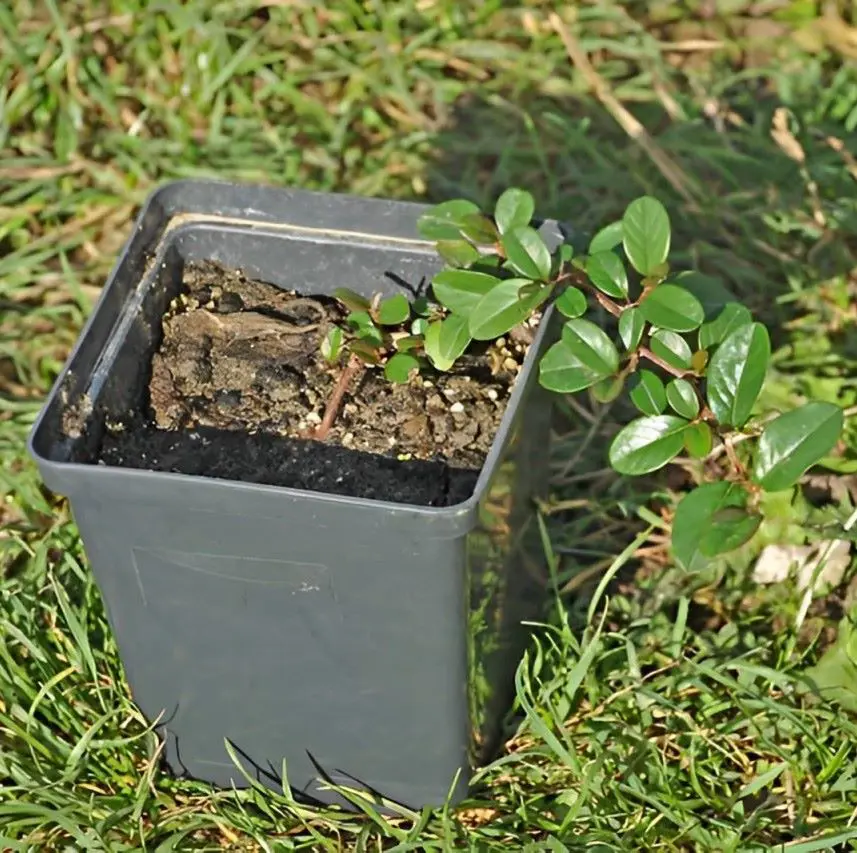
3. Remove the Plant from the Pot: Gently remove the plant from its pot, taking care not to damage the roots or disturb the soil around them.
4. Inspect the Roots: Loosen the roots if they are compacted to ensure they can spread out freely.
5. Plant the Cotoneaster: Place the plant in the hole, ensuring the root ball is at the same depth as it was in the pot. Similarly, firm the soil around the roots with your feet to secure the plant in place.
6. Water Well: Water the plant thoroughly to settle the soil and provide enough moisture for establishment.
7. Mulch around the Plant: Apply a layer of mulch around the plant to retain moisture, suppress weeds, and regulate soil temperature.
Timing for Planting
The best time to plant cotoneaster depends on your climate and weather conditions:
Autumn: Plant in autumn when the soil is still warm from summer but moist enough for the roots to establish before winter sets in.
Spring: In areas with harsh winters, plant in early spring after the last frost, which allows the plant to establish before the growth spurt in spring.
Additional Tips
Avoid planting in extreme weather: Avoid planting during the height of summer or winter to prevent stress on the plants due to extreme temperatures and potential water scarcity.
Choose the right variety: Select a cotoneaster variety that suits your garden needs, considering factors such as growth rate, size, and flowering habits.
Growing Cotoneaster
Cotoneasters are relatively easy to grow and can flourish in various soil types, for instance, clay, chalk, and sand. For more growing leads have a look:
Soil and Fertilizing
It requires rich soil with plenty of organic matter, which should be moist yet free-draining. Cotoneasters can also cope with more free-draining conditions as long as their nutrient needs are met. Most soil types will be suitable, and pH levels are not especially important.
It is a good idea to mulch around your shrub when planting and to replenish the mulch each spring. Additional fertilization is usually not necessary, as these plants are relatively self-sufficient.
Watering
Cotoneasters should be watered well during their first year to help them establish a healthy root system. After this, they will typically not require additional watering, as natural rainfall should be sufficient.
However, if the weather is particularly dry, it is a good idea to provide some supplemental watering.
Light, Temperature, and Exposure
This plant can cope with various conditions when it comes to light levels, from full sun through to partial shade, just as long as the shade is not too deep. They are also relatively tolerant of temperature fluctuations and can blossom in a variety of climates.
Seasonal Care For Cotoneaster
Cotoneasters require different care and watering needs throughout the seasons. Here's a summary of the seasonal care for cotoneaster plants:
In Spring, cotoneasters should be pruned and shaped if needed, just before new growth begins. It helps maintain a dense, compact habit and encourages more flowers and berries. Newly planted cotoneasters should be moisturized regularly to help establish their root systems.
During Summer, it needs more frequent watering, especially young plants and those growing in full sun or sandy soils. The soil should kept consistently moist but not soggy. Likewise, mulching around the base helps retain soil moisture.
In the Fall, you can reduce watering as the plant goes dormant. Deciduous cotoneasters will develop beautiful autumn foliage colors at this time. Any needed pruning to shape the plant can be done after flowering.
In Winter, they require very little wetness, as their growth slows. Further, evergreen varieties may need occasional watering if the soil becomes very dry, but generally, they are fairly drought-tolerant during the dormant season.
Across all seasons, it is vital to ensure cotoneasters have well-drained soil to prevent root rot. Moreover, monitoring moisture and adjusting watering accordingly is key to keeping these hardy shrubs healthy and thriving.
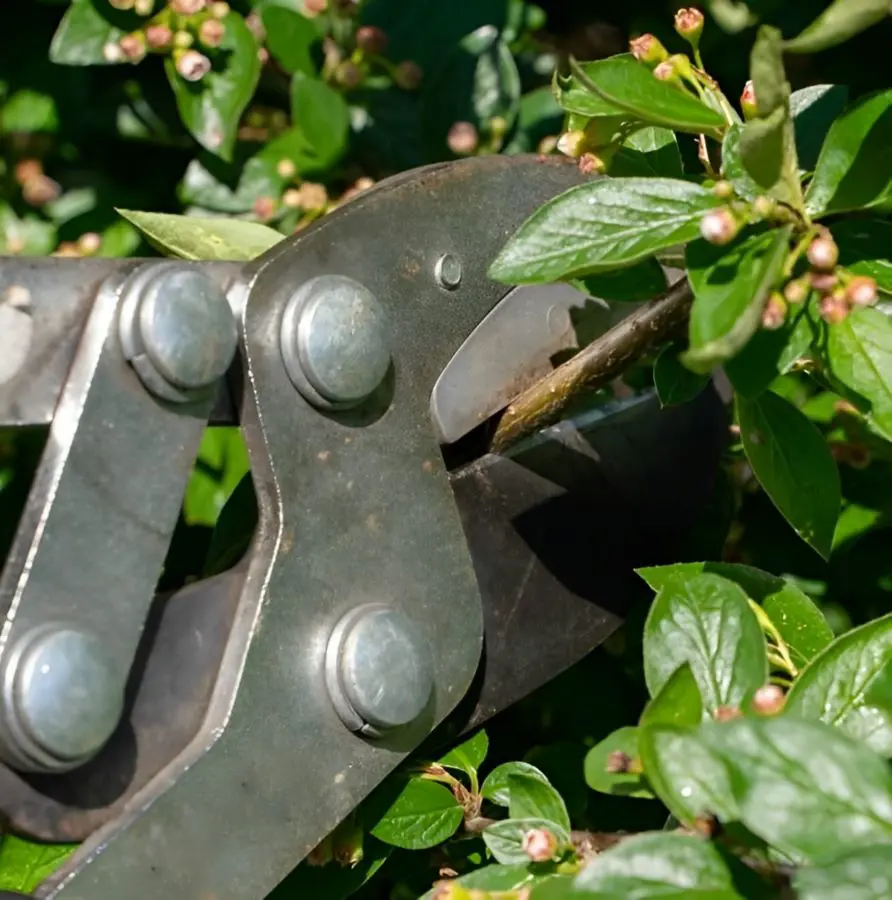
Pruning is an essential part of maintaining the health and appearance of cotoneaster shrubs. Here is a complete guide on how to prune cotoneaster, including tips on when to prune, how to prune, and what to avoid.
When to Prune?
Cotoneaster shrubs should be pruned in the early spring before they leaf out. This allows the shrub to grow new leaves and stems without being hindered by the pruning process. For groundcover types, pruning should be done in the fall to maintain their shape and encourage new growth.
How to Prune?
Renewal Pruning: Cut out about 1/4 of the tallest and largest branches (canes), removing them 2 to 4” above the ground. Repeat this process each year to maintain smaller plants and a shorter shrub.
Rejuvenation Pruning: Cut all branches down to 2 to 4” above the soil line. This method is useful for cleaning up overgrown shrubs or hedges.
Shearing: Shear the shrubs if they are planted as a continuous hedge. Remember to shear the shrubs widest at the bottom and tapering towards the top to maximize sunlight exposure.
What to Avoid When Pruning?
Avoid pruning in winter: Pruning in the winter can cause damage to the shrub and make it more susceptible to disease.
Avoid pruning too much: Pruning too much can cause the shrub to become stressed and vulnerable to disease.
Avoid pruning dead or diseased branches: Pruning dead or diseased branches can spread disease to healthy branches.
Avoid pruning in the summer: If you prune in summer, it can cause the shrub to lose its foliage and become stressed.
Additional Tips
Prune for shape: Prune the shrub to maintain its natural shape and promote healthy growth.
Prune for size: You can prune the shrub to maintain its desired size and shape.
Prune for health: Pruning helps to remove dead or diseased branches and promote healthy growth.
Cotoneaster can be propagated using either seeds or cuttings, and we should explore both methods in detail to understand their proper techniques and benefits:
Seed Propagation
Cotoneasters can be propagated through seeds, although this method can be more time-consuming and requires specific conditions. Here's a step-by-step guide on how to propagate cotoneasters from seeds:
1. Preparing the Seeds
Collect Seeds: Collect ripe fruit from your cotoneaster plant in autumn. The seeds are within the fruit, which can be a berry or a pome depending on the species.
Scarification: To facilitate germination, scarify the seeds by mixing them with a quarter cup of landscape sand and grinding the combination together in a small bowl or container. This process helps to break down the seed coat and expose the inner embryo.
2. Sowing the Seeds
Mix with Compost: Sow the scarified seeds into small pots containing well-draining, gritty compost. Cover the seeds lightly with the compost and water gently.
Cold Stratification: Place the pots in a cold frame or a sheltered outdoor location for the winter. Ensure the soil stays evenly moist but not waterlogged. This cold stratification process can take up to 18 months for germination.
3. Planting Out
Spring or Fall Planting: Once the seeds have germinated and the seedlings have established roots, you can plant them out in the spring or the following fall. Dig a planting hole twice the width and depth of the root ball, and mix in organic matter like compost or leaf mold to improve drainage and fertility.
4. Tips and Considerations
Patience: Propagating cotoneasters from seeds can be a long process because it requires up to 18 months for germination.
Cold Frame: Use a cold frame or a sheltered outdoor location for the winter to provide the necessary cold stratification.
Well-Draining: Ensure the soil is well-draining to prevent root rot and promote healthy growth.
Mulching: Mulch around the plants to retain moisture and suppress weeds.
Cutting Propagation
Taking cuttings is a quicker method to propagate cotoneaster. Here’s how to do it:
1. Hardwood Cuttings
Timing: Take cuttings in early fall when the plant is going dormant, or in early spring before new growth appears.
Procedure:
First, bring 6-8 inch lengthy cuttings from the current year's growth, cutting just below a leaf node.
After that, scrape off the bottom inch of bark to expose the cambium layer. Dip the cuttings in the rooting hormone.
Likewise, plant them in a well-draining, sandy propagation medium.
Keep the soil consistently moist but not waterlogged.
After, roots will form in 6-8 weeks.
2. Softwood Cuttings
Timing: Take cuttings in late spring to late summer when the plant is actively growing.
Procedure:
Use 5-6 inch long pieces of the current season's growth.
Scrape the bottom, dip in rooting hormone, and plant in a sandy medium.
Keep the soil consistently moist but not saturated.
Roots can form in as little as 3-4 weeks.
After Rooting
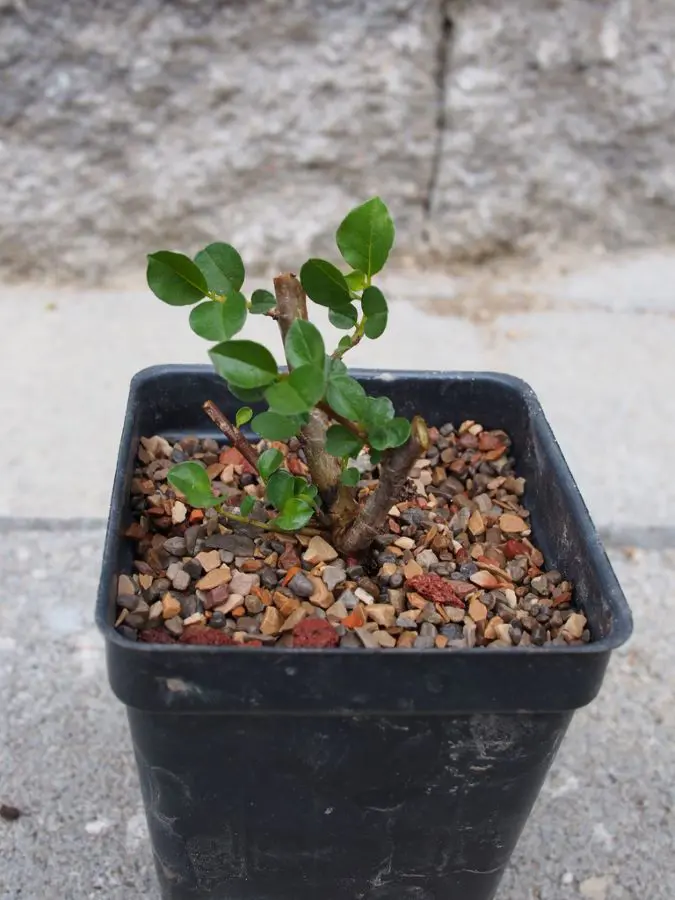
Transplanting: Once rooted, the cuttings can be transplanted into pots with well-draining potting soil or compost.
Care: Provide regular water and fertilizer to encourage growth.
Pruning: Prune as needed to maintain the desired shape.
Tips and Considerations
Easy Propagation: Cotoneasters are one of the easiest shrubs to propagate through cuttings, making them a wonderful choice for beginner gardeners.
Consistency: Ensure consistent moisture levels and avoid overwatering to promote healthy rooting.
Pest And Disease Management
Pest and disease management is crucial for the health and well-being of cotoneaster plants, as it helps to prevent damage and destruction caused by unwanted organisms, ensuring the plant remains healthy and thriving.
Similarly, effective pest and disease management also helps to prevent the spread of diseases to other plants, maintaining a balanced and healthy garden ecosystem.
Pest Management for Cotoneaster
Cotoneaster plants are susceptible to various pests, including:
Aphids: Small, soft-bodied insects that feed on plant sap, causing curled or distorted leaves.
Scale Insects: Small, armored insects that feed on plant sap, causing yellowing or stunted growth.
Whiteflies: Small, winged insects that feed on plant sap, causing yellowing or stunted growth.
To Manage These Pests:
Inspect Regularly: Regularly inspect your cotoneaster plants for signs of pest infestation.
Use Organic Contols: Use organic controls such as neem oil, insecticidal soap, or horticultural oil to control pest populations.
Remove Infested Areas: Remove infested areas of the plant to prevent the spread of pests.
Disease Management for Cotoneaster
Cotoneaster plants are susceptible to various diseases, for instance:
Fire Blight: A bacterial disease that causes blackened or scorched leaves and stems.
Powdery Mildew: A fungal disease that causes a white, powdery coating on leaves.
Root Rot: A fungal disease that causes root decay and plant death.
To Manage these Diseases:
Maintain Good Hygiene: Maintain good hygiene practices such as cleaning pruning tools and removing infected plant material.
Use Fungicides: Use fungicides to control fungal diseases.
Improve Air Circulation: Improve air circulation around the plant to prevent moisture buildup and reduce the risk of fungal diseases.