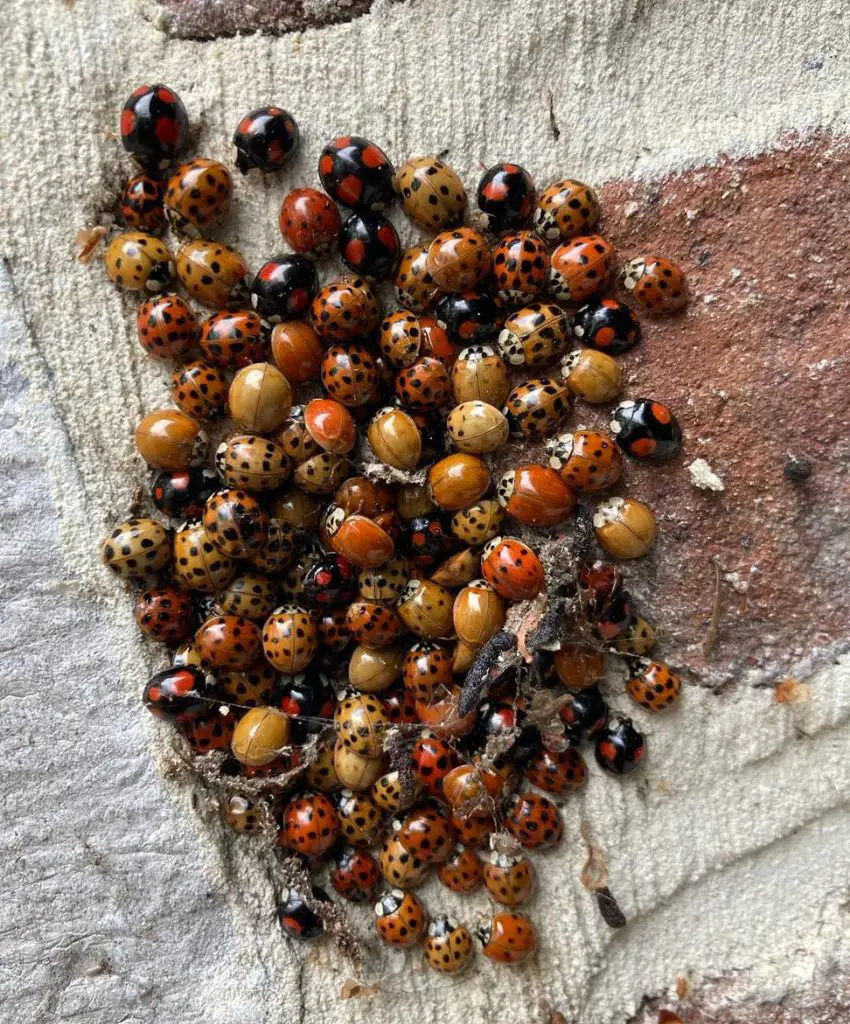
Even if ladybugs outside are viewed as friendly and helpful bugs that help rid gardens of pests, they can become a nuisance once they enter your home. Their presence inside can be more than a mere nuisance since they may disturb your living area and leave stains.
Another important factor that a person needs to understand in trying to get rid of the ladybugs is that this requires prevention and removal of these pests. Below are some tips that you could follow on how to get rid of ladybugs in home.
How to Get Rid of Ladybugs Naturally
Although ladybugs are useful creatures, too much of it can create havoc in the house just by their presence. So, if you are wondering how to get rid of ladybugs naturally, follow the steps below.
1. Identify the Source
Check your house to determine where the ladybugs are getting in. Check for breaks around window frames, doors, and walls. They usually look for comfort and protection indoors. Knowing these entry points is very important in the management and prevention of future infestations.
Look for cracks and other openings that may have not been well sealed to allow ladybugs to access your living space. Awareness of their pathways enables you to target your work on closing and preventing them adequately.
2. Seal Entry Points
Seal any holes, crevices, or spaces around window sills, doors, and walls to limit ladybugs’ access to the house. These entryways should be sealed using weather stripping, caulking, or foam sealant.
Closing all possible entry points as much as possible can help prevent the entry of ladybugs into your home. This is so because these areas are most vulnerable to an infestation since the siding provides some cover for the insects.
Dilute some oils such as clove, eucalyptus, or mint in water and spray the mixture at the spots that have many ladybugs. These oils have powerful smells that repel ladybugs and can be used to minimize their ability to gain access to your home.
Dilute around 10-15 drops of essential oil in 2 cups of water, and use the solution to spray the specific areas that the ladybugs frequent. The smell will keep them away hence eliminating your home as a breeding ground for these insects.
4. Use a Vacuum
To get rid of ladybugs, vacuum them off your home in a soft and delicate manner. Use a vacuum cleaner with a bag that can be removed and replaced to ease the process of disposal. When the vacuum cleaner bag is full, it should be brought outside and opened to release the ladybugs from it.
This technique is useful in getting rid of large quantities of ladybugs within a short duration without actually killing the insects. Make sure that you are gentle in handling the vacuum so that you do not squash the ladybugs or spill dirt in your house.
5. Create a Citrus Spray
Blend equal parts of water and drinkable juice of a lemon or orange and spray this mixture around doors and other affected areas. Citrus fruits’ smell is something that repels ladybugs. It is safe to use within your home and around your family yet still offers a barrier against ladybugs.
To be effective, reapply the spray as often as needed or more frequently when the area is cleaned, or even more ladybugs are noticed.
6. Use a Humidifier
With a humidifier, try to raise the indoor humidity level because ladybugs avoid areas with high humidity. In addition to this, by increasing humidity in your home you can also deter them from coming to your home. This is an easy way to reduce the presence of ladybugs in the house.
This method is effective because ladybugs are attracted to warm and dry environments. Maintaining indoor humidity levels beyond their comfort level can prevent them from staying indoors. Another way of controlling the attacks by ladybugs is to maintain the correct humidity levels and ensure they are checked frequently.
7. Install Screens
Install screens for windows and doors through which the ladybugs cannot enter while simultaneously letting in fresh air. Check that there are no tears or holes in any of the screens.
It is possible to exclude the ladybugs by putting fine mesh screens on the windows or doors through which the ladybugs may access the house. The screens should be checked and, if necessary, repaired more often when the ladybugs are particularly active, for the screens to effectively keep the insects off the house.
8. Keep Your Home Clean
Wash floors and other surfaces where the ladybugs have been seen on a frequent basis. Ensure that there are no crumbs, food residues, and any other things that may attract them are cleared from the area. Because ladybugs are often attracted to warmth and light, a clean house is actually less appealing to them.
Regular vacuuming and dusting also help in the reduction of food particles hence discouraging the habitation by ladybugs. Pay particular attention to those zones that are close to windows or other sources of light, where ladybugs usually appear.
9. Use Diatomaceous Earth
Apply a layer of food-grade DE near doors and window sills or other places where the ladybugs are often found. This natural powder works as a repellent and, in addition, dries out insects.
Diatomaceous earth is safe to use indoors and also helps to prevent ladybugs from invading your home. Use it sparingly, and be sure to use more when necessary - for instance, after washing the surfaces, or if you see more ladybugs are active.
10. Encourage Natural Predators
Spray natural enemies like birds or spiders in and around your home to help reduce ladybug's presence. For instance, birds feed on insects and therefore have the capability to control the growth of ladybugs.
Such natural enemies of the pests include birds that can be attracted through the provision of feeders and nesting boxes in the compound. If there is a balanced environment around your house, chances are that there will be few ladybugs and other insects.
Using chemicals to deal with Ladybugs should be a last option because they can harm the environment and pose health risks. But if you still want to know how to get rid of them using chemicals, these are some methods.
11. Insecticidal Soap
This solution is effective for soft-bodied insects because it disrupts the cell membranes of the insects. It works well if the ladybugs are on the surface of the water and touching the soap. This is one of the easiest remedies if you are wondering how to get rid of ladybugs inside your home.
Safe for plants and useful for certain beneficial insects, it is less toxic, but must be re-applied more frequently in order to be effective. It works well for localized pests or in combination with other strategies for tackling pests.
12. Pyrethrin-Based Insecticides
Pyrethrin, which is extracted from chrysanthemum flowers, interferes with the nervous system of insects and paralyzes them. Non-sticky and good against many insects such as ladybugs, it dissolves in direct sunlight so its long-term impact is minimal.
It is an instant control measure and should not be applied frequently since it is dangerous to beneficial insects and pollinators.
13. Permethrin
A synthetic pyrethrin known as permethrin has the ability to exterminate many insects including ladybugs. It acts through the modulation of the nervous system hence resulting in paralysis and death.
This chemical is commonly used in farming as well as in domestic use. However, permethrin poses a risk to aquatic life hence when used it should be so in a way that does not have a negative impact on the environment.
14. Bifenthrin
Bifenthrin is an insecticide that targets the neural system of insects including ladybugs which makes them immobile and kills them. It can be used in; homes and offices, gardens, and compounds, and offers long-lasting control.
However, it is also extremely poisonous to fish and useful insects; therefore, it is used rather cautiously in order to reduce harm to the ecology. Always comply with safety measures to reduce health and environmental hazards when using such chemicals.
15. Malathion
Malathion is an organophosphate insecticide that affects the nervous systems of insects by blocking an enzyme essential to the proper functioning of these nerves, which results in paralysis and death. It is active on many types of pests and can be used to control ladybugs.
While effective in controlling pests, the chemical can be dangerous to mankind and animals when improperly applied. Comply with safety measures to reduce health and environmental hazards and avoid excessive use of the products.
16. Carbaryl
An insecticide in the carbamate class, Carbaryl interferes with the nervous systems of insects causing their death. This insecticide can control different pests and is commonly used in both farm fields and homes to manage ladybugs.
Although it gives broad-spectrum control, carbaryl poses adverse effects on beneficial insects and aquatic organisms. It should be used carefully and follow the instructions mentioned on the label to reduce the impact on the environment and living organisms.
17. Imidacloprid
A systemic insecticide, imidacloprid is ingested by plants and impacts any insect taking a feed from them including ladybugs. It functions by interfering with the transmission of impulses along the nerves as it causes paralysis and subsequently death.
It is still effective in long-term pest control but may also prove lethal to other forms of life including bees and aquatic life. It is safe to use it while following safety measures to minimize the effect of negative externalities on the environment.
18. Professional Pest Control
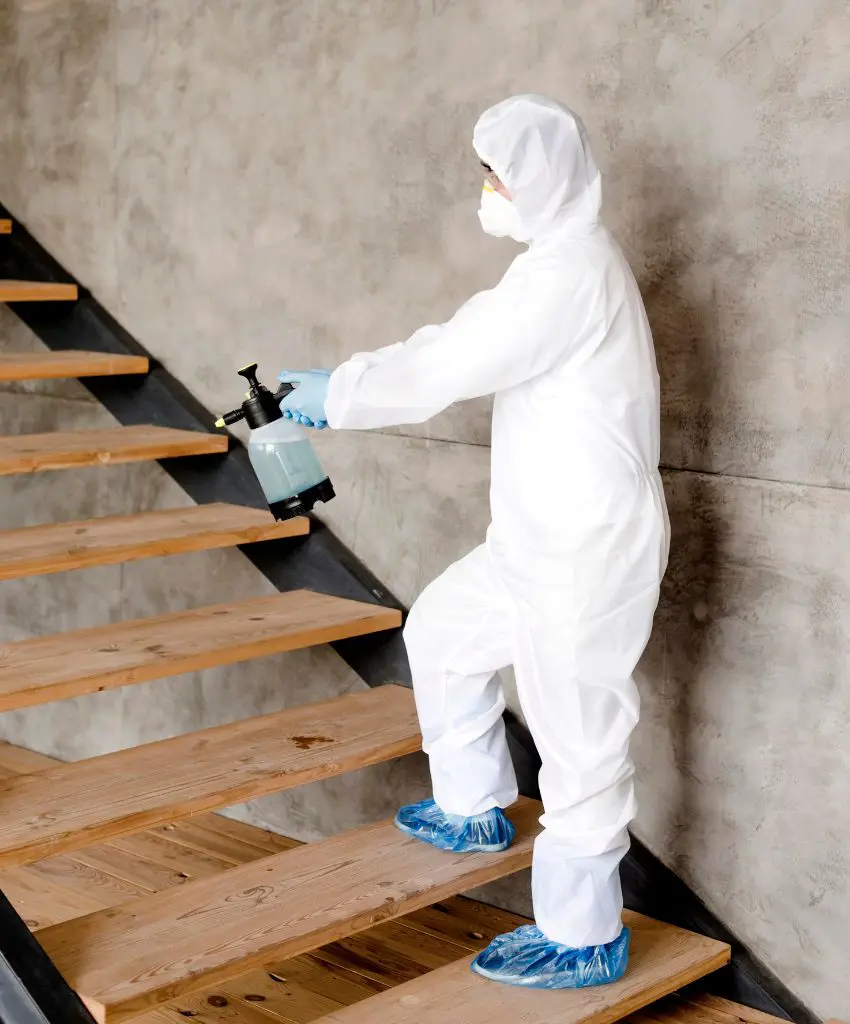
Engaging the services of a pest control company can help deliver localized and efficient control of ladybugs. It is done with the help of professional equipment and materials as well as with the use of stronger chemicals than in commercial products.
They diagnose, treat, and advise their clients on how to deal with future pest control problems. This is helpful especially when treating extensive or stubborn pest populations and guarantees safety and adherence to the laws.
Ladybugs or ladybird beetles are tiny and bright insects characterized by their red or orange external covering with black spots. They are insects in the Coccinellidae family, commonly used as biopesticides in agricultural practices. These species can be found in every continent, in gardens, fields, and forests.
Larvae and adult beetles consume aphids, mites, and other damaging insects affecting crops and gardens. Ladybugs are typically referred to as ‘good bugs’ or beneficial since they aid in the conservation of the natural environment and prevent the use of chemical pesticides.
Ladybugs come in various types and colors. Some of the major and commonly seen types of ladybugs are as follows:
Seven-Spotted Ladybug (Coccinella septempunctata)
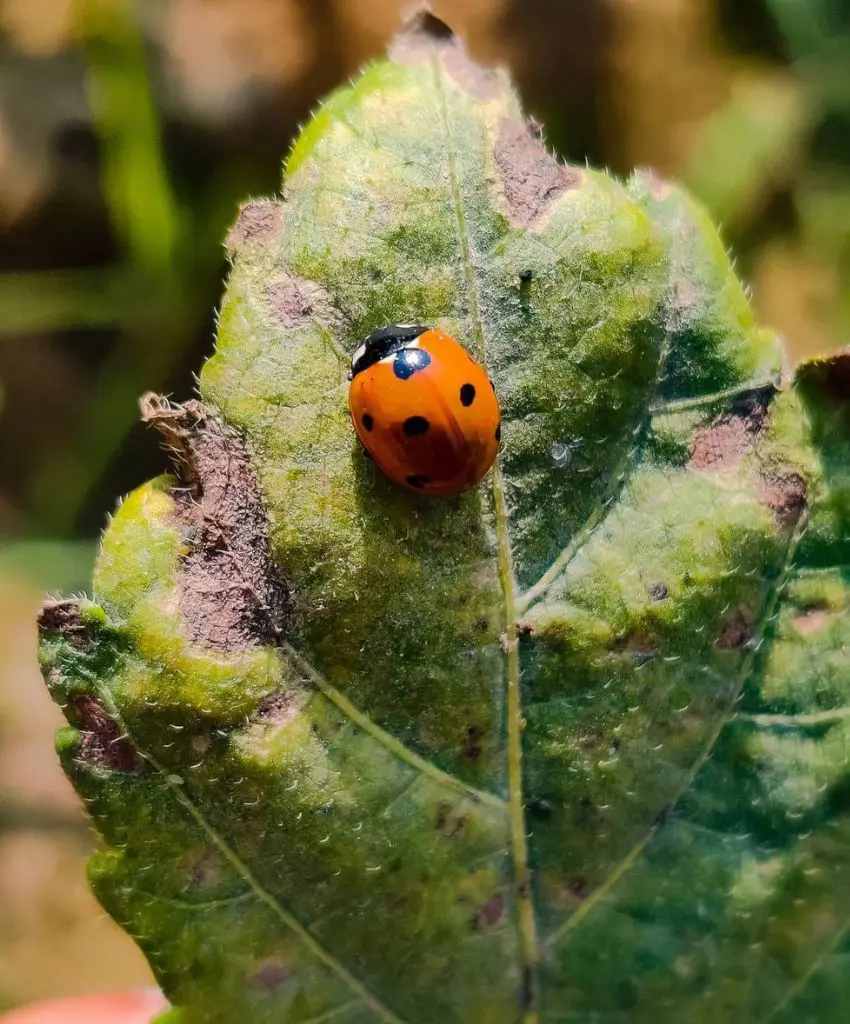
The most common ladybird is the Seven-Spotted Ladybug which has red or orange wings with seven clear black dots. Usually, this ladybug has black spots with distinct patterns on it: 3 on its left side 3 on the right side, and 1 on the back part of its head.
It mostly lives in gardens, forests, and grasslands and is 5 to 7 mm long, especially on plants with aphids. It feeds mainly on aphids and other small insects and is thus favorable in pest management for agriculture.
Asian Ladybug (Harmonia axyridis)
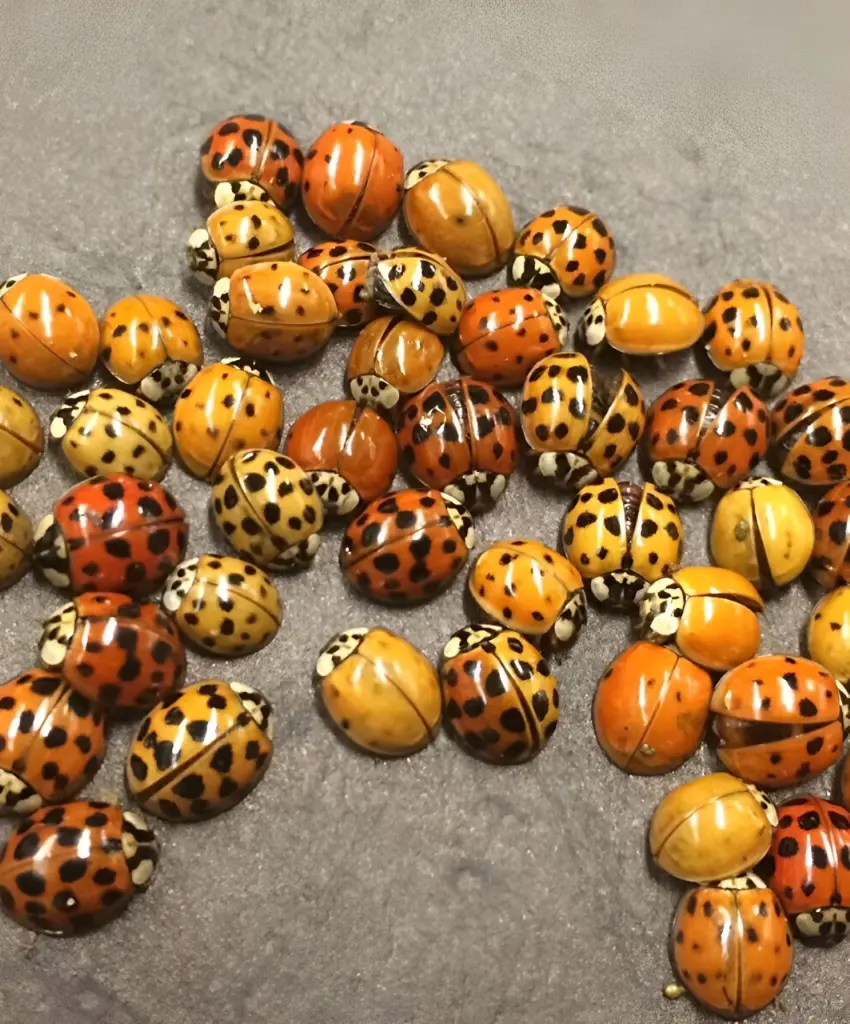
The Asian Ladybug comes in a vast spectrum from red to orange and can have zero to numerous black spots at irregular places. This species has an approximate size of 6 to 8 mm and is originally from East Asia but can now be found all over the world.
It is commonly found in gardens, crops, and other areas with plant growth. Aphids and small insects are its favorite food but it also feeds on other ladybugs’ larvae. These characteristics of adaptability and polymorphism give it a high profile and importance in many different environments.
Two-Spotted Ladybug (Adalia bipunctata)
Easily distinguished by its red or orange wing cover bearing two black spots on each is the Two-Spotted Ladybug. This is a relatively small ladybug that grows to a size of between 4 to 6 millimeters in length. It is primarily found in gardens, parks, and forests for its main food sources include aphids and other insects.
As a predator, it plays an important part in regulating the pest species, and hence, it is useful for both natural and man-made ecosystems. These factors make the Two-Spotted Ladybug attractive to growers and masters of entomology due to its bright color and practical predatory behavior.
Measuring about 5 to 7 millimeters in size, the Thirteen-Spotted Ladybug is easily identifiable by the fact that it has 13 black spots and they are all placed on yellow or orange background. Its spots are often aligned in rows and columns so that it has a very unique appearance.
Residing in fields, meadows, and gardens, this ladybird is an efficient aphid farmer parasite. This showcases its ability to regulate specific ecosystems and act as a biocontrol agent against pests.
Polished Ladybug (Clytra laeviuscula)
The form is shiny and glossy and is characterized by a red or orange coloration with irregular black spots. It is about 5 to 8 mm long and is usually found in forests and woodlands, particularly in areas with an accumulation of leaves and other decomposing vegetation.
This little creature feeds on small insects and occasionally plants, which further supports its position as both a predator and a decomposer within the environment. This species has a special shiny coat and they inhabit different locations, which makes it a special species in its ecosystem.
Some major signs and symptoms of a Ladybugs infestation in your home include:
Large Numbers
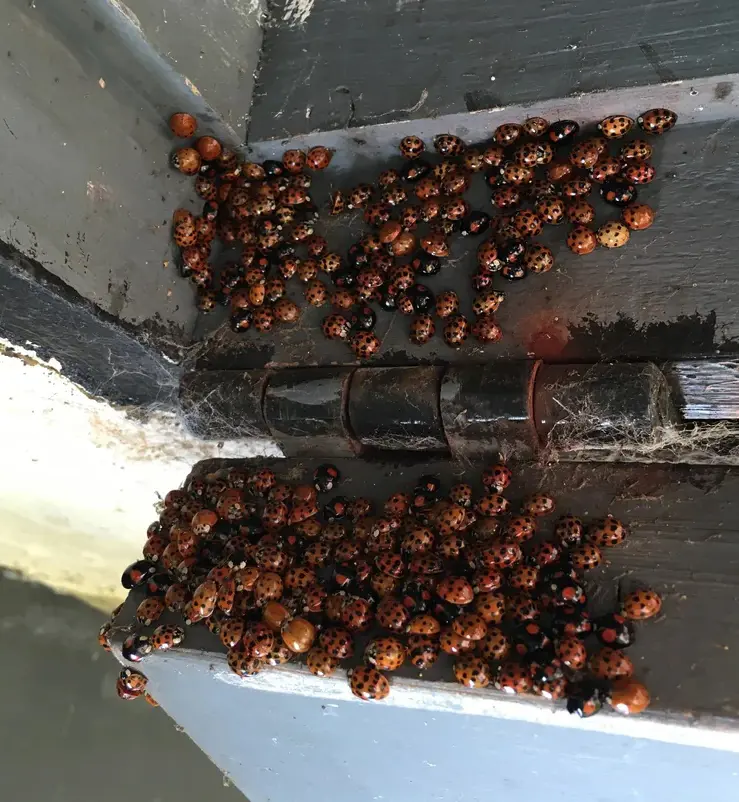
The presence of a large number of ladybugs on the windowsills, walls, or ceiling points to an infestation. These beetles are normally found in areas with exposure to natural light or warm parts of houses during cold seasons.
This can be quite overwhelming and noticeable due to the volume. They usually form a group and this makes it easy to notice the problem. Therefore, the fact that we observe them in large numbers means that they have identified a suitable habitat.
Presence of Dead Ladybugs
Dead ladybugs in and around your home such as in corners, baseboards, and under furniture indicate that you are under siege by ladybugs. These dead insects may accumulate if the population dies out or if the insects become dormant.
In some cases, dead ladybugs can pose as a source of slight discoloration, which draws more attention to them.
Staining
When squashed, ladybugs can leave behind a yellowish or orange residue that is close to hemolymph, which is the insect’s fluid equivalent to blood. These stains may appear on walls, ceilings, or fabrics where the ladybug activity has been detected.
Staining typically occurs from contact with the insects or their excreta. In case you come across these stains, this is a clear sign that the ladybugs have been numerous and may be signs of a severe infestation.
Bugs in Winter
It is common to find ladybugs in homes in winter. If you discover them inside your home, especially in large numbers then this could be a sign that they are either hibernating or are in search of warmth.
They can be found in places like attics, wall voids, or any other concealed area in the homes. Indoor presence during the cold seasons is another clear indication that they are present because they transfer from outdoor habitats to look for a proper overwintering site.
Scent
Sometimes, the infestation of ladybugs is accompanied by a subtle, mildew smell resulting from their pheromones. This smell becomes noticeable when ladybugs are disturbed, or when they cluster together in large groups.
The smell may indicate a worse infestation since the insects emit these chemicals to repel predators, which may alter indoor air conditions.