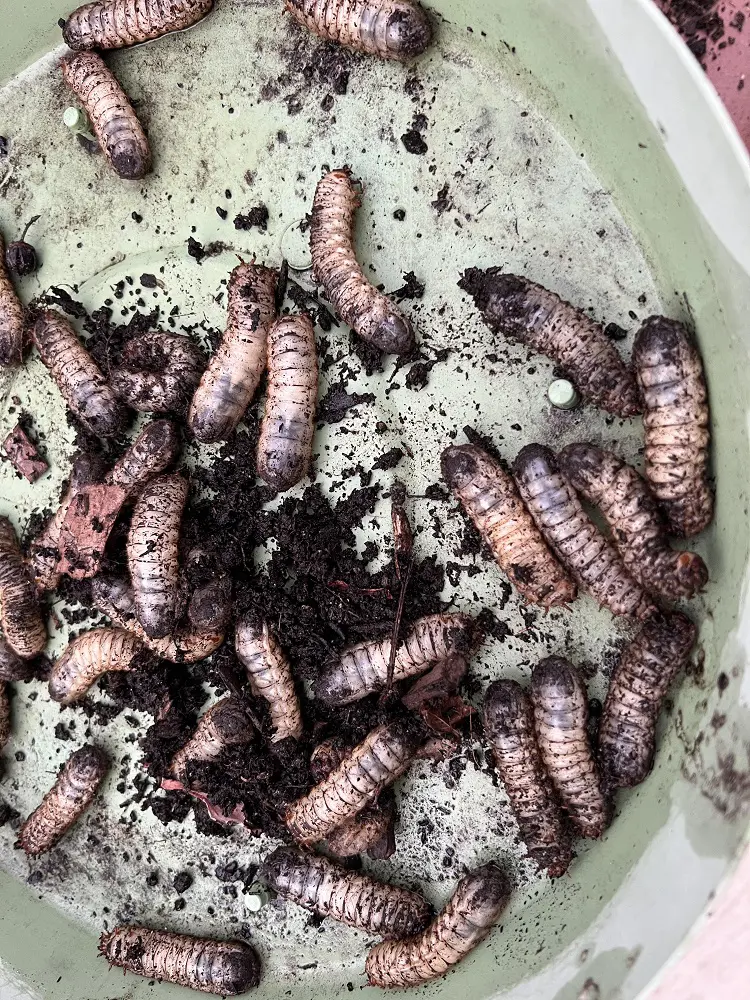
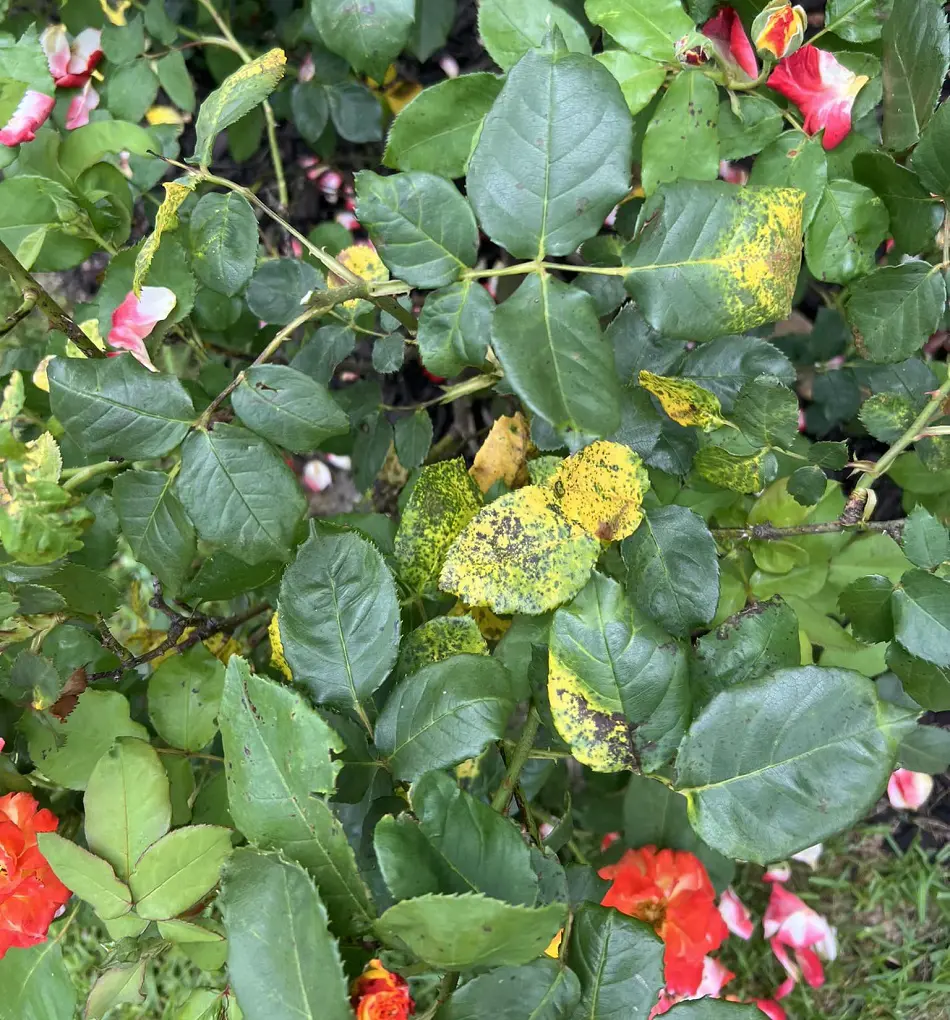
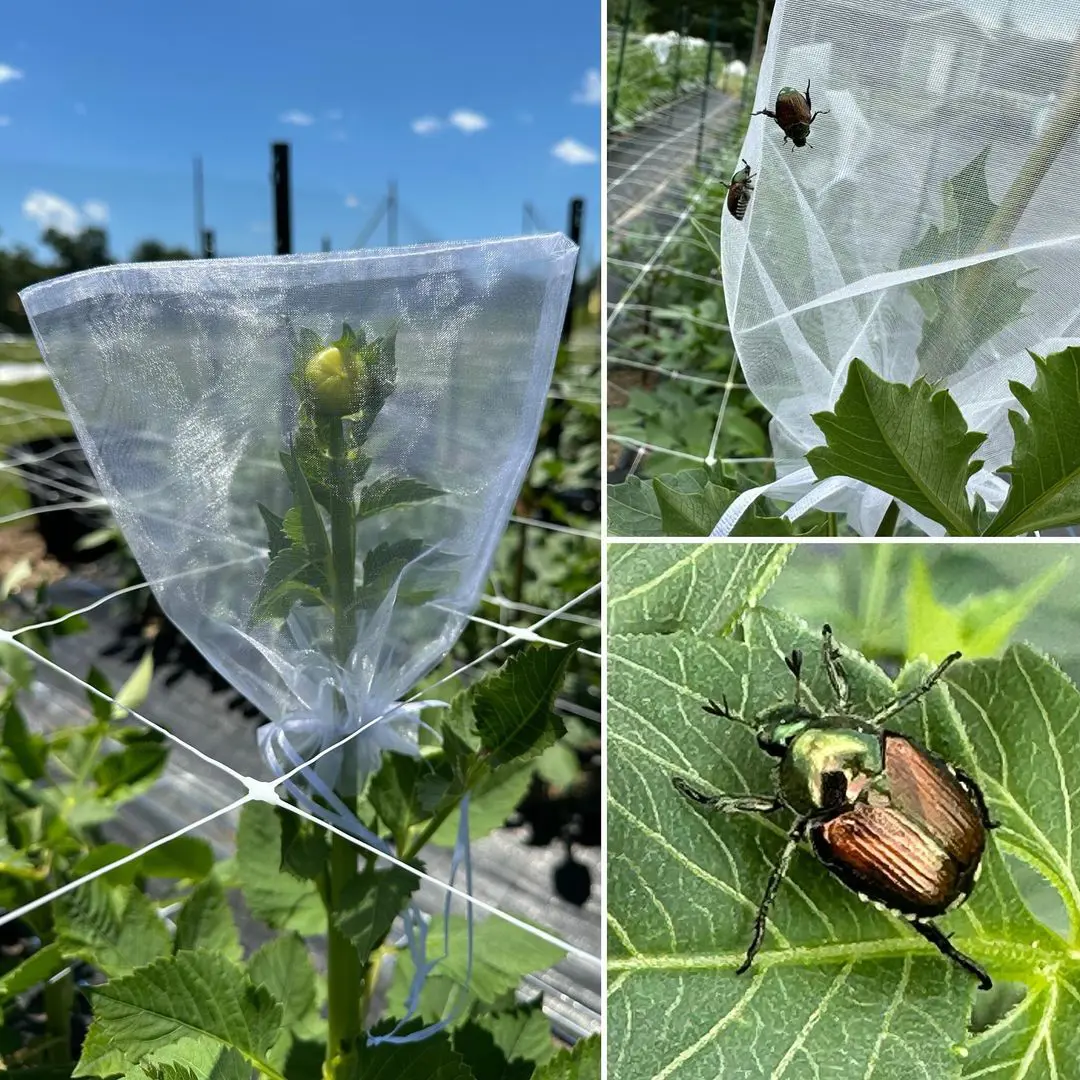
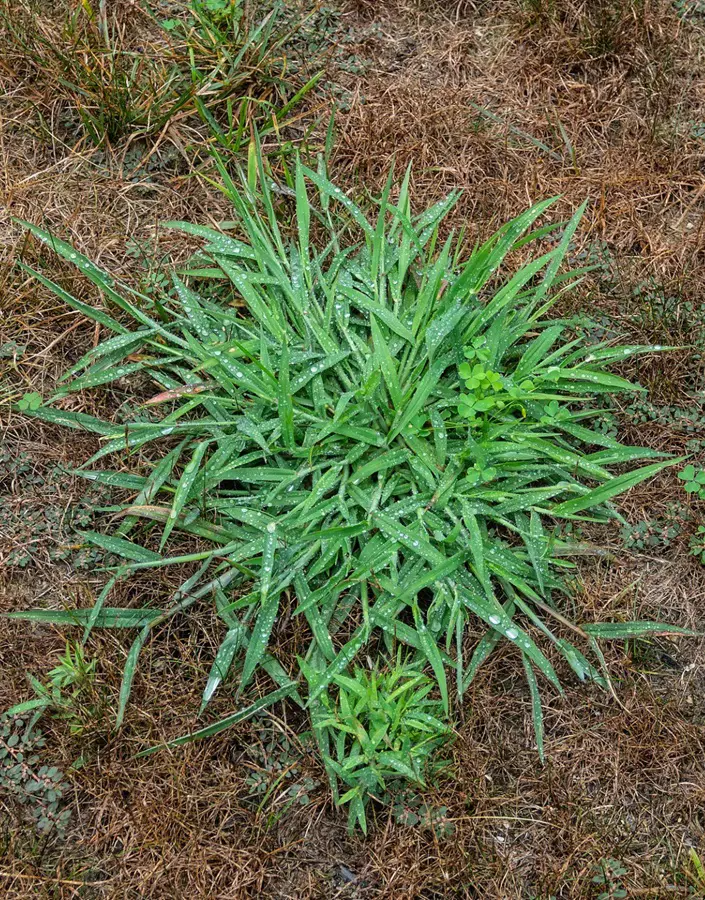
Lawn grubs can wreak havoc on your lawn by feeding on the grassroots, which can lead to brown patches and weakened turf. These larvae eventually transform into adult beetles that further damage your garden by feeding on plant leaves.
While many homeowners opt for chemical treatments to control grub populations, several natural methods can also be effective. Read this article for a guide on how to get rid of grubs on your lawn.
For those who prefer organic lawn care, there are several natural methods to control and eliminate lawn grubs. Here are a few effective ways:
1. Neem Oil
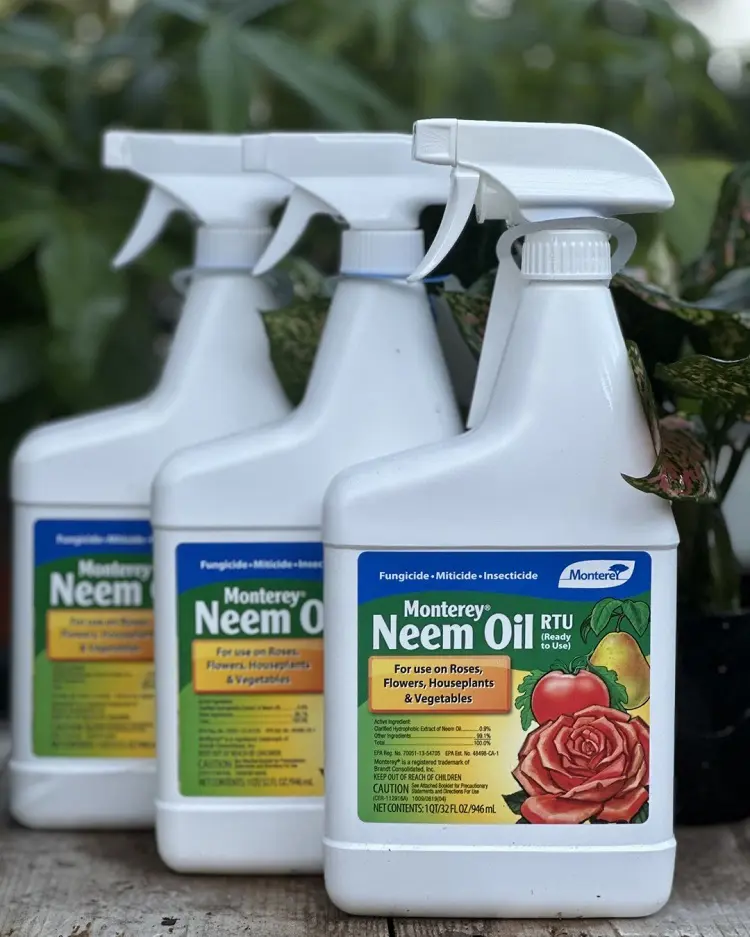
Neem oil, derived from neem tree seeds, acts as an organic insect repellent disrupting grubs' feeding, growth, and molting processes. It doesn't kill grubs directly but eventually leads to their death and is safe for the environment.
To use, mix neem oil with water per product instructions and spray it evenly on the lawn. Reapply every two weeks during the grub season for optimal results.
2. Beneficial Nematodes
Beneficial nematodes are microscopic roundworms that naturally target and kill lawn grubs. These nematodes release bacteria inside the grubs, causing death from the inside out.
Purchase nematodes from garden centers, mix them with water as directed and apply them to a moist lawn in the evening. Thoroughly water the lawn after application to help the nematodes penetrate the soil and effectively reach the grubs.
3. Milky Spore
Milky spore, a bacterium called Paenibacillus popilliae, specifically targets Japanese beetle grubs. Once ingested, the bacteria multiply inside the grubs, ultimately killing them and releasing spores back into the soil for long-term protection.
Apply milky spore powder using a lawn spreader, then water the area to help the spores penetrate. It takes a few years to build up, but it provides enduring grub control.
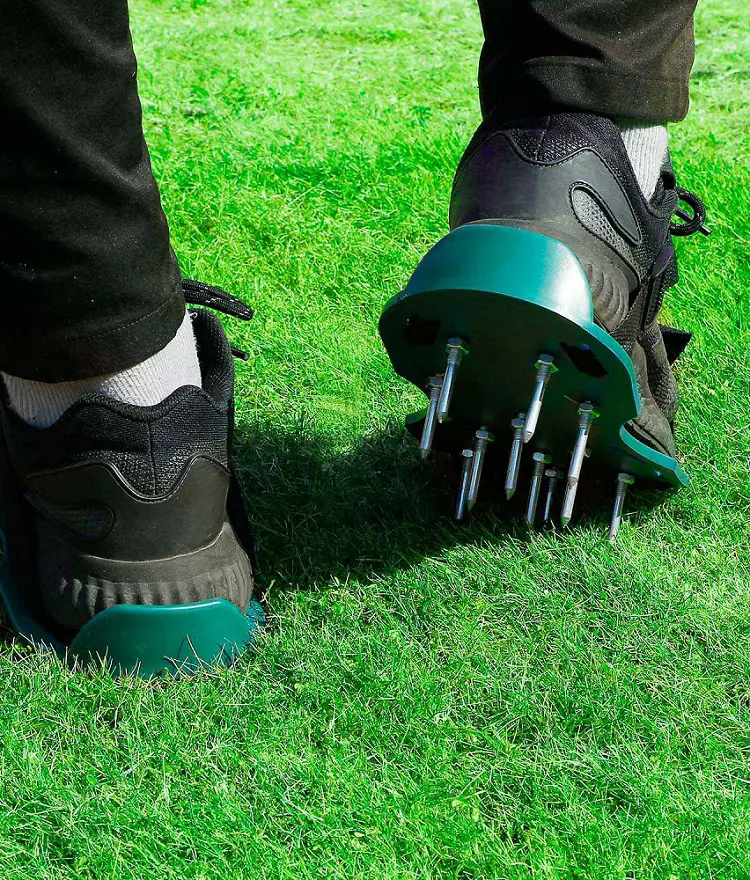
Lawn-aerating shoes, equipped with spikes, help manage grub populations by disrupting their habitat and improving soil aeration. Wearing these shoes while walking across your lawn punctures the soil, enhancing the effectiveness of other treatments.
Focus on areas with suspected grub activity and combine this method with additional natural treatments for the best results.
5. Birds
Attracting birds to your yard can naturally control grub populations, as birds are predators of grubs. Set up bird feeders and birdbaths to draw birds to your garden. Additionally, remove thatch and debris to expose grubs, making them more accessible to birds.
Avoid using chemical treatments that might harm birds to ensure a healthy, natural grub control method.
6. Soap and Water Solution
A soap and water solution can help surface grubs for easy removal. Mix two tablespoons of dish soap with a gallon of water and pour it over a small lawn section. Within minutes, grubs will rise to the surface, where they can be collected and disposed of.
Chemical treatments can be very effective at controlling grub populations but remember to water the lawn thoroughly afterward using these chemical treatments to help the insecticide penetrate the soil, and effectively target the grubs. Here are some of the common chemical methods:
7. Imidacloprid-Based Products
Imidacloprid is a popular insecticide effective against grubs. It is most effective when applied in the spring or early summer, targeting young, vulnerable grubs. To use, purchase an imidacloprid-based grub control product and apply it evenly across your lawn with a lawn spreader.
8. Chlorantraniliprole-Based Products
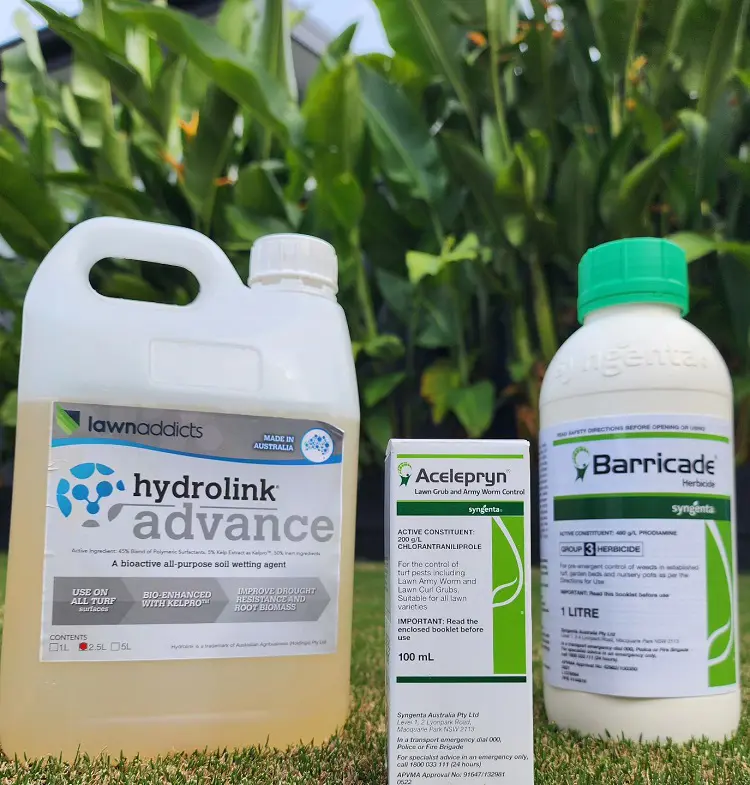
Chlorantraniliprole is a newer, pet- and wildlife-safe insecticide providing long-lasting grub control. Apply it in the spring or early summer for the best results. Purchase a chlorantraniliprole-based product and use a lawn spreader to distribute it evenly across your lawn.
9. Carbaryl-Based Products
Carbaryl is a broad-spectrum insecticide that effectively kills grubs and is often used alongside other treatments. To use, purchase a carbaryl-based product and apply it according to the label instructions. Ensure thorough watering of the lawn after application to help the insecticide penetrate the soil.
10. Trichlorfon-Based Products
Trichlorfon is a fast-acting insecticide that kills grubs on contact, making it ideal for late summer or early fall when grubs are actively feeding. Purchase a trichlorfon-based product and apply it using a lawn spreader or sprayer.
11. Thiamethoxam-Based Products
Thiamethoxam is an effective insecticide offering season-long protection against grubs. Apply it in the spring or early summer for optimal results. Purchase a thiamethoxam-based product and use a lawn spreader to distribute it evenly across your lawn.
12. Dylox-Based Products
Dylox, a form of trichlorfon, is effective for severe grub infestations and provides rapid control. Purchase a Dylox-based product and apply it according to the instructions on the label.
Thoroughly water the lawn after application to help the insecticide penetrate the soil, ensuring it reaches and rapidly eliminates the grubs, addressing severe infestations effectively.
Professional lawn care services can provide specialized treatments to manage grub infestations. Here are a few methods professionals might use:
13. Soil Testing and Analysis
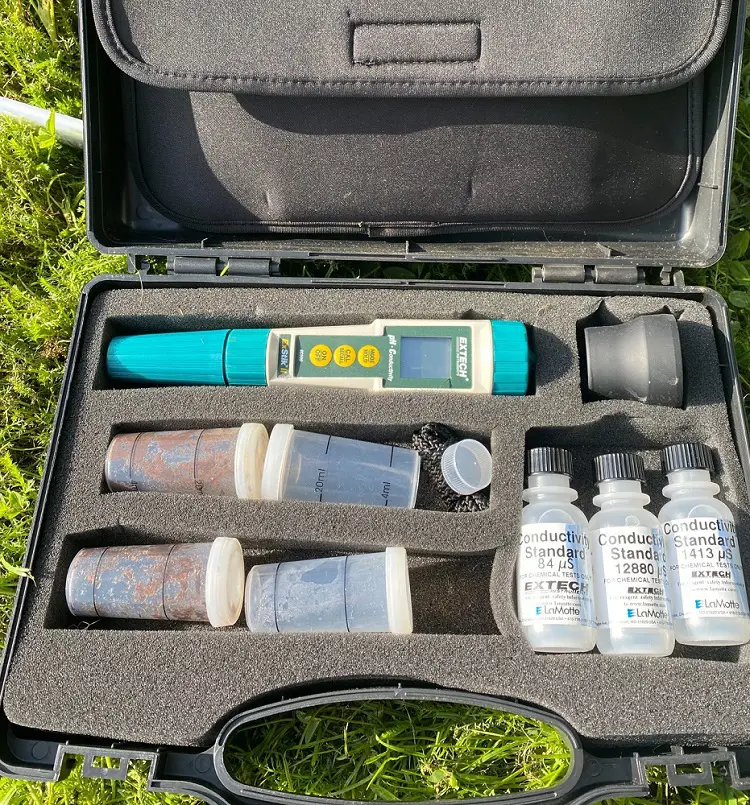
Professional lawn care services can conduct thorough soil testing and analysis to assess the severity of grub infestations. By analyzing soil samples, professionals determine the presence and concentration of grubs, identifying the most effective treatment strategy.
Contact a reputable lawn care service to schedule an appointment for soil testing. Based on the analysis results, professionals will recommend targeted treatments and follow-up actions to address the grub problem comprehensively and prevent future infestations.
14. Preventative Treatments
These treatments are typically applied in the spring when grubs are small and most vulnerable. Schedule a preventative treatment with a professional service, and they will apply the appropriate products to your lawn.
Following their maintenance advice, such as regular watering and mowing, will help ensure the effectiveness of the treatment and maintain a healthy, grub-free lawn.
15. Curative Treatments
For active grub infestations, professionals can apply curative treatments that provide immediate relief. These treatments target and kill existing grubs, preventing further lawn damage. Contact a lawn care service to schedule a curative treatment application at the optimal time, usually in late summer or early fall.
16. Integrated Pest Management (IPM)
Integrated Pest Management (IPM) combines various methods to manage pests sustainably and responsibly. Professional IPM services use a mix of natural and chemical treatments to control grubs while minimizing environmental impact.
Hire a service specializing in IPM, and they will develop a comprehensive plan tailored to your lawn’s needs. Regular monitoring and adjustments based on grub activity ensure effective pest management and a healthy, resilient lawn.
17. Aeration and Overseeding
Aeration involves perforating the soil to improve air, water, and nutrient penetration while overseeding introduces new grass varieties to thicken the lawn.
Schedule these services with a professional lawn care provider, and follow up with proper lawn care practices, such as watering and mowing, to maintain the results and create an environment less conducive to grub infestations.
Identifying a grub infestation early can help you take action before significant damage occurs. Some of the common signs of grub infestations are as follows:
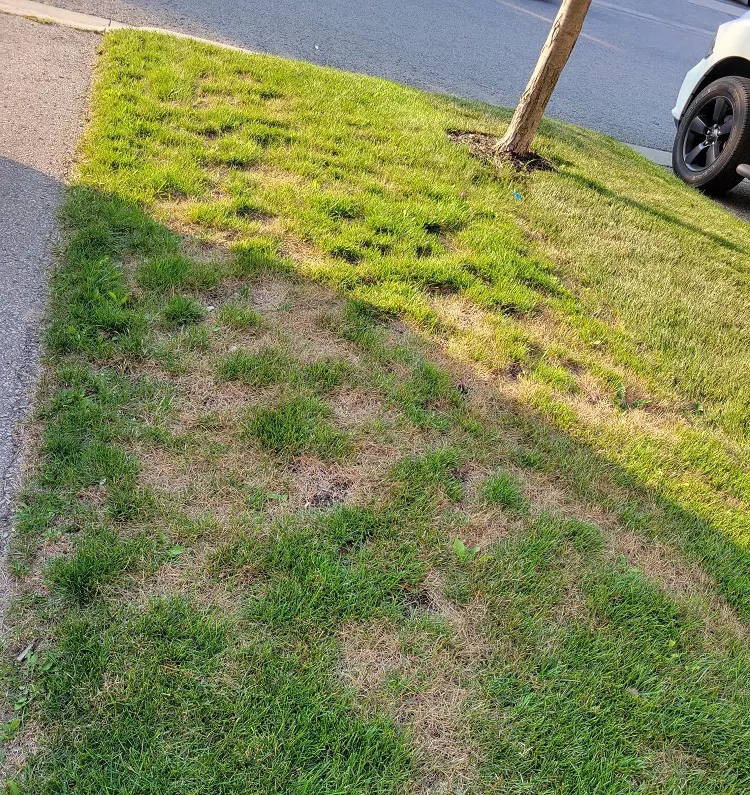
Brown Patches: Irregular brown patches of dead or dying grass are one of the most noticeable signs of a grub infestation. These patches can appear suddenly and spread quickly as grubs feed on grass roots, cutting off the plant's nutrient supply.
Increased Wildlife Activity: An increase in wildlife activity, such as birds, skunks, raccoons, and other animals digging in your lawn, can indicate a grub problem. These animals are attracted to the lawn because grubs are a rich food source.
Spongy Turf: A lawn that feels spongy or soft when you walk on it can be a sign of grub activity beneath the surface. As grubs consume the roots, the soil loses its structural integrity, causing the turf to become spongy and loose.
Weak Grass: Grass that pulls up easily, especially in larger sections, suggests root damage caused by grubs. Healthy grass should be firmly rooted in the soil, but when grubs feed on the roots, the grass loses its anchor.
Preventing grubs from returning requires ongoing lawn care and maintenance. Here are some effective prevention tips:
Maintain a Healthy Lawn
A healthy, well-maintained lawn is less susceptible to grub infestations. Regularly watering your lawn ensures deep root growth, fertilizing provides essential nutrients, and mowing keeps the grass at an optimal height.
These practices strengthen the grass, making it more resistant to pests and diseases, including grubs.
Use Grub-Resistant Grass Varieties
Certain grass varieties are naturally more resistant to grub damage. Consult with a lawn care specialist to identify and plant these varieties in your lawn. Using grub-resistant grasses can significantly reduce the risk of infestations and contribute to a more resilient and sustainable lawn.
Regularly Inspect Your Lawn
Conducting regular lawn inspections helps you identify early signs of grub activity, such as brown patches or increased wildlife activity. Early detection allows you to take prompt action, such as applying treatments or adjusting lawn care practices, to prevent significant damage and control grub populations.
Apply Preventative Treatments
Applying preventative grub control treatments in the spring can stop grubs before they become a problem. These treatments target young grubs before they cause damage, providing season-long protection. Follow product instructions carefully and consider a professional application for the best results.
Different species of grubs can infest your lawn, each with its unique characteristics:
Japanese Beetle Grubs: Japanese beetle grubs are the most common lawn pests, recognized for their voracious feeding on grass roots. These white, C-shaped larvae cause significant damage, leading to brown patches and weakened turf. They typically infest lawns during late summer and early fall.
European Chafer Grubs: European chafer grubs are similar to Japanese beetle grubs but are slightly larger and more aggressive. These pests primarily infest lawns in the northern United States and Canada, feeding on grass roots and causing extensive damage, especially in well-maintained turf.
June Beetle Grubs: June beetle grubs are larger than most other lawn grubs and can cause substantial damage during their larval stage. These pests feed on a wide variety of plant roots, not just grass, and can be particularly problematic in regions with sandy soils.
Oriental Beetle Grubs: Oriental beetle grubs are smaller but still harmful, primarily affecting lawns in the eastern United States. These grubs feed on grass roots, leading to weakened turf and brown patches. They are less destructive than Japanese beetle grubs but can still cause notable damage.
Masked Chafer Grubs: Masked chafer grubs are notorious for their feeding on grass roots, resulting in brown patches and spongy turf. These pests are common in many parts of the United States and are particularly active during the summer months, making regular lawn monitoring essential.
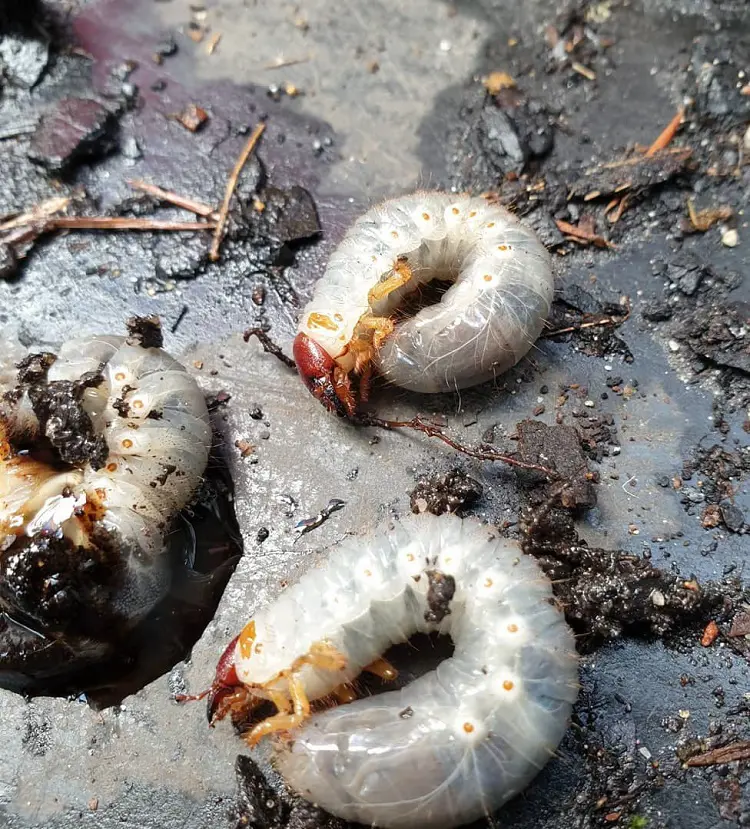
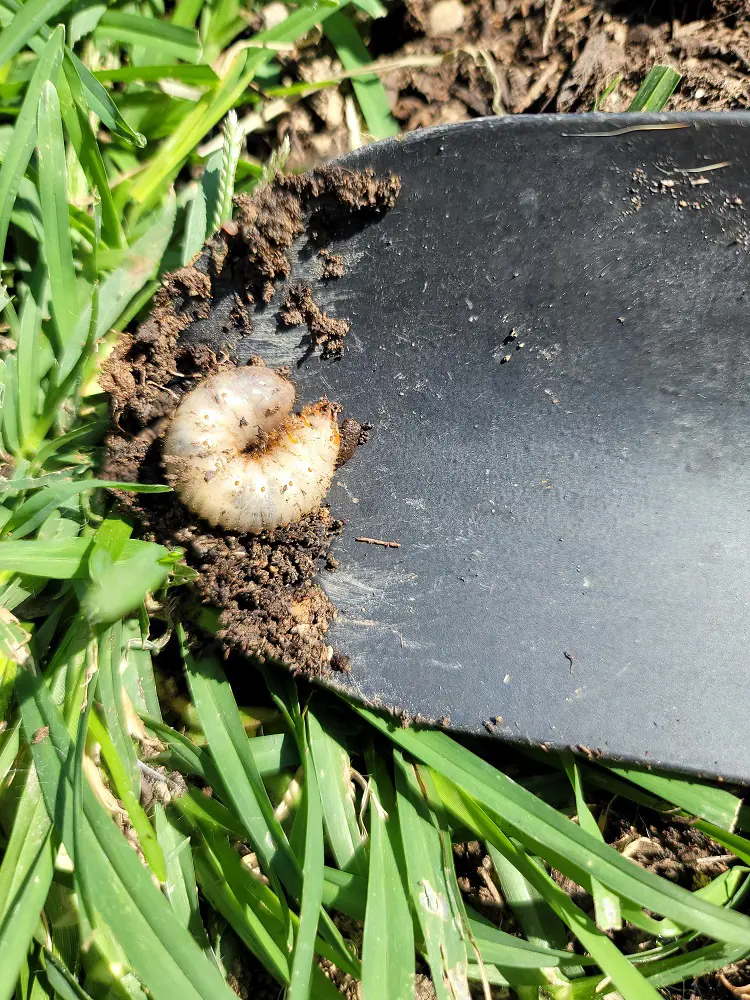
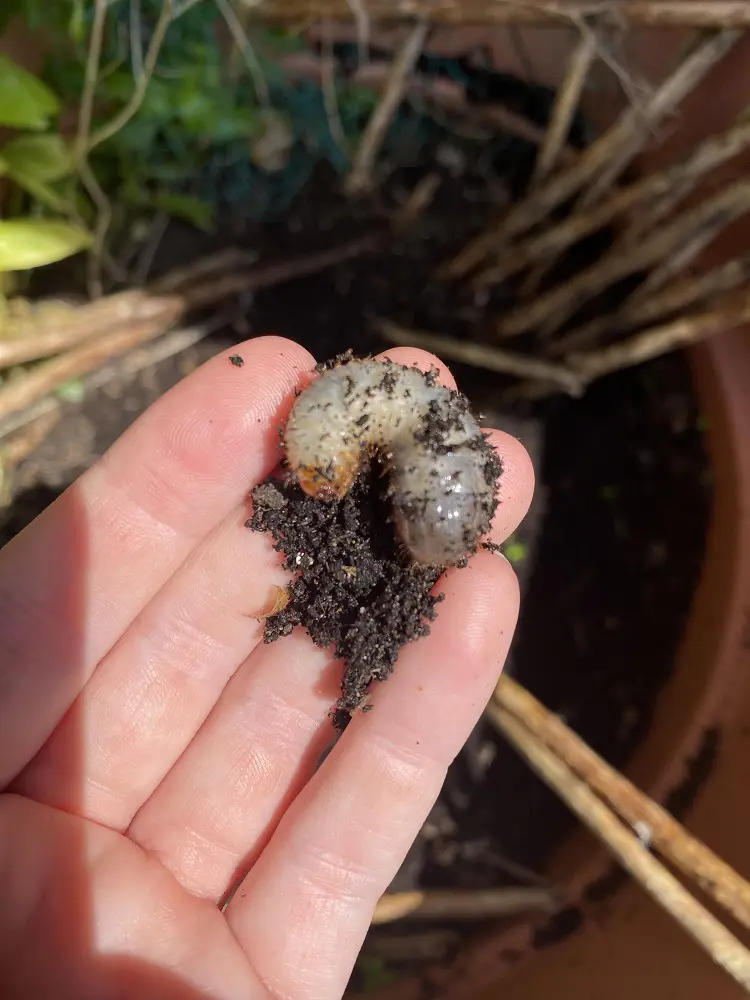
Lawn grubs, also known as white grubs, are the larvae of various beetles such as Japanese beetles, June beetles, and European chafers. They are typically white or cream-colored with a C-shaped body and a brown head.
Measuring about 1/2 to 1 inch in length, they have three pairs of legs near the head. When unearthed, grubs are often found just beneath the soil surface, feeding on grass roots. Their distinctive curled shape and creamy color make them easily recognizable when you dig into the soil to inspect for their presence.
What Causes Lawn Grub in Garden?
Lawn grubs are primarily caused by adult beetles like Japanese beetles, June beetles, and European chafers, which lay eggs in the soil during late spring or early summer. The larvae, or grubs, hatch and feed on grass roots. Ideal conditions for grubs include moist, well-maintained lawns and mild, wet weather.
Overwatering can make lawns attractive to beetles, while poor lawn maintenance weakens the grass, making it more vulnerable. Additionally, a lack of natural predators, such as birds and beneficial nematodes, can lead to higher grub populations. Proper lawn care and monitoring can help prevent and manage grub infestations.
What Does Lawn Grub Eat?
Lawn grubs primarily feed on the roots of grass and other plants. As larvae of beetles such as Japanese beetles, June beetles, and European chafers, they burrow into the soil and consume the tender, young roots.
This feeding activity disrupts the plant’s ability to absorb water and nutrients, leading to weakened grass and the formation of brown patches on the lawn. In severe cases, extensive grub feeding can cause large sections of grass to die and easily pull up from the soil. The damage can significantly impact the health and appearance of your lawn.