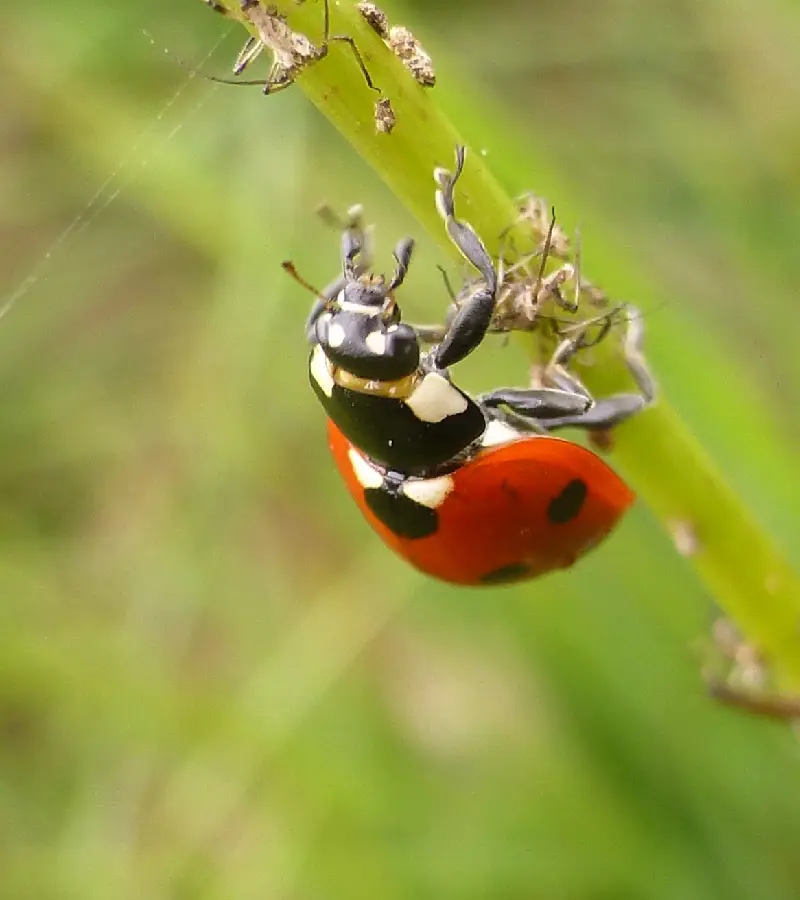
When it comes to critters, most people aren't a fan of bugs but if there is a bug that everyone is fond of, it's the ladybug. Often seen as a sign of good luck, these ladybugs are stellar but sometimes you may end up confused when you see many of them congregating near or inside your homes.
Those orange beetles aren't ladybugs but ladybug-like bugs, which hijack the good name of the ladybug and are much less friendly than the ladybugs. What are they, and what to do upon seeing them? Continue reading on to find out!
Asian Lady Beetle vs Ladybug
The yellowish imitators referred to above are probably an invasive species from Asia: the Asian Lady Beetles. In terms of ladybug vs Asian lady beetle, it helps to know what they both do and don't so you can decide for yourself whether you like them or not.
Although they both are part of the same Coccinellidae family and, as such, have particular importance in ecosystems, preying upon pests that would otherwise damage a person's plants and hence are helpful to gardeners, ladybugs are extremely friendly natives who mind their own business, while lady beetles are invasive from Asia.
These Asian ladybugs are much less friendly, and because they're outcompeting the ladybugs for the same food source, native ladybugs are now an endangered species.
In terms of size, Asian lady beetles are slightly larger than most common ladybugs that you can see in your garden. Asian lady beetles range from about 5 to 8 millimeters and are about 4 to 6 mm wide, while the common ladybugs typically range from 5 to 6 millimeters while being 4 to 6 mm wide.
Anatomically speaking both species have similar structures such as the mouthparts which are adapted for feeding on aphids and other soft-bodied insects. Although asian lady beetles do have a different antenna design structure when compared to native ladybugs.
Asian Lady Beetle Identification Guide
Asian lady beetles were deliberately brought over to North America from Asia in the year 1916 as an attempt to help farmers combat aphids and released again several times in the 1970s and 1980s by the Department of Agriculture as a result of which it's hard to argue whether they are truly an invasive species.
What we do know however is that due to the lack of predators threatening their population in sufficient numbers due to them secreting a foul-smelling yellowish fluid, their population has exploded to the point that they have displaced the native ladybug population making them an endangered species.
Another reason they are considered invasive is because they are not used to the colder months of the American continent and will make their way indoors for warmth and the foul yellowish fluid they have can stain and stink up your homes.
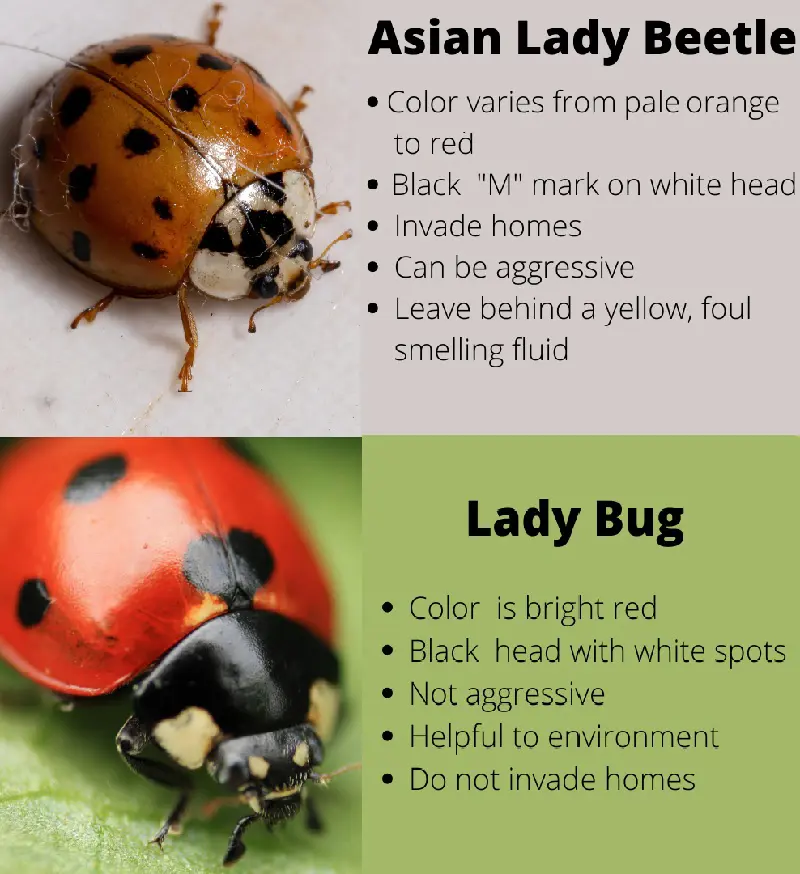
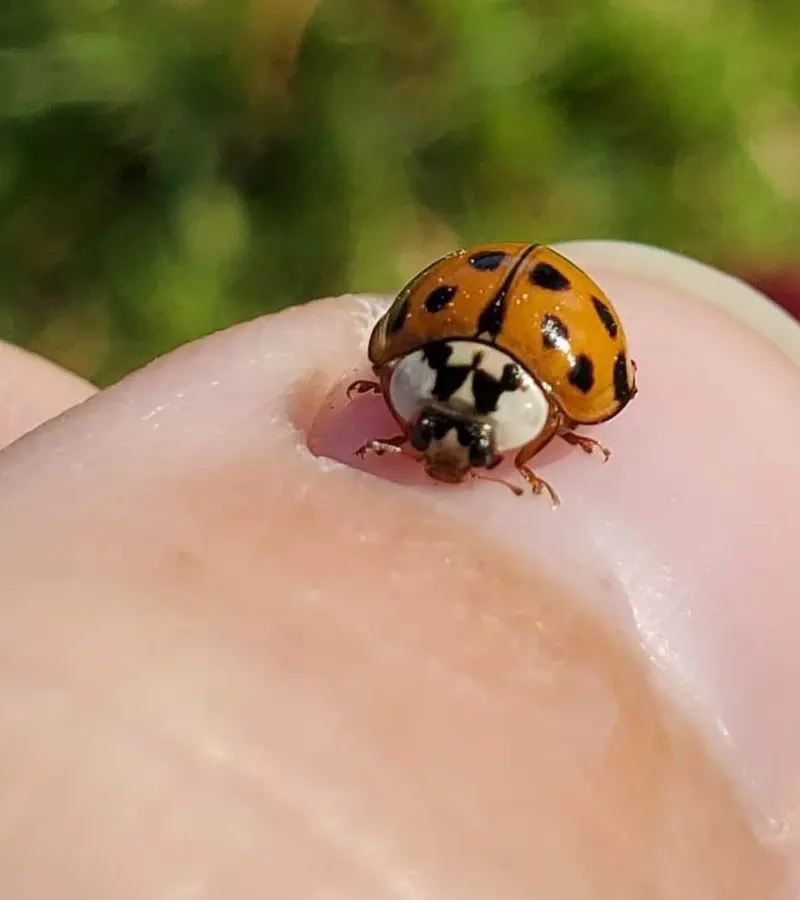
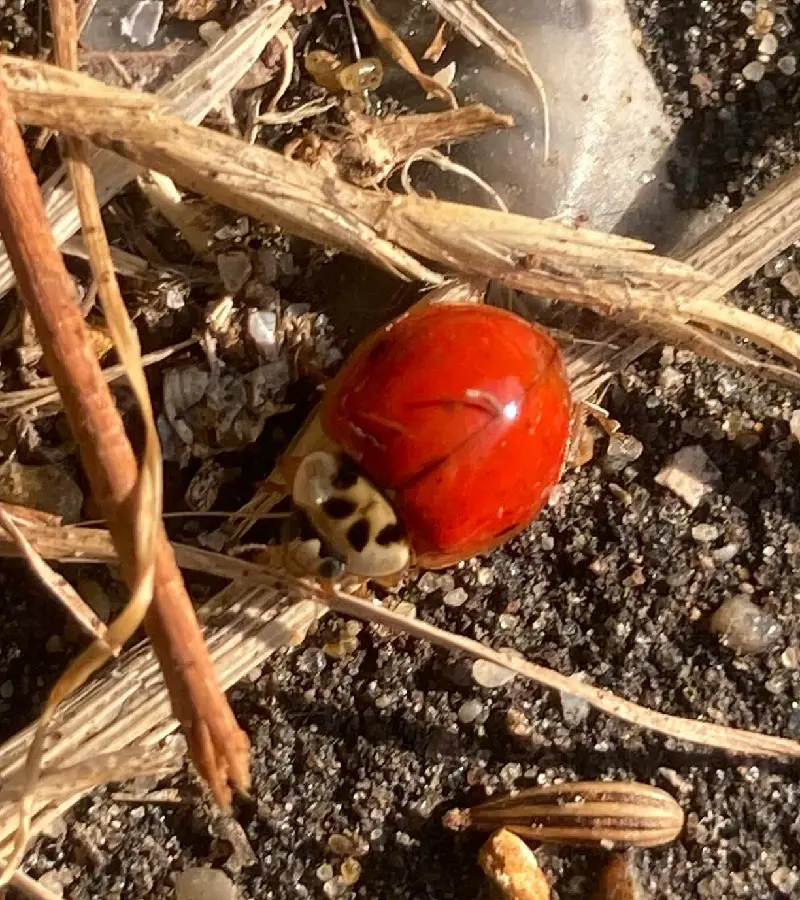
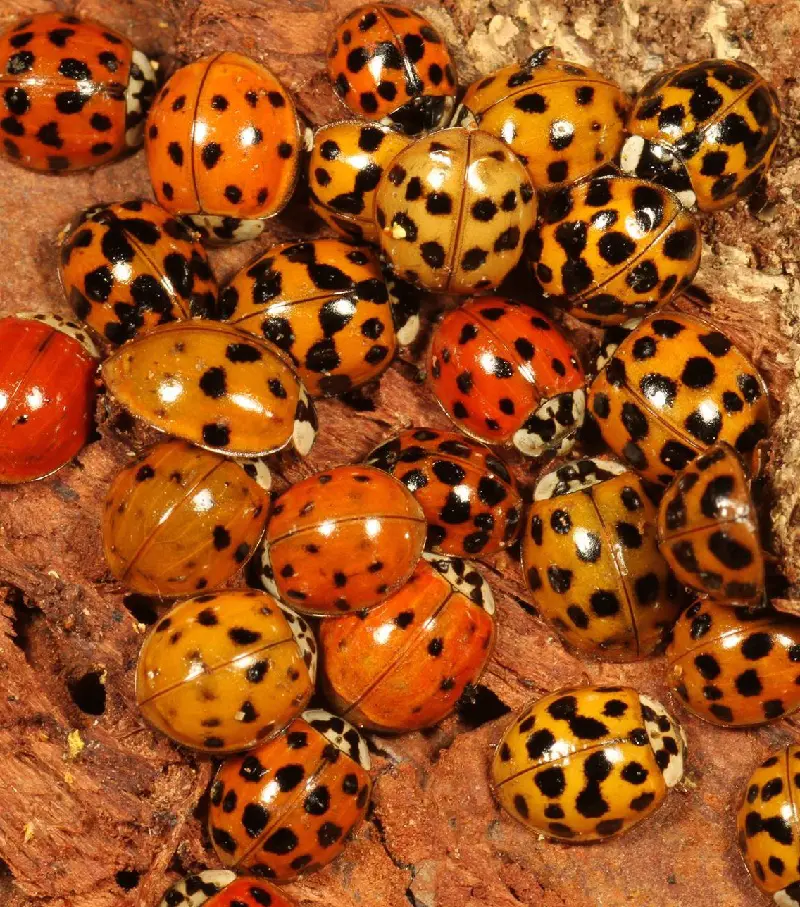
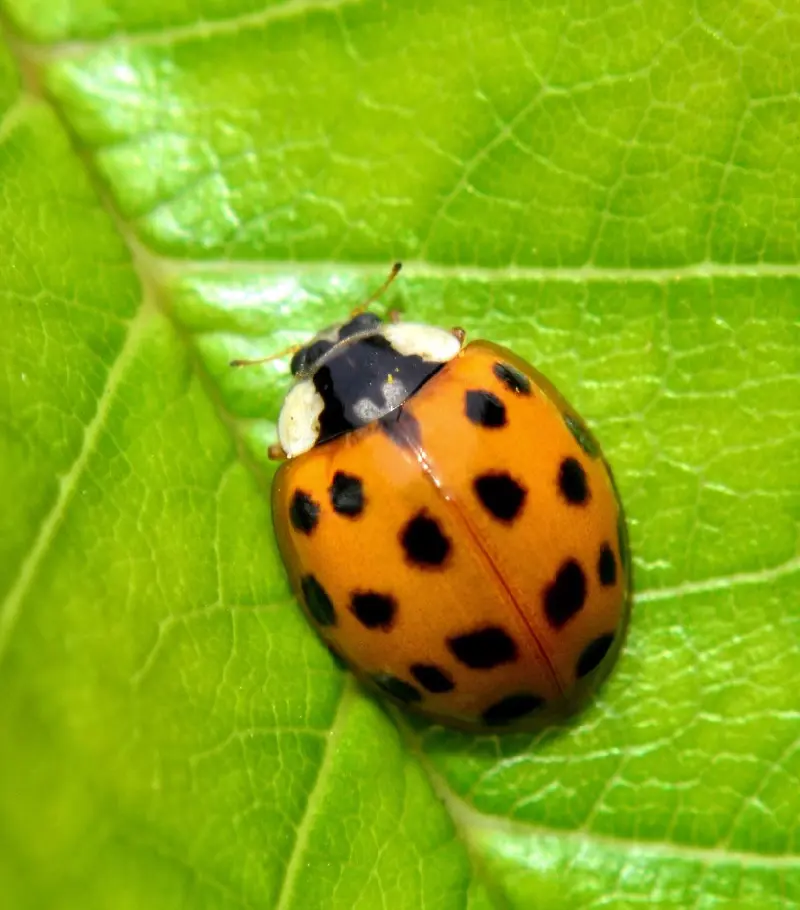
Aside from being larger, unlike the ladybugs the Asian lady beetle comes in a wide range of colors from very pale yellow, tan, and orange to a deep red making them really easy to identify when looking at bugs in your yard.
Since beetles of different species don't congregate together, if you see beetles with a range of color and spot variations huddling together, you're likely looking at ladybeetles rather than ladybugs.
Spots
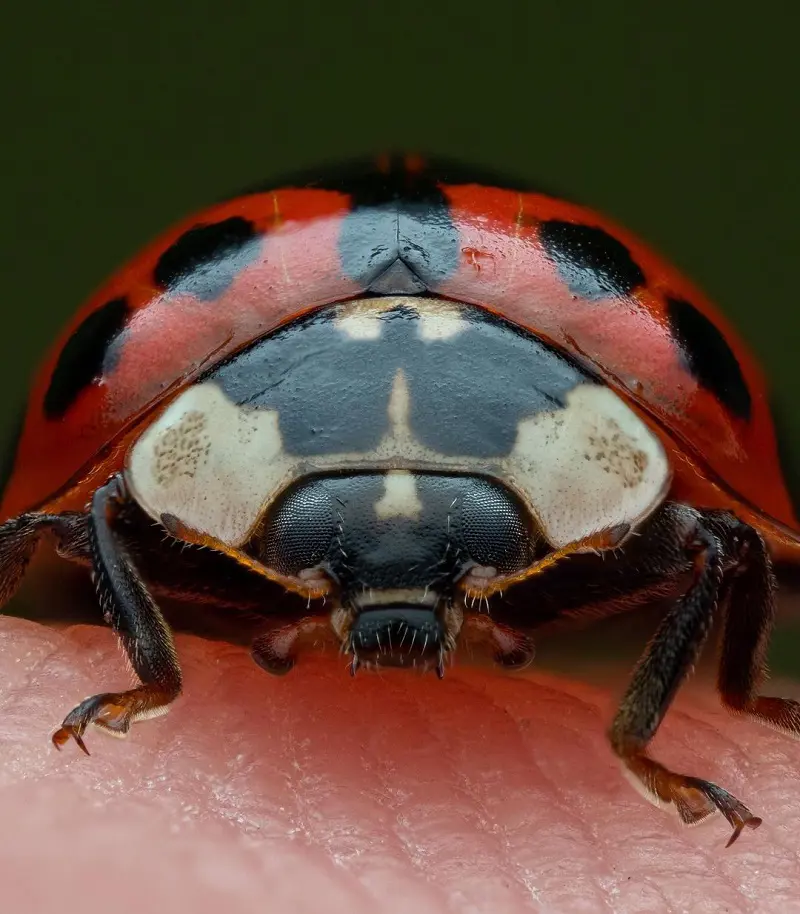
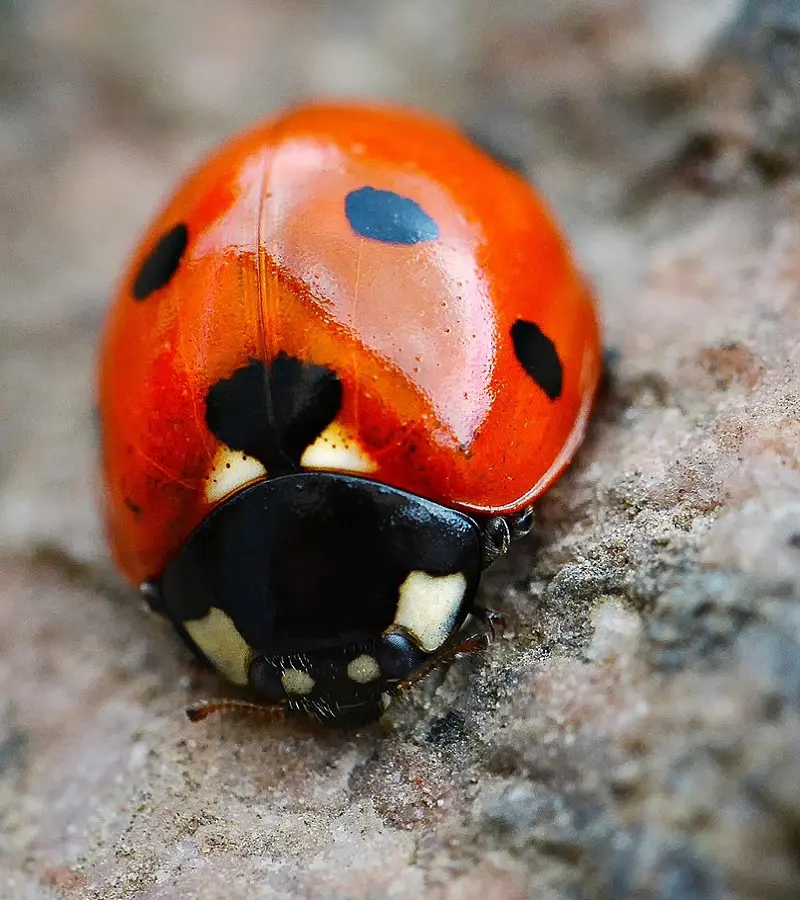
Even if they are red, you can easily spot the lady beetle due to their larger more numerous white "cheek" spots which create a black-colored M-shaped marking that is only present on lady beetles.
Also, Asian lady beetles have more numerous black spots and can have up to 22 black spots on their back carapace, they can also be faded or entirely missing resulting in an inconsistent number of spots between each lady beetle.
If you paid closer attention to the size range information of a ladybeetle side by side in contrast to the ladybug you would also have noticed that there is less significant difference between the length and width of a ladybug.
This is because ladybugs typically tend to be rounder while Asian ladybeetles have an oval-like shape and thus are a little longer than they are wide.
Smell
Another way you can distinguish between the two types of creatures can be because of your nose. Due to the presence of foul-smelling blood fluid in Asian ladybeetles which can be readily secreted, Asian ladybeetles have a foul smell that will stink up your homes.
Aside from having a pungent smell which can cause allergies and irritate the skin, the fluid can also become a hard-to-remove stain which is not only a headache but can attract even more Asian ladybeetles to that spot.
Yes, Asian lady beetles are far more aggressive than ladybugs they will bite humans and animals if provoked. However, unlike the mosquitos, these bugs don't suck blood and this is only a self-defense mechanism to protect themselves proactively.
They bite you by scraping the skin that they land on which can feel like a bit of a painful pinprick but are unable to break the skin so they won't be able to cause any real damage to you.
What Do Asian Lady Beetles Eat?
While Asian ladybeetles also eat aphids and other small bugs which makes them helpful for pest control in your garden, that relief can also soon turn to horror as the lady beetles can eat more types of food than the ladybugs.
For example, if their regular food sources are diminished either due to scarcity or successful extermination, they will also attack plants and ripe fruits.
The biggest difference in behavior between the two is that Asian lady beetles often sneak into your homes through cracks and holes when it gets cold outside during the winter months and shelter in your homes or the south side of a building if entry is impossible.
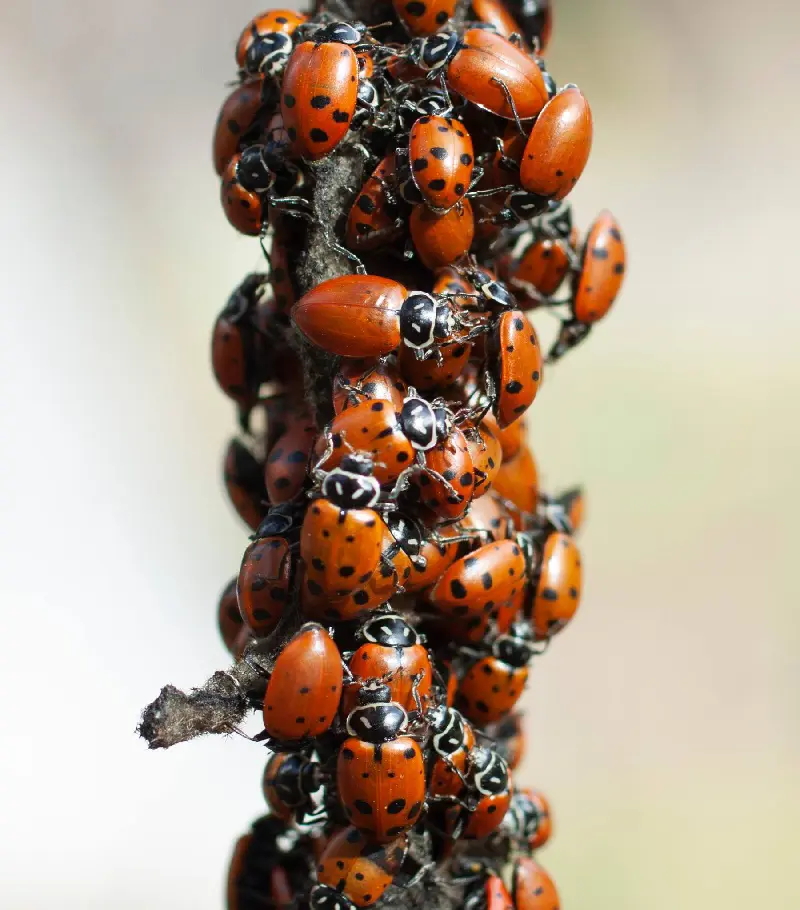
Asian ladybeetles tend to travel in large groups and swarms of them can especially be found huddled around warm or reflective surfaces such as the windows. So if you see a large number of beetle bugs, they are most certainly Asian ladies.
Ladybug Identification Guide
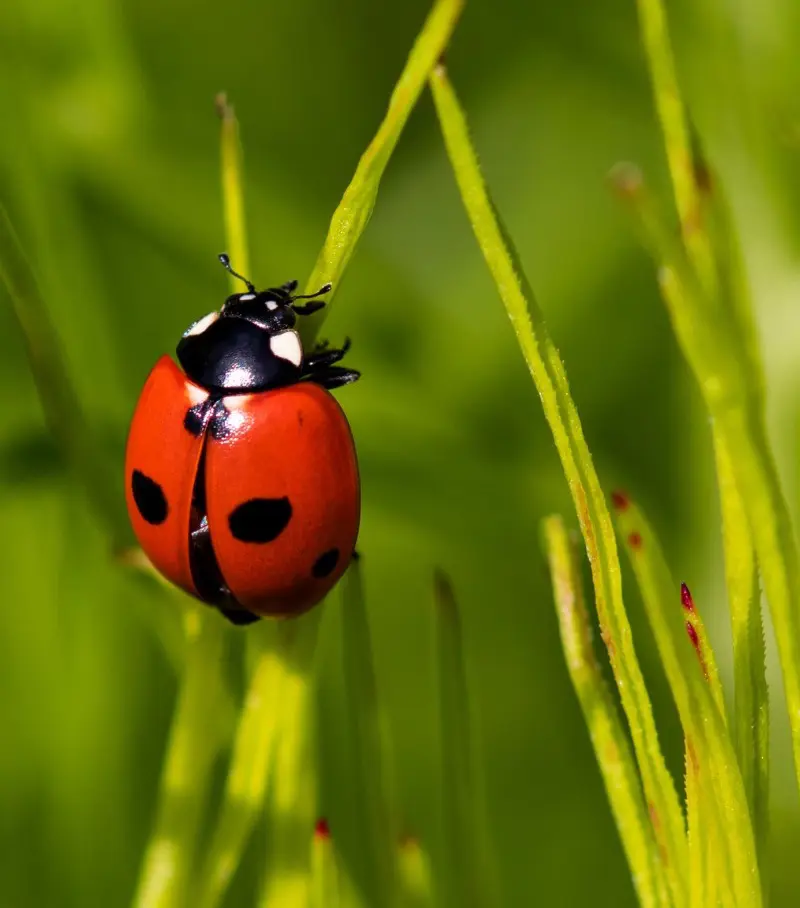
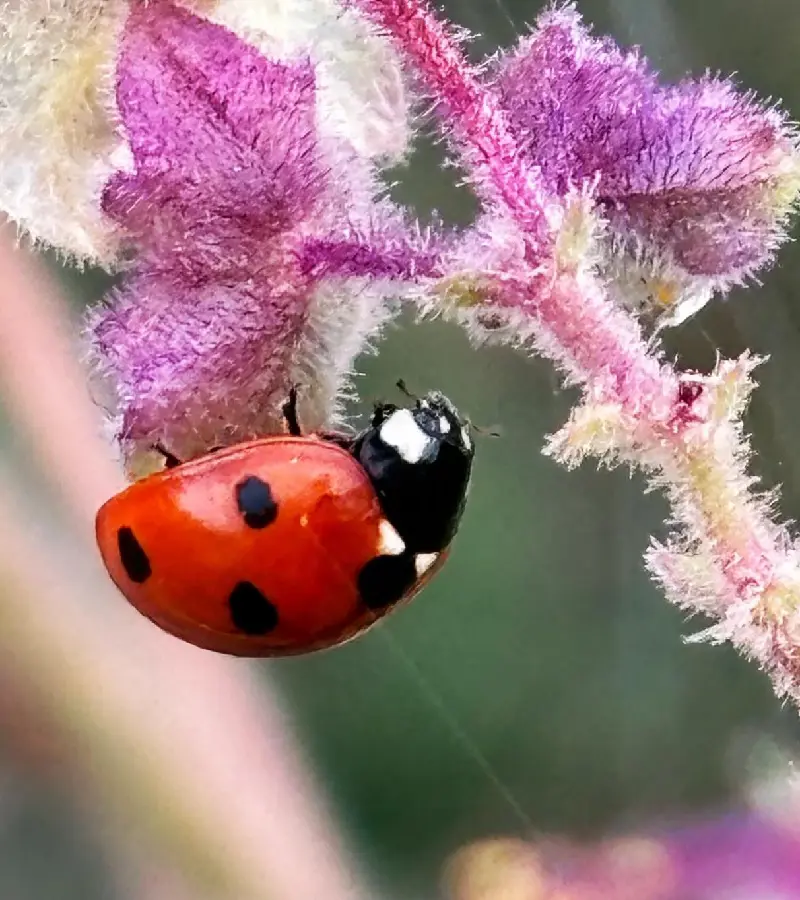
The ladybugs are small, round beetles that are native to North America and are very easily identified thanks to their small bright red bodies and black spots. They mostly keep to themselves and prefer staying under the cover of leaves and trees if they are not actively feeding.
Ladybugs are a great plant friend to keep around as they get rid of other bugs. This, if you want to apply pesticides in your home it's important to use a targeted pesticide to keep ladybugs from getting harmed in the crossfire.
Unlike the Asian ladybeetles, the ladybugs are always colored in bright red with no other color to speak of. Sometimes their colors can be of a sharper or a duller contrast of red which is influenced by the richness of their diet when they were young.
Spots
Ladybugs always have black spots on their elytra wing covers, also called cerci. Contrary to popular belief, the varying number of spots is not due to the age of the ladybug but rather has everything to do with genetic markers.
Hence, the species of ladybugs can be easily differentiated by counting their spots. Some of the native American ladybugs are nine-spotted, transverse, two-spotted, pink-spotted, parenthesis, and convergent ladybugs which have everything to do with their spots.
The 7-spotted ladybug that can be commonly found isn't a native but was introduced in 1956 from Europe for pest control due to the decline and loss of native populations of ladybugs.
Ladybugs are rounder and smaller in size in comparison to Asian ladybeetles. While this difference isn't easily noticeable in the case of juvenile ladybeetles, it is still worth noting as there may be some exceptionally large ladybeetles in a group.
Smell
While the ladybugs also synthesize toxic alkaloids such as N-oxide coccinelline and its free base precoccinelline, they are less potent than those of Asian ladybeetles and thus do not have a pungent smell.
Ladybugs are also far friendlier and unlikely to secret those chemicals except when in a life-threatening situation in self-defense.
Ladybugs have not been noted to bite humans outside of some very rare circumstances where it was done for self-defense after being repeatedly provoked. However, unlike Asian ladybeetles, ladybug bites can barely be registered.
What Do Ladybugs Eat?
Ladybugs are carnivorous beetles so it's obvious what ladybugs eat. They primarily feed on smaller insect pests such as aphids, spider mites, and mealybugs.
Ladybugs are solitary adults and are rarely found in groups throughout most of their adult lives. These ladybugs are used to the cold North American continental climate and prefer to overwinter outside in sheltered locations such as under a tree, rocks, logs, or piles of leaves.
When winter arrives despite having led a solitary summer and spring, all of them head for the hills and congregate together which is known as an aggregate. This aggregate of ladybugs helps them regulate their internal body temperatures, share mates, enhance their defense, and share resources.
Despite being a common proactive biter, they are no match for the human skin and their mandibles can barely scrape the skin. Instead, their source of harmfulness comes from a location that you might not expect.
Asian ladybeetles can seem like a helpful insect at first glace due to them feeding on plant pests such as aphids but when those pests are long gone, they can soon turn to munch on fruits such as grapes, apples, and fall raspberries themselves causing a loss for the farmers.
Toxic Blood
Asian lady beetles secrete a foul-smelling yellow hemolymph (invertebrate fluid equivalent to blood) that contains various alkaloid toxins from their leg joints through a process known as “reflex bleeding”.
This fluid isn't venomous to humans but may cause some minor allergic reactions as well as stain your walls or fabric. Since this fluid is literally their blood, crushing them also releases the same fluid and stinks up the place.
Ladybugs are highly beneficial and harmless insects as they do not sting or bite due to their friendly nature. If they do bite, it feels like a light pinch or a tickle due to the size disparity of their mandibles and the thickness of the human skin.
Ladybugs won't also spontaneously secrete hemolymph, nor do their fluid contain potent nor foul-smelling alkaloid toxins. If there are no more aphids and other plant pests in the garden, they will choose to fly away in search of more food in other locations rather than feed on the plants.
When the Asian lady beetles hatch from their tiny oval yellow eggs, takes about a month to reach adulthood and can on average survive up to three years. In contrast to this, most ladybug species only live in their adult form for up to a year while the 7-spotted ladybugs only survive up to several months depending on the environment.
This huge gap in lifespan between their American and Asian counterparts gives the Asian lady beetles a huge survival advantage and allows them to consistently increase their population year after year.
How Do You Get Rid Of The Asian Lady Beetle Smell?
If you happen to have squished an Asian lady beetle in an accident, it will leave behind a distinct foul and musty smell which will leave you uncomfortable around your house. That's not all as the fluid also contains pheromones that will attract even more Asian beetles so it's in your best interest to get it cleaned.
So how to get rid of the Asian lady beetle smell? Use a cloth damped in warm soapy water to clear away the smear. In addition to using soap, you can also try and mask the smell by using the scent of essential oils such as citrus, vinegar, or citronella by making them into sprays.
The name "ladybug" was coined by European farmers who prayed to the Virgin Mary to save their crops from the pests which is when the ladybugs promptly arrived and wiped out the invading insects. European ladybugs also have 7 spots which is said to represent 7 virtues of Mary.
After this occurrence, they were believed to have been named "beetle of Our Lady" which was eventually shortened to "ladybug." In Spanish, they are called "Mariquita” (little Mary) and "Marienkäfer" in German (Mary’s bug). Another reason could be due to their red color which reminded people of the red cape worn by Mary in paintings.
Where Do Asian Lady Beetles Fit In?
Although some argue that Asian Lady Beetles are also ladybugs as they belong to the same family of Coccinellidae in the bug kingdom and feed on plant pests, they also prey on the plants themselves and don't always come in red.
It is for this reason others argue that all ladybugs are lady beetles but Asian lady beetles are not ladybugs as it does not fit with the etymology of the name ladybug.